
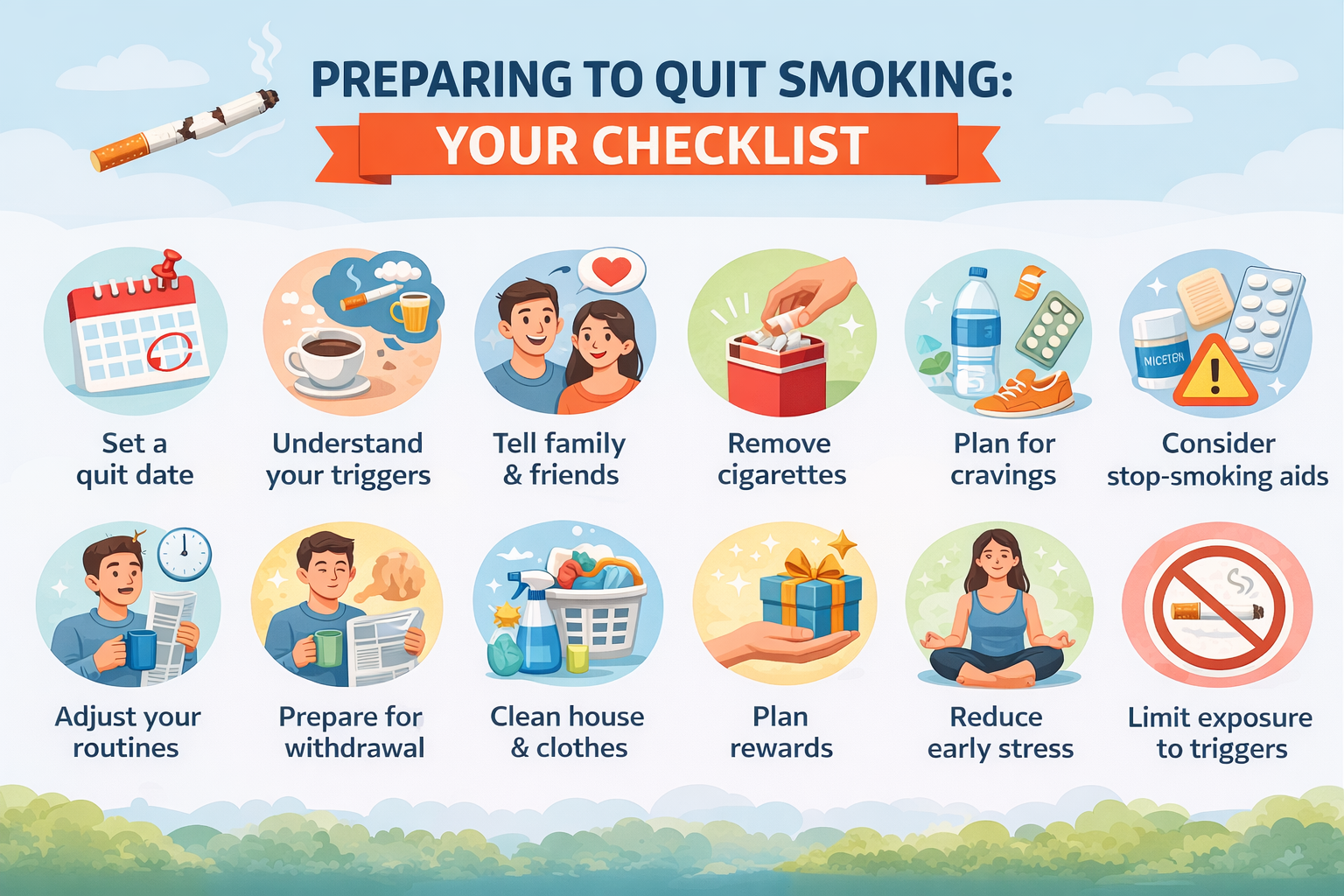
Quitting smoking is much easier when you prepare in advance. A well-planned quit attempt increases your chances of success and helps you handle cravings and challenges with confidence. Here is a practical checklist to guide you before your quit day.
⏹️ Start by setting a clear quit date. Choose a specific day within the next one to two weeks so you have enough time to prepare, but not so much that you lose motivation. Mark it in your calendar and treat it as an important commitment.
⏹️ Take time to understand your smoking habits. Notice when and why you smoke, whether it is with coffee, during stress, or out of boredom. Identifying these patterns will help you anticipate difficult moments and plan alternatives.
⏹️ Tell the people around you that you are quitting. Inform family, friends, and colleagues so they can support you. Their encouragement can make a significant difference, especially during the first few days.
⏹️ Seek help from a doctor, nurse, or psychologist who specializes in nicotine addiction, or call a helpline.
⏹️ Remove cigarettes and smoking-related items from your environment. Throw away cigarettes, lighters, and ashtrays from your home, car, and workplace. A clean environment reduces temptation.
⏹️ Plan how you will handle cravings. The best way is to take nicotine medications (patch, gum). Think ahead about what you will do when the urge to smoke appears. Simple strategies such as waiting for 5 minutes (the craving will pass), drinking water, going for a short walk, or taking deep breaths can help cravings pass. You may also want to use e-cigarettes, nicotine pouches or heated tobacco.
⏹️ Consider using stop-smoking aids. Nicotine replacement therapies such as patches, gum, or lozenges can reduce withdrawal symptoms. Other medications may also be helpful if recommended by a healthcare professional.
⏹️ Change your routines if they are strongly linked to smoking. For example, if you usually smoke with your morning coffee, consider changing your drink or location. Small adjustments can break powerful associations.
⏹️ Prepare for withdrawal symptoms. Irritability, restlessness, and increased appetite are common but temporary, but weight gain may be permanent. Knowing this in advance helps you stay focused and avoid discouragement.
⏹️ Clean your home and clothes. Removing the smell of smoke from your surroundings can make the transition feel fresh and reinforce your decision to quit.
⏹️ Plan rewards for yourself. Decide how you will celebrate milestones such as one day, one week, and one month without smoking. Rewards help maintain motivation.
⏹️ Reduce stress before your quit day. Try relaxation techniques such as deep breathing, light exercise, or meditation. Managing stress will make it easier to cope without cigarettes.
⏹️ Limit exposure to triggers in the first days. Avoid situations where you are strongly tempted to smoke, such as social settings with other smokers, until you feel more confident.
⏹️ Remind yourself why you are quitting. Write down your personal reasons, whether they are related to health, family, or finances. Keep this list visible and revisit it often.
⏹️ Finally, accept that quitting is a process. You may face challenges along the way, and you may need several quit attempts before you succeed, but each attempt brings you closer to success.




Leave a Reply