Tag: stop smoking

  • IQOS

    IQOS

    Here is a summary about IQOS: what it is, how it works, the difference between combustion and pyrolysis, the composition of the aerosol compared to cigarette smoke, nicotine exposure: amount and speed of absorption into the blood and brain, can it help smokers quit, impact on cigarette sales in Japan, who should and should not use it, the fact that the US FDA has authorized it as a reduced exposure product but not as a reduced risk product, does it reduce health risks compared to cigarettes, impact on PMI’s sales and profits, the problem of the scarcity of manufacturer-independent research, and the controversy surrounding tobacco harm reduction. Use a journalistic style without bullet points or numbered lists, and avoid words, phrases, and transitional sentences typical of AI-generated content.

    IQOS, the flagship heated tobacco product from Philip Morris International (PMI), has become a fixture in the global debate over smoking and public health. Marketed as a revolutionary alternative to cigarettes, the device and its success, particularly in Japan, represent a high-stakes experiment in the contentious world of tobacco harm reduction.

    How Heating Differs from Burning

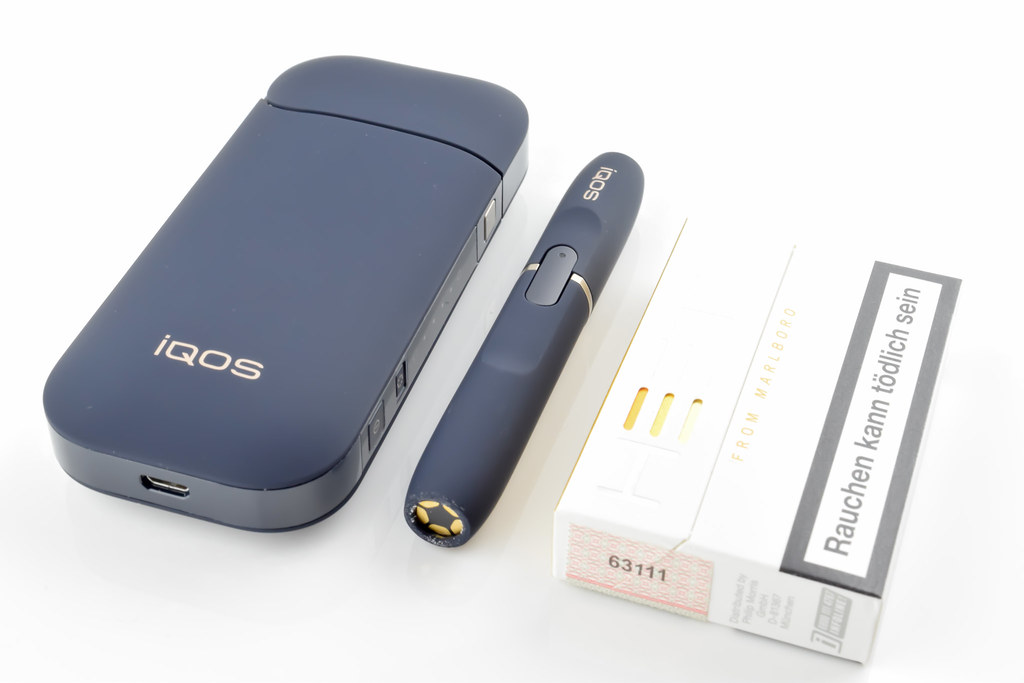
    At its core, IQOS is an electronic device designed to heat specially prepared tobacco sticks, called HEETS or HeatSticks, to a precise temperature, typically around 350 °C. This is the crucial distinction from a conventional cigarette, which combusts tobacco at temperatures often exceeding 800 °C.

    The difference lies in the process: Cigarettes rely on combustion (burning), which generates smoke filled with complex byproducts, including solid particles and toxic chemicals.5 IQOS employs a process closer to pyrolysis (thermal decomposition in the absence of oxygen). This heating process generates an aerosol—a vapor composed primarily of nicotine and water, rather than smoke.6

    What’s In the Cloud: Aerosol Composition

    Because it avoids combustion, the aerosol produced by IQOS contains significantly lower levels of many harmful and potentially harmful chemical constituents compared to cigarette smoke.7 Manufacturer-sponsored studies often claim reductions of 90-95% for certain key toxicants, excluding nicotine.8 However, independent research has noted that while levels of many harmful substances are indeed reduced, the aerosol still contains nicotine and measurable concentrations of some toxicants, and the full long-term health impact is not yet known.9 Some independent analyses have even noted that certain chemicals may be present in higher concentrations compared to traditional smoke.10

    Nicotine Delivery and Addiction

    The device is specifically engineered to ensure that the user receives an amount and rate of nicotine absorption comparable to smoking a conventional cigarette.11 While the nicotine content in the specific tobacco sticks might be lower than in a cigarette, the delivery mechanism is highly efficient.12 This rapid and substantial dose of nicotine is what makes the product satisfying to current smokers, but it also ensures the user remains exposed to and dependent on an addictive substance.13 The amount of nicotine absorbed is similar to a cigarette, establishing a theoretical one-to-one usage ratio.14

    The Japan Experiment: Impact on Cigarette Sales

    Japan has become the key real-world laboratory for heated tobacco products.15 Following the widespread introduction of IQOS in 2014-2015, independent studies noted a dramatic, accelerated decline in sales of traditional cigarettes.16 Where cigarette sales were already falling slowly, the decline accelerated significantly, suggesting that a large number of smokers in Japan made a complete switch to the heated product.17 The experience there is frequently cited as proof that heated tobacco products can displace cigarette are are an alternative to them. Smoking rates among the general japanese population may not change as a result, as IQOS users may continue to smoke a few cigarettes.

    The Regulatory Status: Reduced Exposure, Not Reduced Risk

    In the United States, the Food and Drug Administration (FDA) authorized IQOS for marketing with a reduced exposure claim in 2020. This allows the company to communicate that “Scientific studies have shown that switching completely from conventional cigarettes to the IQOS system significantly reduces your body’s exposure to harmful or potentially harmful chemicals.”18

    Crucially, the FDA explicitly stated that this authorization did not mean IQOS had been proven to reduce the risk of disease or harm.19 The agency found that the evidence did not yet support a reduced risk claim, meaning users cannot assume that switching guarantees an improvement in long-term health outcomes compared to continued smoking, though the exposure is lower.

    Who Should Use It?

    IQOS is not a smoking cessation product; it is a tobacco product. Health authorities and the manufacturer agree that the product is intended only for adult smokers who would otherwise continue to smoke.20 It should not be used by non-smokers, former smokers, or young people, as it delivers addictive nicotine and carries health risks.21 Whether it genuinely helps smokers quit completely, rather than merely switching products, remains a subject of ongoing debate and research.

    The Conflict of Research and Profit

    The majority of the data initially supporting IQOS’s reduced-exposure claims came from PMI-sponsored studies, leading to persistent concerns within the public health community about the scarcity of fully manufacturer-independent research. While the number of independent studies is growing, there remains a lack of long-term data on health outcomes.22

    The controversy is central to the broader tobacco harm reduction debate.23 Advocates argue that providing a significantly less harmful nicotine delivery system offers smokers who are unwilling or unable to quit an invaluable path away from deadly cigarettes.24 Critics fear that these products, while potentially less harmful than smoking, risk addicting a new generation of users, undermine decades of successful tobacco control efforts, and serve primarily to boost the profits of tobacco companies like PMI, whose market share and revenue have significantly benefited from the global uptake of IQOS.

    The verdict on whether heated tobacco products serve the overall public health interest will not be rendered by initial sales figures or regulatory labels, but by decades of independent research tracking population health outcomes.


    Use the Comments field below to share your experience with IQOS or to suggest improvements to this article.

  • 10 policies against smoking

    10 policies against smoking

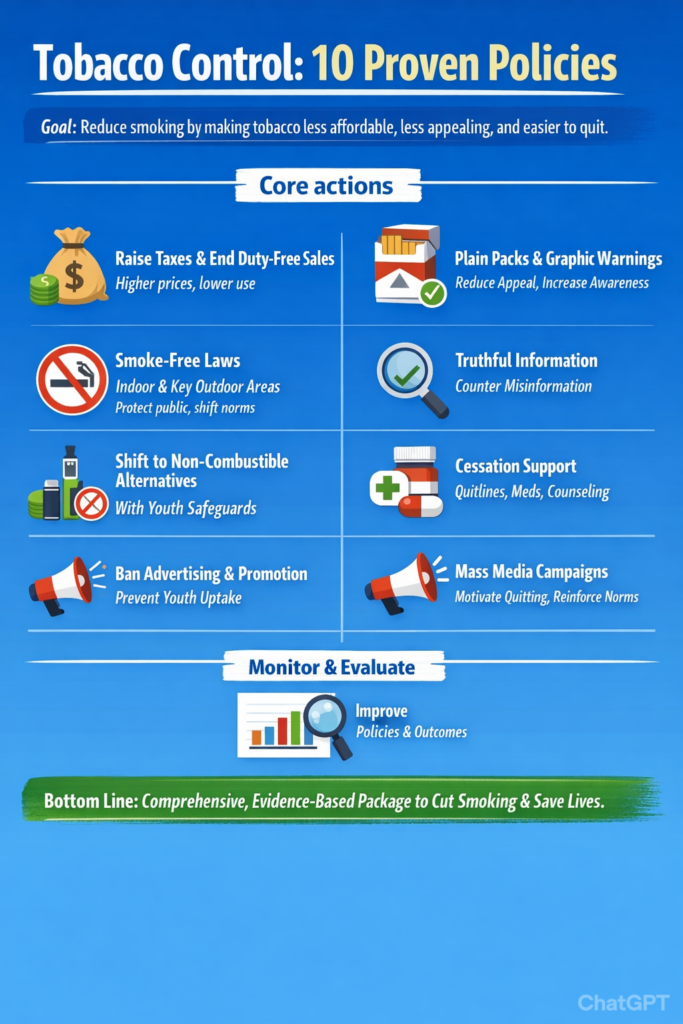
    Smoking remains a scourge on public health and a major factor of healthcare costs, but the good news is that governments worldwide have effective and proven tools at their disposal to combat it. This article presents the ten most effective policy measures, backed by scientific evidence, that can significantly reduce smoking and save lives.

    These policies work by either making smoking less appealing and accessible, or by empowering smokers to quit.


    The Economic Approach: Making Tobacco Unaffordable

    1. Raise Taxes on Tobacco Products

    This is widely considered the single most effective policy for reducing tobacco consumption. Significant and regular increases in excise taxes make tobacco products less affordable, discouraging young people from starting and incentivizing current users to quit. For every 10% price increase, studies show a significant reduction in overall consumption, with the greatest impact seen among youth and low-income populations.

    2. Eliminate Tax-Free and Duty-Free Sales

    By removing tax exemptions for tobacco sold at airports and border crossings, governments close a loophole that allows products to be sold at artificially low prices. This policy maintains the price disincentive and prevents cheap tobacco from undermining local taxation efforts.

    Clean Air and Social Norms: Protecting the Public

    3. Implement Comprehensive Smoke-Free Laws

    Laws mandating 100% smoke-free indoor public places, workplaces, restaurants, and bars protect non-smokers from the harms of secondhand smoke. Furthermore, these policies change social norms, making smoking less visible, less socially acceptable, and providing a powerful incentive for smokers to quit. Well-enforced bans have been shown to reduce smoking prevalence itself.

    Extending smoke-free regulations to include outdoor areas—such as parks, beaches, school grounds, and hospital entrances—further de-normalizes smoking, protects children from exposure, and reinforces the public health message that smoking is not a typical behaviour.

    Replace combustible products with smokefree products

    4. Accelerate the replacement of cigarettes with non-combustible products

    The tobacco market is undergoing rapid change, with cigarettes becoming an obsolete and inferior product, replaced by non-combustible alternatives.

    It is essential to accelerate the transition of smokers to these new products, while implementing effective and proportionate policies to prevent young non-smokers from starting to use nicotine or tobacco.

    5. Providing truthful information and combating disinformation

    Misinformation about harm reduction and non-combustible nicotine and tobacco products is ubiquitous. Governments should support the creation and dissemination of truthful, balanced, and honest information on these topics.

    Stopping the Next Generation: Eliminating Promotion and Appeal

    6. Enforce Comprehensive Bans on Tobacco Advertising, Promotion, and Sponsorship (TAPS)8

    Tobacco advertising recruits new users and undermines quit attempts. A total ban on all forms of TAPS—including in traditional media, online, at the point of sale, and through product placement or sponsorship—is highly effective at reducing tobacco initiation, particularly among youth.9

    7. Mandate Graphic Health Warnings and Plain Packaging

    Removing all branding, colours, and promotional elements from tobacco packaging (plain packaging) and requiring large, graphic health warnings that cover at least 50% (and ideally much more) of the pack surface reduces the product’s appeal and increases consumer awareness of the harms.10 This policy eliminates the pack as a marketing tool.11

    Empowerment and Support: Helping People Quit

    8. Provide Accessible and Affordable Smoking Cessation Services

    While policies reduce demand, many addicted smokers need help to quit.15 Governments must invest in comprehensive cessation support, including:

    • Toll-free national quitlines.
    • Coverage for proven therapies (like NRT and prescription medicines such as varenicline and cytisine) and behavioral counselling through national health insurance programs.16
    • Integrating ‘Ask, Advise, Refer’ protocols into routine healthcare.17

    9. Run Sustained, High-Impact Mass Media Campaigns

    Hard-hitting, professionally produced anti-tobacco media campaigns that clearly communicate the health risks and benefits of quitting are highly effective.18 These campaigns should be sustained over time and run at high frequency to ensure maximum reach and impact, reinforcing the message that help is available.

    Monitor tobacco use and evaluate interventions

    10. Monitor tobacco use and evaluate campaigns and policies

    It is crucial to monitor tobacco and nicotine use in each population subgroup, and to assess the intended and unintended effect of all interventions, campaigns, policies, treatments and other anti-tobacco measures.


    Use the ‘Comments’ field below to share your experience or to suggest improvements to this article.

  • Weight gain

    Weight gain

    After quitting smoking, most people gain weight. Here we explain why this happens, how much weight people usually gain after quitting, the possibility of using nicotine medications to delay weight gain, and how to limit weight gain

    Why people gain weight after they quit

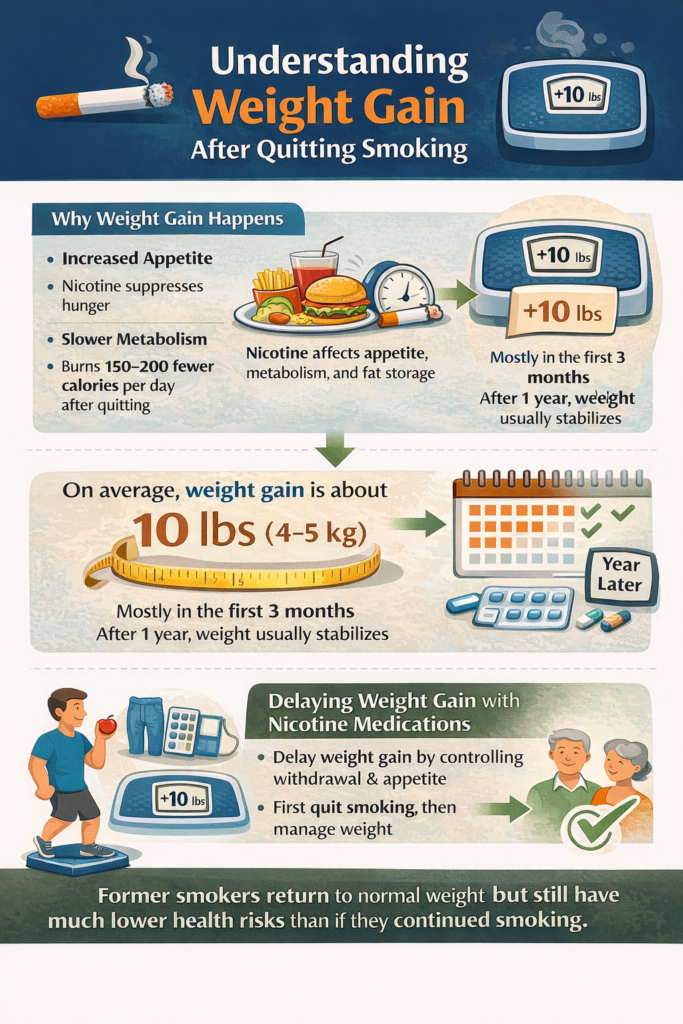
    There are three main reasons why your body tends to put on a few pounds when you stop smoking, linked to the effects of nicotine on your appetite and metabolism. Together, these three factors influence your calorie balance (intake/expenditure) and storage in the form of body fat.

    Increased appetite and cravings:

    Nicotine acts as a mild appetite suppressant. When you remove it, you may feel hungrier more often. Increased appetite is a well-documented nicotine withdrawal symptom.

    Many people also mistake the craving for a cigarette for a craving for food. Reaching for a snack is often an unconscious way to deal with the urge to put something in your mouth (the “hand-to-mouth” habit).

    Food, especially sugary or fatty treats, releases brain chemicals that feel good, temporarily replacing the pleasure you got from nicotine.

    Slower metabolism:

    Smoking actually speeds up your metabolism (the rate your body burns calories). A smoker’s body burns about 150 to 200 more calories per day than a non-smoker’s.

    When you quit smoking, your metabolism slows down to a normal, healthy rate, meaning you burn fewer calories at rest. If you don’t adjust your eating, those unburned calories can lead to weight gain.

    Changes in how your body handles fat:

    Nicotine affects how your body processes and stores fat. Quitting can lead to a shift in your body’s fat storage that contributes to weight gain.

    How much weight can you expect to gain?

    The good news is that the weight gain is usually modest. On average, most people who quit smoking gain about 10 pounds (4-5 kg). About one in ten people may gain more than 30 pounds, but this is the exception, not the rule. Most of this weight gain occurs within the first three months after quitting, and weight usually stabilises after about a year.

    Remember, even with a 10-pound gain, your risk of heart disease and cancer is still significantly lower than if you continued to smoke.

    How to use nicotine medications to delay and limit weight gain

    Increased appetite and weight gain are nicotine withdrawal symptoms, and you can delay them as long as you take a sufficient dose of nicotine. Of course, it is preferable to use nicotine medications (patches, gum, lozenges, sprays or inhalers) which are harmless. By ‘delay’, we mean that you first stop smoking, then after 3 months of using nicotine medications, you can stop the nicotine treatment and only then will you gain weight. This two-step strategy allows you to deal with one problem at a time, first quitting smoking and managing withdrawal symptoms, then managing your weight.

    Nicotine medications also make it easier to quit smoking by attenuating the other nicotine withdrawal symptoms: craving, iritability, depressed mood, anxiety, difficulty concentrating, difficulty sleeping.

    But you have to accept the fact that, for most former smokers, weight gain is permanent. On average however, former smokers weigh the same as people who have never smoked, and current smokers weigh less than non-smokers. This means that, on average, former smokers simply return to the normal weight of non-smokers of the same age and gender. However, some former smokers gain a lot of weight and end up weighing more than is normal for their age.

    We have created an entire website (Stop-Kilos.org) dedicated to helping people lose weight, so we invite you to visit the Stop-Kilos website for more information.

    Is weight gain always a health problem?

    Weight gain can lead to health problems mostly if you are overweight (body mass index, BMI>25 kg/m2) or obese (BMI >30 kg/m2) or if your waist circumference is >80 cm or >31.8 in (women) or >94 cm or 37 in (men). See our articles on how to measure your waist circumference and your body mass index.


    Please rate this article by clicking on the desired number of stars:
    1 Star2 Stars3 Stars4 Stars5 Stars (1 votes, average: 5.00 out of 5)
    Loading...

    Please use the Comments field below to share your experience and to suggest improvments to this page.


  • Cytisine

    Cytisine

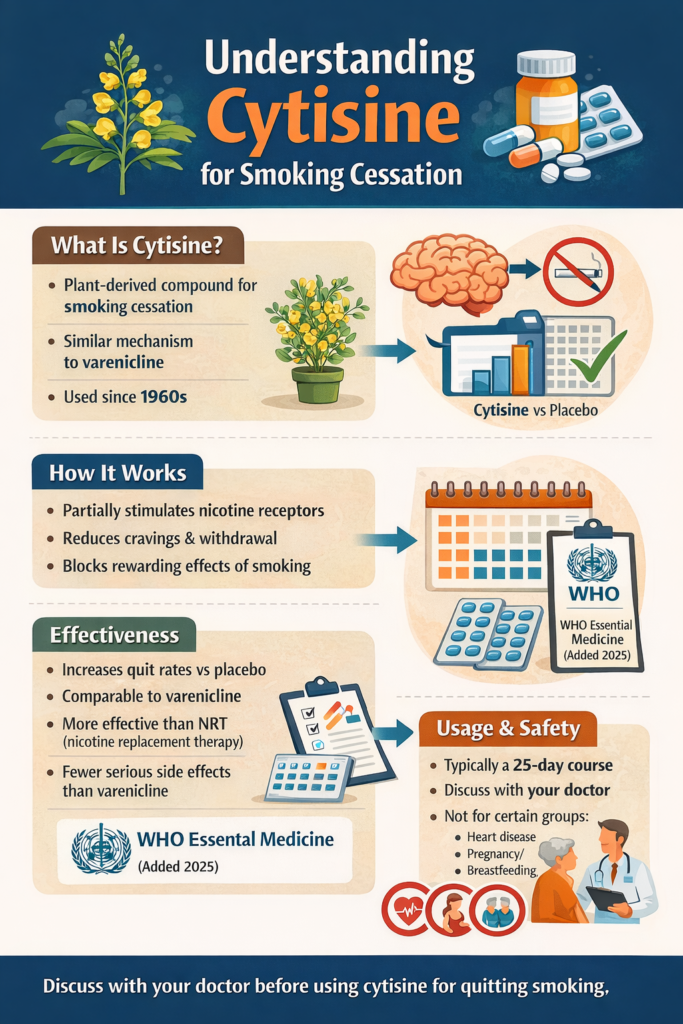
    If you are looking for an effective nicotine-free treatment to help you quit smoking, you may have heard about cytisine. Although it has only recently been recognized in countries such as the United Kingdom and North America, this plant-derived substance has been used successfully for decades by millions of people in Central and Eastern Europe, making it one of the oldest and most reliable ways to quit smoking. It was recently added to WHO’s list of essenial medicines.

    What Is Cytisine?

    Cytisine is a naturally occurring plant alkaloid, a chemical substance extracted primarily from the seeds of plants in the Cytisus and Laburnum genera (like the Golden Rain acacia, which gets its name from its beautiful yellow flowers). It is usually referred to by its generic names cytisine or cytisinicline.

    Like nicotine, cytisine is a natural insecticide, it kills insects by acting on their nervous system, and it also acts on the human nervous system. Its mechanism of action is similar to that of the prescription medication varenicline (Chantix/Champix). Cytisine works by acting as a partial agonist at the nicotinic acetylcholine receptors in the brain, the same receptors that nicotine targets.

    Its action serves two critical purposes: it reduces nicotine cravings and withdrawal symptoms by partially activating these receptors, and it blunts the rewarding effect of smoking by blocking nicotine from fully binding to nicotinic receptors. Essentially, it “tricks” your brain into feeling like you’ve had some nicotine, making the experience of smoking less satisfying.

    A Long History of Use

    Cytisine is not a new discovery. It was first isolated in 1865, and during World War II, it was smoked by German and Russian soldiers as an accessible, cheap substitute for tobacco. However, its formal use as a pharmaceutical smoking cessation aid began in 1964, when the Bulgarian company Sopharma first marketed it under the brand name Tabex. Since the 1970s, it has been widely available and highly popular across many Central and Eastern European countries. Its extensive and long-term use has provided substantial data on its safety and effectiveness.

    How Effective Is Cytisine?

    The evidence supporting cytisine’s efficacy is strong and growing. Rigorous modern studies and meta-analyses have consistently demonstrated that smokers who use cytisine are about 1.3 times to 1.75 times more likely to achieve long-term abstinence compared to those using a placebo. Even with its short treatment course, cytisine has been found to be as effective as varenicline, and more effective than NRT (nicotine replacement therapy). Also, cytisine leads to a lower number of people reporting serious adverse effects compared to varenicline.

    Given its efficacy and low cost, cytisine is often cited by public health experts as a medicine with the potential to have a major global impact on smoking rates. Cytisine was recently (2025) added to the World Health Organization (WHO) list of essential medicines, which could facilitate its adoption in more countries.

    Side Effects and Withdrawal

    The most commonly reported side effects of cytisine are mild to moderate and tend to occur mainly at the beginning of the treatment course before resolving. These may include gastrointestinal issues such as nausea, vomiting, dry mouth, or constipation, as well as sleep disturbances (insomnia or drowsiness), headache, dizziness, increased appetite, and irritability.

    It is important to remember that many of these symptoms, such as irritability, sleep problems, increased appetite and mood changes, are also classical symptoms of nicotine withdrawal. It is important to distinguish between the two.

    Dosage and Treatment Duration

    Cytisine is typically taken as a 1.5 mg tablet or capsule and is prescribed as a 25-day course of treatment with a gradually reducing dose.

    The treatment schedule is as follows:

    • Days 1–3: One tablet every 2 hours (Maximum 6 tablets per day)
    • Days 4–12: One tablet every 2.5 hours (Maximum 5 tablets per day)
    • Days 13–16: One tablet every 3 hours (Maximum 4 tablets per day)
    • Days 17–20: One tablet every 5 hours (Maximum 3 tablets per day)
    • Days 21–25: One to two tablets per day (Maximum 2 tablets per day)

    You must stop smoking no later than the fifth day of treatment. Although the standard course is 25 days, some clinical evidence suggests that a longer treatment, up to 12 weeks, may be more effective, but this is not the typical licensed duration.

    Contraindications

    Cytisine is generally not recommended and is contraindicated (should not be used) if you have:

    • A known hypersensitivity (allergy) to cytisine or to any of the excipients in the product.
    • Unstable angina, a recent history of heart attack, or clinically significant heart rhythm issues.
    • A history of recent stroke.
    • Are pregnant or breastfeeding.

    It is also generally not recommended for people under 18 or over 65, or those with severe kidney or liver impairment, due to limited clinical data in these groups. Use with caution is advised for individuals with ischemic heart disease, heart failure, high blood pressure, ulcers, and certain other chronic conditions.

    Main Brands

    Cytisine is authorized for smoking cessation in 34 countries, and is included in the WHO’s list of essential medicines. It is manufactured and distributed by relatively small pharmaceutical companies rather than by “big pharma”:

    • It is sold under the brand name Tabex since the 1960s (manufacturer: Sopharma in Bulgaria),
    • and more recently Desmoxan (manufacturer: Aflofarm in Poland), and the same product by Aflofarm is sold under different brand names in different countries:
      Defumoxan in Romania,
      – Liberisan in Hungary,
      – Tadocitan in Spain,
      – Asmoken in Austria and Germany,
      – Decigatan in Belgium and the Netherlands,
      – Dextazin in Portugal, and
      – generic Cytisine in the UK.
    • Other brands include Cravv in Canada by Zpharm,
    • and Tactizen in the UK.
    • The Polish firm Adamed Pharma produces cytisine tablets under the brand names Recigar (sold in also in Russia and Ukraine), and Cytisinicline Adamed, Glavrinxa and Belnifrem in the UK, distributed by Viatris.
    • In Thailand, the Government Pharmaceutical Organization produces tablets under the brand name Cytisine GPO.
    • In Australia, Quit4Good sells cytisine tablets that dissolve under the tongue, Nicoiq sells oral strips, and QSN sells cytisine tablets under the name NaturQuit.
    • In the USA, the company Achieve Life Sciences conducted several randomized trials with the objective of obtaining FDA approval for its cytisinicline product.
    • In some other countries, cytisine is not available as a commercial product, but is available as a compounded magistral preparation dispensed by pharmacists on medical prescription.
    • There are probably other brands and manufacturers, so please tell us if you know of any, using the “Comments” field below.

    Important :

    Only use cytisine if prescribed by a doctor; do not purchase it online without a prescription.


    The Stop2smoke website provides information on other smoking cessation medications, such as varenicline or Nicotine Replacement Therapy (NRT)


    References:

    Read an comprehensive summary on cytisine here.

    Cytisine. By Robert West, Magdalena Cedzyńska and Andy McEwen, with contributions from Julia Robson, Lou Ross. Editor: Andy McEwen. UK National Centre for Smoking Cessation and Training (NCSCT): March 2025 (PDF).

    Etter JF. Cytisine for smoking cessation: a literature review and a meta-analysis. Arch Intern Med. 2006 Aug 14-28;166(15):1553-9. doi: 10.1001/archinte.166.15.1553. PMID: 16908787.

    Etter JF, Lukas RJ, Benowitz NL, West R, Dresler CM. Cytisine for smoking cessation: a research agenda. Drug Alcohol Depend. 2008 Jan 1;92(1-3):3-8. doi: 10.1016/j.drugalcdep.2007.06.017. Epub 2007 Sep 6. PMID: 17825502.

    Livingstone-Banks J, Fanshawe TR, Thomas KH, Theodoulou A, Hajizadeh A, Hartman L, Lindson N. Nicotine receptor partial agonists for smoking cessation. Cochrane Database of Systematic Reviews 2023, Issue 6. Art. No.: CD006103. DOI: 10.1002/14651858.CD006103.pub9. Accessed 14 December 2025.

    Tutka, P., Vinnikov, D., Courtney, R. J., and Benowitz, N. L. (2019) Cytisine for nicotine addiction treatment: a review of pharmacology, therapeutics and an update of clinical trial evidence for smoking cessation. Addiction, 114: 1951–1969. https://doi.org/10.1111/add.14721.

    Walker N et al. Cytisine versus nicotine for smoking cessation. New England Journal of Medicine. 2014; 371(25): 2353–2362

    Walker N, Bullen C, Barnes J, McRobbie H, Tutka P, Raw M, Etter JF, Siddiqi K, Courtney RJ, Castaldelli-Maia JM, Selby P, Sheridan J, Rigotti NA. Getting cytisine licensed for use world-wide: a call to action. Addiction. 2016 Nov;111(11):1895-1898. https://doi.org/10.1111/add.13464. Epub 2016 Jul 17. PMID: 27426482.


    Please rate this article by clicking on the desired number of stars:
    1 Star2 Stars3 Stars4 Stars5 Stars (No Ratings Yet)
    Loading...

    Please use the ‘Comments’ field below to share your experience and to suggest improvments to this article.


  • Doctors and clinical services

    Doctors and clinical services

    Here is a list of smoking cessation clinics and programs:


    🇺🇸 United States


    🇬🇧 United Kingdom

    ✅ NHS Stop Smoking Services

    Other UK Resource

    • National Centre for Smoking Cessation and Training (NCSCT) – Provides training, resources, and links for evidence-based cessation support (useful for providers and pathways to services). NCSCT smoking cessation support📍

    🇦🇺 Australia

    📍 Government Support & Quitline

    • Australian Government Smoking & Tobacco Info – Lists the Quitline contact and national cessation support resources for people trying to quit. Health.gov.au smoking cessation contacts📍
      • Includes Quitline phone support and links to local services.

    🇨🇦 Canada

    📍 Provincial and territorial services: list of resources by province.


    🇳🇿 New Zealand

    📍 Smokefree NZ – Stop Smoking Services


    Use the ‘Comments’ field below to share your experiences with the services listed above, or to suggest additions to this list.


  • Forums

    Forums

    Get support and encouragement from online discussion forums, join the conversation and help others quit smoking.

    Here is a list of forums you may want to join :


    Use the “Comments” field below to suggest additions to this list and share your experience with the forums mentioned above.


  • Testimonials

    Testimonials

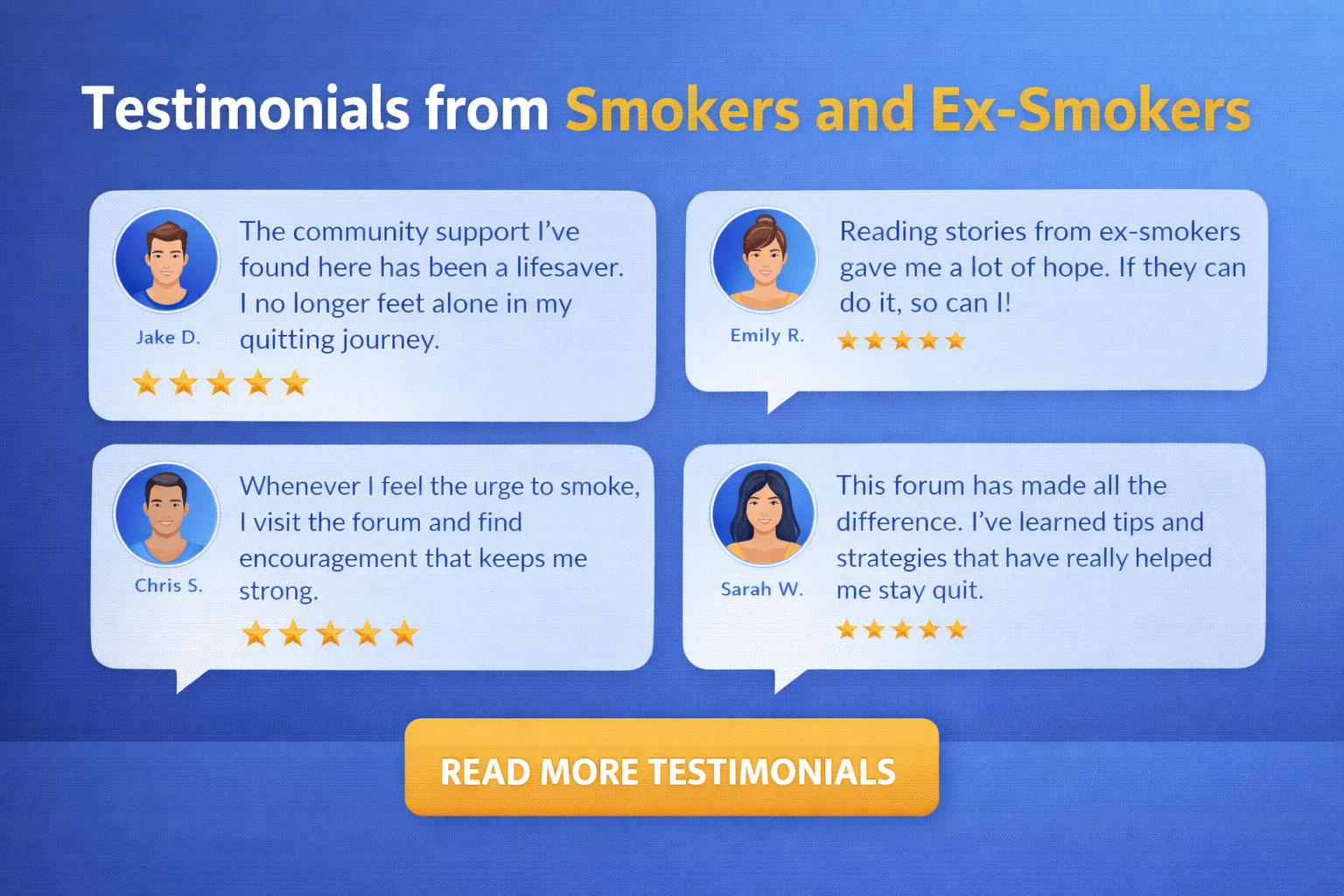
    Share your own story, and encourage others to quit smoking.

    Write a testimonial or personal story:


  • Nicotine medications

    Nicotine medications

    Nicotine replacement therapies (NRT) are safe and effective, they include :

  • Relapse

    Relapse

    Quitting smoking is often a difficult break from a powerful addiction. However, the real test of resilience often begins after the initial withdrawal phase. A relapse is not a failure, but a common obstacle—a sign that the addiction pathways in the brain are still active. To remain abstinent in the long term, you must not only stay away from smoking, but actively build a life in which smoking no longer plays a role. This transition requires practical strategies and an unwavering commitment.

    Identifying the Enemy: High-Risk Triggers

    The majority of relapses occur in predictable situations that act as powerful psychological cues. Understanding these personal triggers is the first line of defense. They fall broadly into four categories:

    1. Social Triggers: Being around other smokers is perhaps the most immediate danger. Attending a party where everyone steps outside for a smoke break or going to a bar where smoking is allowed can easily compromise resolve.
    2. Emotional Triggers: Stress, anxiety, boredom, anger, sadness, or even a celebration can all signal the brain that it needs the soothing or stimulating effect of nicotine. For example, the former smoker who always reached for a cigarette after a heated argument with a spouse must have a replacement plan ready before the next disagreement even begins.
    3. Routine Triggers: These are the habitual pairings—the ritualistic moments in the day tied to a cigarette. The first cup of coffee in the morning, the end of a meal, or getting into the car are all prime examples. These triggers are the most ingrained and require consistent, active substitution.
    4. Craving and other nicotine withdrawal symptoms: a very strong urge to smoke (craving), being in a bad mood (sad or depressed, angry, irritable, impatient or agitated, anxious or nervous, rapid mood swings), poor sleep (insomnia), difficulty concentrating, increased hunger and weight gain. But quitting smoking also brings about a rapid improvement in smell and taste. These symptoms are alleviated by nicotine replacement therapy.

    The Escape Plan: Avoidance and Substitution

    To successfully navigate these high-risk moments, preparation is key. Avoidance is the simplest tactic for the immediate term. For instance, if a specific coffee shop was the regular smoking spot, the former smoker should temporarily change their morning routine, perhaps opting for tea at home or taking a different route to work.

    When avoidance is impossible, substitution becomes the main tool. This is where the commitment to a new behavior must override the old habit. If stress is the trigger, a five-minute substitution could involve deep-breathing exercises, a quick walk around the block, or texting a supportive friend. If the trigger is the end of a meal, the former smoker needs to immediately engage the mouth and hands with something else—brushing teeth right away, chewing nicotine gum, or eating a piece of hard candy. The crucial action is disrupting the old routine instantly.

    Navigating Cravings: The Four D’s

    Cravings, even months after quitting, are intense but short-lived. They typically peak within three to five minutes. Former smokers need a repertoire of rapid response mechanisms to survive this brief window of desire. In addition to taking a nicotine gum of lozenge, experts recommend the “Four D’s” strategy:

    • Delay: Wait it out. Tell oneself, “I will wait five minutes and see how I feel then.” By delaying, the intensity often subsides before the person gives in.
    • Deep Breathe: Take ten slow, deep breaths. This not only distracts but also helps manage the anxiety often associated with the craving.
    • Drink Water: Sip a glass of water slowly. The physical act engages the mouth and provides a minor distraction.
    • Do Something Else: Immediately change activities. If one is sitting, they should stand up and move. If they are talking, they should shift the topic. A quick distraction breaks the mental focus on the craving.

    Weight Gain

    Many former smokers gain a few pounds after quitting smoking. Weight gain can be delayed by using nicotine replacement products (patches, gum, tablet). This way, you can tackle one difficulty at a time: first, you quit smoking, then you use nicotine replacement products for a few months, and only when you stop using these products will you possibly gain weight.

    The Relapse Management Protocol

    The ultimate mistake is to treat a single slip as a total failure. A single cigarette is a slip, not a surrender. The danger lies in the self-defeating mindset that follows, leading to the full return to regular smoking.

    A successful relapse management protocol requires compassion and immediate action. If a former smoker has a cigarette, the focus must be on what happened just before that moment, identifying the trigger (Was it alcohol? Stress? A specific person?) and analyzing what defensive measure was skipped. The goal is to learn from the mistake and immediately recommit to the quit effort, disposing of any remaining cigarettes and reinforcing the substitution tactics for the next high-risk situation.

    Long-term success is built on the realization that abstinence is a continuous, conscious effort. It requires maintaining motivation, celebrating every smoke-free day, and understanding that managing the urge to smoke is a skill that improves, but never entirely disappears. Staying vigilant against the triggers is the true path to a permanently smoke-free life.


    Use the ‘Comments’ field below to share your experience or to suggest improvements to this article.


  • Quitting smoking

    Quitting smoking

    In this section, you will find everything you need to know to stop smoking for good:
    10 rules to stop smoking,
    – post cessation weight gain,
    addiction and withdrawal symptoms,
    – effective methods and treatments,
    – avoiding relapses,
    – the health benefits of quitting smoking
    – Addresses: helplines, doctors and clinics, discussion forums