Tag: nicotine replacement therapy

  • Nicotine gum

    Nicotine gum

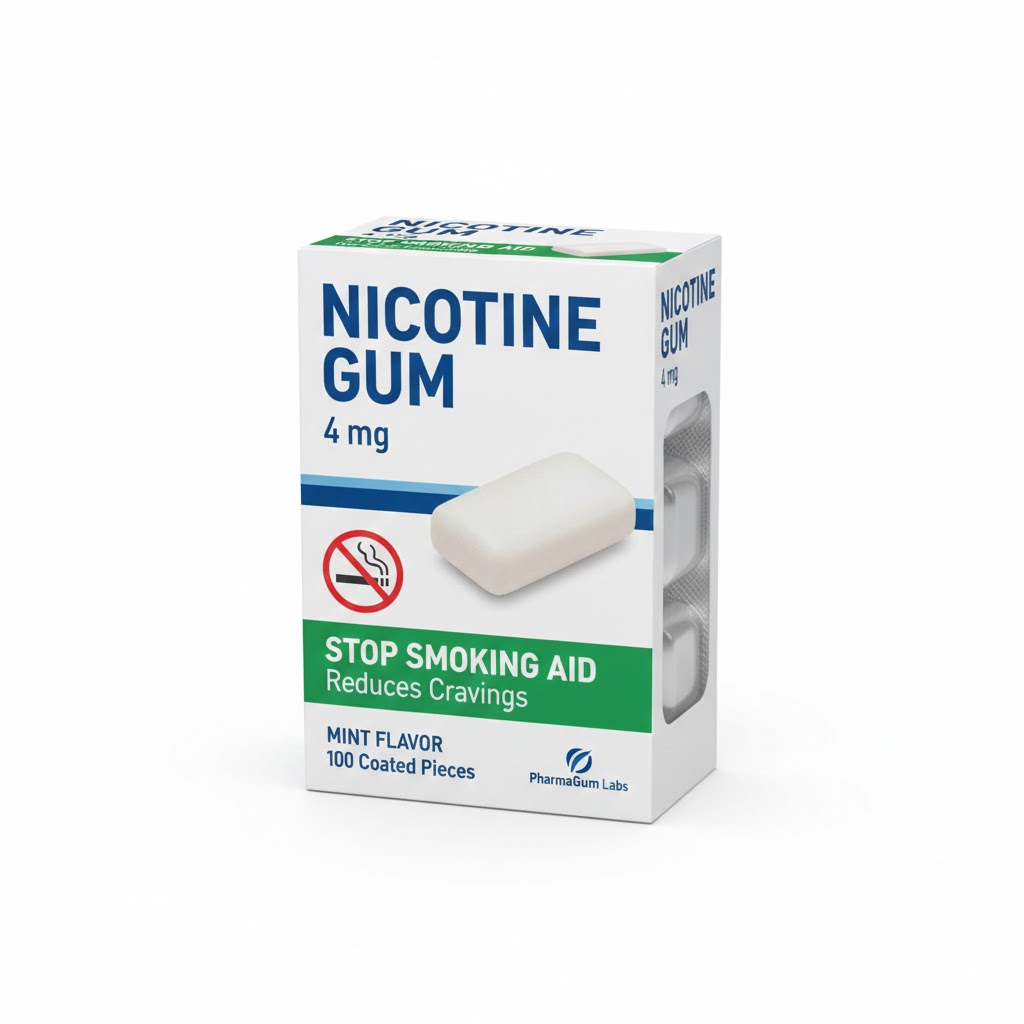
    For decades, nicotine replacement therapy (NRT) has been helping smokers quit. Nicotine gums are designed to treat physical dependence on nicotine by releasing a controlled dose through the oral mucosa, thus avoiding the thousands of harmful chemicals present in tobacco smoke and reducing cravings and other nicotine withdrawal symptoms.

    What is Nicotine Gum and How Does It Work?

    Nicotine gum is exactly what its name implies: a piece of specially formulated chewing gum containing medicinal nicotine. Unlike regular chewing gum, it is designed to be “parked” between the cheek and the gum after a few chews, allowing the nicotine to be absorbed slowly into the bloodstream. This process helps to smooth out the craving cycles that derail many quit attempts. The active ingredient, nicotine, is present in a polacrilex resin that controls its release. The gum often contains flavorings, sweeteners, and buffering agents to facilitate absorption and manage taste.

    Crucially, the gum’s approval extends beyond simply quitting cold turkey. It is also sanctioned for smoking reduction, allowing highly dependent smokers to cut back their cigarette consumption before fully stopping, and for pre-treatment (or ‘pre-quitting’), where users start the gum a week or two before their target quit date to lower their dependence baseline, thereby increasing the chances of success when the final stop occurs.

    Dosage: The Critical Difference Between Success and Relapse

    The efficacy of nicotine gum hinges on using the correct strength and quantity. It is available in two main dosages: 2 mg and 4 mg. The choice between these is directly tied to the individual’s level of nicotine dependence, which is typically measured by the time elapsed between waking up and smoking the first cigarette.

    Smokers who light up their first cigarette more than 30 minutes after waking are generally advised to start with the 2 mg dose. However, those who smoke their first cigarette within 30 minutes of waking, or who smoke more than 20 cigarettes per day, should begin with the 4 mg strength.

    This emphasis on starting with an adequate dose is vital because underdosing is a primary reason for treatment failure. If the nicotine supply is not enough to counteract the withdrawal symptoms—such as irritability, anxiety, intense cravings, and lack of concentration—the smoker’s brain will signal an overwhelming need for a cigarette, often leading to a quick return to tobacco. Healthcare providers often recommend chewing a piece every hour or every 90 minutes initially, or whenever an intense craving strikes, with a typical limit of 15 to 20 pieces per day. The nicotine gum should be chewed slowly for about 30 minutes, alternating between chewing and placing it between the cheek and teeth (“chew and park”).

    Duration

    The treatment is not meant to be indefinite. A standard course of treatment is about 12 weeks, followed by a gradual reduction. For instance, the user might gradually decrease the total number of pieces chewed per day over several weeks until they are no longer using the gum at all. It is paramount that users do not stop treatment prematurely. Stopping too soon, perhaps out of a false sense of security after a few weeks of success, exposes the person to the full force of lingering cravings and other nicotine withdrawal symptoms, dramatically increasing the risk of relapse. Some individuals may benefit from remaining on the gum for six months or more, as the small, controlled nicotine exposure is infinitely safer than returning to combustion.

    Side effects

    Side effects are usually mild and related to improper chewing technique. Chewing too fast can release too much nicotine at once, leading to minor stomach upset, hiccups, or a slight burning sensation in the mouth.

    Special Populations and Public Health Impact

    Nicotine gum is contraindicated for children under the age of 12.

    Regarding pregnancy and breastfeeding, the general consensus is that while no nicotine product is entirely risk-free, the use of NRTs—including gum—is overwhelmingly safer than continued smoking. The carbon monoxide and thousands of toxins in smoke pose a massive risk to the fetus and infant, whereas NRT provides pure nicotine in a controlled manner. Use during pregnancy and breastfeeding should always be under medical supervision.

    In the broader context of public health, NRTs like the gum represent the gold standard of tobacco harm reduction (THR). They are fundamentally distinct from the controversial use of nicotine delivery systems like e-cigarettes or heated tobacco products, as they are tested, regulated pharmaceuticals with decades of data proving their safety and efficacy for smoking cessation or reduction. The gum’s role is to help people sever the link between nicotine and the lethal practice of inhaling smoke.


    Use the ‘Comments’ field below to share your experience with the nicotine gum or to suggest improvements to this article.



  • Dosage of nicotine medications

    Dosage of nicotine medications

    Quitting smoking is not won solely by willpower, but largely through a correctly calibrated nicotine replacement strategy (NRT). For thousands of smokers NRT represents invaluable help, provided the correct dose is used—one that will extinguish the compelling urge to light a cigarette and other nicotine withdrawal symptoms. The equation is simple: the stronger the dependence, the greater the initial nicotine intake must be.

    Determining the Right Dose: The Fagerström Test as a Guide

    Assessing dependence is essential before starting effective treatment. Specialists often rely on two simple indicators: the number of cigarettes smoked per day and, most importantly, the time elapsed between waking up and the first cigarette.

    A smoker who consumes fewer than 10 cigarettes per day or waits more than an hour after waking up for their first puff is considered weakly dependent. For them, lower doses of oral substitutes will often suffice, possibly combined with a low-dose patch.

    Conversely, if consumption exceeds 15 cigarettes or if the first cigarette is smoked within 30 minutes of waking up, the dependence is judged to be strong to very strong. In this case, it is imperative to start with a high-dose patch (often 21 mg/24h or 25 mg/16h) and systematically combine it with a fast-acting oral form to manage unexpected craving spikes. For heavy smokers (more than 15 cigarettes), it is sometimes necessary to use two patches simultaneously to reach the required replacement dose.

    Forms of Substitution

    Each type of substitute delivers nicotine according to a different kinetic, justifying their combined or targeted use:

    • Patches: They ensure continuous, slow diffusion of nicotine into the body over sixteen or twenty-four hours. They constitute the background treatment, aiming to maintain stable nicotine levels and prevent constant withdrawal. Dosing typically ranges from 7 to 21 mg (or 10 to 25 mg for 16h), with a gradual weaning protocol over about eight to twelve weeks, reducing the dose in stages.
    • Gums, Micro-Tablets, and Lozenges: These oral forms deliver nicotine through the oral mucosa. They are essential for managing craving peaks. They are generally available in 2 mg doses for moderate dependence and 4 mg for strong dependence. They are taken on demand, typically eight to twelve times a day.
    • Mouth Sprays and Inhalers: These devices offer very rapid absorption, with the mouth spray being the quickest to counter a sudden urge, closely resembling the effect of a cigarette puff. They are used at a rate of one to two sprays per craving.

    The duration of this replacement treatment should be maintained for at least three months, with the goal of stabilizing the cessation, and then gradually reducing the nicotine intake over several weeks, or even months, depending on the comfort of the ex-smoker. Treatment can extend up to six or even twelve months if necessary, to prevent relapse.

    The Fear of Overdose: A Myth for the Smoker

    The key point, often misunderstood by the general public, is that it is rarely possible to overdose on nicotine replacement therapy.

    Healthcare professionals point out that the nicotine delivered by an NRT is absorbed more slowly and does not create the abrupt cerebral concentration peak of a cigarette. If the dosage is too high, the symptoms are generally mild and temporary: slight nausea, headaches, or palpitations. These signs are easily identifiable and simply call for a reduction in dose.

    Conversely, it is under-dosing that represents the true pitfall of quitting. An insufficient dose fails to satisfy the nicotine deficiency, leaving the door open to withdrawal symptoms (irritability, anxiety, hunger, difficulty concentrating) and, inevitably, to relapse. The message is clear: it is better to start with a strong dose and adjust downwards, rather than condemning oneself to failure through timid dosing.

    It is crucial not to stop treatment prematurely under the pretext of feeling “cured.” A hasty cessation, often after only a few weeks, exposes the former smoker to persistent craving and other nicotine withdrawal symptoms which can undermine efforts and lead to a return to smoking. Lasting success lies in this measured and fully dosed approach, taking the time for gradual reduction.


    Use the Comments field below to share your experience or to suggest improvements to this article.

  • Nicotine medications

    Nicotine medications

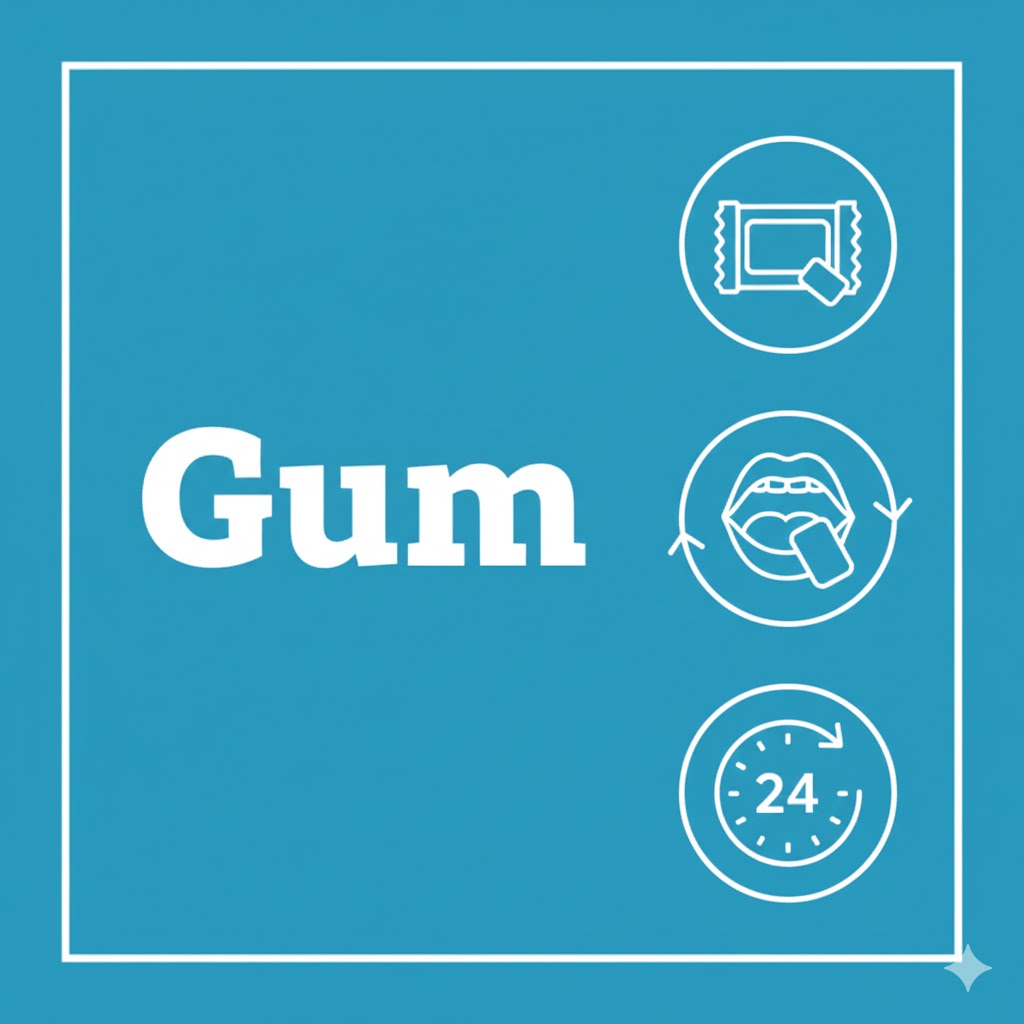
    Nicotine replacement therapies (NRT) are safe and effective, they include :

  • Treatments of tobacco dependence

    Treatments of tobacco dependence

    The firm decision to quit smoking is a necessary first step, but the path to lasting abstinence requires more than willpower alone. Cigarette addiction is a chronic condition, and treating it effectively demands a sophisticated, two-pronged approach that targets both the physical craving and the ingrained behaviors. Thankfully, science has provided a robust arsenal of medications and support strategies.

    Effective Medications:

    The physical aspect of nicotine dependence is addressed through pharmacological treatments that work on the brain’s neurochemistry.

    Nicotine Replacement Therapy (NRT): The most familiar approach, NRT works by delivering clean, controlled doses of nicotine without the thousands of toxic chemicals found in tobacco smoke. This helps to alleviate the acute physical withdrawal symptoms. NRT comes in various forms, including patches (for a steady, all-day supply), gums, lozenges, inhalers, and mouth sprays (for fast relief during intense cravings). Combining a long-acting product, like the patch, with a short-acting product, such as the gum or lozenge, is often the most effective way to manage both basal cravings and breakthrough urges.

    Prescription Medications: Three prescription medications are highly effective.
    Varenicline, often considered a first-line therapy, works by partially activating the same nicotine receptors in the brain. This dual action reduces both withdrawal symptoms and the satisfaction or “reward” derived from smoking a cigarette, making smoking less appealing.
    Bupropion, an antidepressant originally, works on different brain chemicals (dopamine and norepinephrine) to help lessen the symptoms of withdrawal.
    Cytisine, a plant-based alkaloid, is also a highly effective and increasingly utilized alternative that acts similarly to varenicline, and is available in many, but not all, countries.

    Behavioral Support:

    While medication handles the physical dependence, psychological and behavioral support is crucial for addressing the years of habits, routines, and emotional associations linked to smoking. This support provides the tools necessary to navigate life without tobacco.

    Cognitive Behavioral Therapy (CBT): CBT helps patients identify the specific triggers—the morning coffee, a stressful meeting, a social setting—that lead to smoking. A therapist works with the individual to develop tailored coping mechanisms and strategies to break these conditioned responses and prevent relapse.

    Motivational Interviewing (MI): This client-centered counseling style is particularly useful for smokers who are ambivalent or uncertain about quitting. MI avoids confrontation and instead uses a collaborative approach to help the person explore their own reasons for change, building intrinsic motivation and confidence in their ability to succeed.

    The Synergy of Combined Treatment:

    The consensus among health professionals is clear: combining medication with behavioral support offers the highest chance of long-term success. Medication tackles the neurobiological drive, and support addresses the psychological and behavioral patterns. Used together, the two methods provide a protective shield that is significantly stronger than either approach used alone. Studies suggest that this combined therapy can almost double the odds of successfully quitting compared to an unaided attempt.

    Addressing Common Reservations About Medications:

    Despite the clear evidence, many smokers hesitate to use cessation medication, often due to persistent myths.

    Objection: “If I really wanted to quit, I could do it with willpower alone.”

    Response: This objection misunderstands the nature of addiction. Nicotine dependence is a complex, chronic condition involving neurochemical changes, not a failure of character. Medication helps correct the chemical imbalance, leveling the playing field so willpower has a real chance to work. Only a small fraction of unaided attempts are successful in the long term.

    Objection: “The side effects of the medication are more dangerous than smoking.”

    Response: This is unequivocally false. Smoking exposes the body to thousands of toxins and carcinogens, causing cancer, heart disease, and lung disease. The approved cessation medications, while they may have minor side effects (like nausea or vivid dreams), are used for a short, therapeutic duration and are profoundly safer than continuing to smoke.11 Nicotine in NRT, for example, is delivered without the harmful combustion products that cause the vast majority of tobacco-related illness. Nicotine itself does not cause cancer.

    Accessing Support Beyond the Clinic Walls:

    Effective support is increasingly accessible through various channels.

    Helplines and Quitlines: In many regions, specialized telephone helplines offer free, confidential, one-on-one counseling provided by trained cessation specialists. They are a convenient and highly effective form of behavioral support.

    Group Therapy: Quitting in a group setting can provide a sense of community, shared experience, and accountability, significantly boosting motivation and offering invaluable peer support.

    Online Interventions and Apps: Modern technology has introduced apps and online programs that provide structure, tracking, daily tips, and virtual coaching, offering flexible support that can be accessed anytime and anywhere.

    The Role of Novel Nicotine Products:

    The emergence of e-cigarettes (vaping), heated tobacco products (HTPs), and nicotine pouches has introduced a new dynamic to the quitting conversation. These products are generally seen as less harmful than traditional combustible cigarettes because they eliminate combustion and thus reduce exposure to most toxins.

    E-cigarettes (Vaping): Some regulatory bodies now recommend e-cigarettes as a tool for smoking cessation. The evidence shows that, when used as a complete replacement for cigarettes, nicotine-containing e-cigarettes are more effective than NRT in helping smokers quit. However, health professionals caution that the goal must be complete nicotine cessation, not dual use (smoking and vaping), and the long-term health effects of vaping remain under study.

    Heated Tobacco and Nicotine Pouches: These products are part of the “harm reduction” spectrum. HTPs heat tobacco instead of burning it, and nicotine pouches contain no tobacco leaf, only nicotine and flavorings. While they reduce exposure to some toxicants compared to smoking, they are still addictive nicotine delivery systems. Their role in smoking cessation is debated, but they are often viewed by experts as a less desirable path than using approved medication, which has a clear track record and a defined endpoint for use.

    The most successful treatment is one that is chosen in consultation with a healthcare provider and tailored to the individual’s level of dependence and personal circumstances and preferences, combining medications with behavioral strategies.


    Use the ‘Comments’ field below to share your experience or to suggest improvements to this page.