Tag: electronic cigarette

  • E-cigarettes to quit smoking

    E-cigarettes to quit smoking

    Electronic cigarettes (e-cigarettes or vapes) are an alternative to traditional cigarettes and a tool to help smokers quit.


    What are e-cigarettes?

    E-cigarettes are devices that heat a liquid (usually containing nicotine, flavorings, and other chemicals) to produce an aerosol that is inhaled. Unlike conventional cigarettes, they do not burn tobacco and therefore do not produce tar or carbon monoxide—two of the most harmful components of cigarette smoke. The aerosol still contains substances that can affect health, although at much lower levels than cigarette smoke.


    How effective are e-cigarettes for quitting smoking?

    Evidence suggests that e-cigarettes can help some smokers quit, particularly when compared to no support or to traditional nicotine replacement therapies. Clinical trials have shown that smokers using nicotine-containing e-cigarettes are more likely to quit than those using nicotine patches or gum.

    Behavioral support—such as counseling or structured quit programs—significantly improves success rates when combined with e-cigarettes.


    Who should consider using e-cigarettes?

    E-cigarettes may be appropriate for smokers who are looking for an alternative source of nicotine with fewer toxic exposures, they are not recommended for non-smokers.


    How to use e-cigarettes effectively to quit

    First, choose a device, flavor and nicotine level that adequately replaces your cigarette and prevent cravings. If the nicotine dose is too low, you may relapse to smoking. Take our test to determine the nicotine strength you need in your e-liquid.

    Second, set a clear goal to quit smoking completely. Some people switch from traditional cigarettes to e-cigarettes within a few days or weeks. Others, however, may need to use both e-cigarettes and cigarettes (dual use)for a while before they can quit smoking completely, which is perfectly normal.

    Third, use the e-cigarette regularly to prevent and manage cravings, rather than waiting until urges become overwhelming.

    Fourth, combine vaping with behavioral strategies. Identify triggers, change routines, and develop coping mechanisms, just as you would with any quit attempt.


    How long should e-cigarettes be used after quitting?

    There is no “ideal” duration; some people use e-cigarettes as a temporary solution, while for others, they replace cigarettes and become a permanent habit.

    Gradual reduction in frequency or nicotine strength is not recommended if you still experience nicotine withdrawal symptoms when you reduce. Some individuals may need long-term use at a sufficient dosage, particularly those with a strong dependence on nicotine.

    The basic principle is to take a sufficient dose of nicotine for a long enough period to avoid withdrawal symptoms and prevent a relapse into smoking.


    Reference:

    Lindson N, Livingstone-Banks J, Butler AR, McRobbie H, Bullen CR, Hajek P, Wu AD, Begh R, Theodoulou A, Notley C, Rigotti NA, Turner T, Fanshawe T, Hartmann-Boyce J. Electronic cigarettes for smoking cessation. Cochrane Database of Systematic Reviews 2025, Issue 11. Art. No.: CD010216. DOI: 10.1002/14651858.CD010216.pub10.


  • Choosing E-Liquid Flavors

    Choosing E-Liquid Flavors

    To quit smoking using an e-cigarette, it’s crucial to find a flavor that suits you. Choosing an e-liquid with the right flavor can make the difference between successfully quitting and relapsing. In this article, we examine the needs of recent and long-term ex-smokers, explore the pros and cons of the main flavor categories, and explain why it’s essential to test flavors before buying an e-liquid.


    The Main E-Liquid Flavor Categories

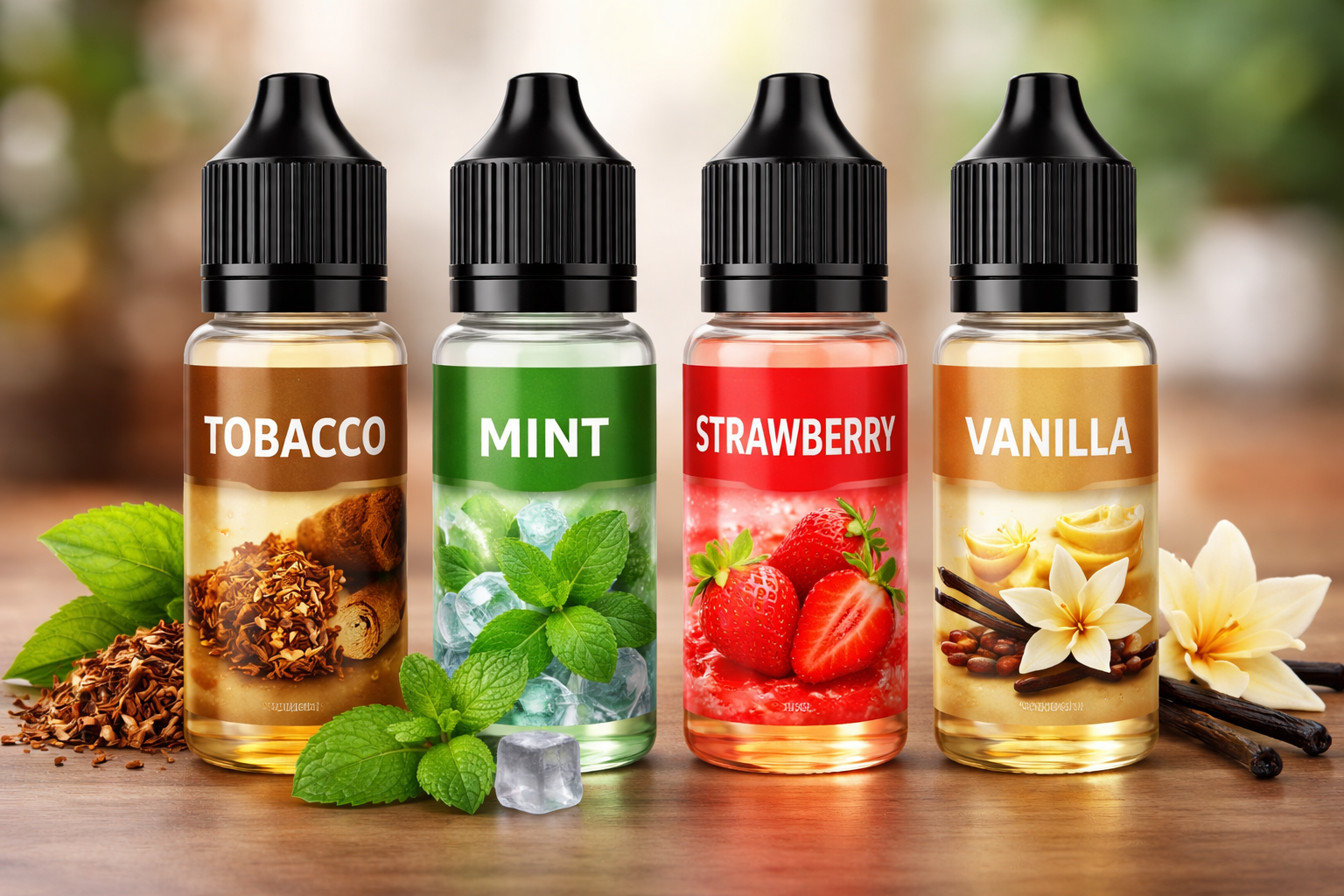
    Tobacco Flavors

    Tobacco flavors are often the first choice for smokers transitioning to vaping because they closely mimic the taste of traditional cigarettes. This familiarity can make the transition smoother and reduce the psychological gap between smoking and vaping. However, these flavors are not always as rich or satisfying as real tobacco, and some users find them disappointing after a short time. In addition, continuing to use tobacco flavors may prolong the attachment to smoking, which can slow down the process of fully moving away from cigarettes.


    Mint and Menthol Flavors

    Mint and menthol flavors offer a fresh sensation that many smokers appreciate, especially those who previously smoked menthol cigarettes. These flavors also provide a stronger throat hit, which helps replicate part of the smoking experience. On the downside, mint flavors can become overpowering with frequent use, and the range of variations is more limited compared to other categories such as fruit or dessert flavors.


    Fruit Flavors

    Fruit flavors are among the most popular choices due to their wide variety and refreshing taste. They can range from simple single-fruit options to complex blends, making them suitable for all-day vaping. Importantly, they help create a clear break from the taste of cigarettes, which can support long-term smoking cessation. However, for heavy smokers at the beginning of their journey, fruit flavors may feel too light or insufficiently satisfying. Some products can also taste overly sweet or artificial, depending on their formulation.


    Dessert and Sweet Flavors

    Dessert flavors, such as vanilla, custard, or caramel, are rich and indulgent and can provide a high level of satisfaction. They may also help compensate for sugar cravings that sometimes appear after quitting smoking. These flavors are particularly appreciated by experienced vapers who are looking for variety and enjoyment. However, they can feel heavy over time and may quickly lead to flavor fatigue. For beginners, they are not always the best starting point, as their intensity can be overwhelming.


    Choosing the Right Flavor for Your Profile

    Beginner Vapers (Quitting Smoking)

    For individuals who are just starting to vape with the goal of quitting smoking, familiarity and simplicity are essential. Tobacco flavors or menthol options, especially for those who previously smoked menthol cigarettes, can ease the transition and make the experience more comfortable. Choosing flavors that are not overly sweet or complex helps maintain consistency during the early stages. Over time, as the reliance on cigarettes decreases, gradually experimenting with fruit flavors can help create distance from tobacco and support long-term success.


    Experienced Vapers (Avoiding Relapse)

    For ex-smokers who have already transitioned away from smoking, the challenge becomes maintaining satisfaction and preventing boredom and late relapse. Relying exclusively on tobacco flavors is generally not recommended at this stage, as it can maintain a connection with past smoking habits. Instead, rotating between fruit and dessert flavors and exploring more complex combinations can keep the experience engaging. This diversity plays an important role in reducing the risk of relapse by ensuring that vaping remains enjoyable and fulfilling.

    According to our own survey of long-term vapers (former smokers who had been vaping for at least 5 years), 26% used fruit flavors, 18% used tobacco flavors, 14% used mint/menthol flavors, and the next most popular flavors were vanilla, coffee, RY4, and caramel (3–5% each).(1)


    The Importance of Testing Flavors Before Buying

    Choosing an e-liquid based solely on its description can be misleading, as taste is highly subjective. A flavor that works well for one person may be unpleasant for another. Testing flavors in a specialty store (vape shop) allows users to try different options before committing to a purchase, reducing the risk of disappointment. It also provides the opportunity to compare several flavors in a short time and to receive personalized advice from knowledgeable staff. Many users discover their preferred “all-day flavor” through this process, which can be a key factor in successfully quitting smoking.


    There is no single flavor that works for everyone. Preferences evolve over time, and what feels satisfying at one stage may change later. Being open to experimentation, switching flavors when necessary, and keeping some variety can help prevent fatigue and maintain motivation. Taking the time to test flavors in a vape shop is a simple but effective step that can significantly improve the chances of quitting smoking for good.


    Use the ‘Comments’ field below to suggest improvements to this article, and to share your experience.


    Reference:

    Jean-François Etter, An 8-year longitudinal study of long-term, continuous users of electronic cigarettes, Addictive Behaviors, Volume 149, 2024, 107891, ISSN 0306-4603, https://doi.org/10.1016/j.addbeh.2023.107891.


  • JUUL

    JUUL

    When the electronic cigarette market was still experimental, a small USB-shaped device launched in 2015 quickly transformed the landscape. That device was JUUL. Within a few years it dominated the American vaping market, triggered fierce public health debates, and became one of the most controversial nicotine products ever sold.

    Today JUUL sits at the center of two competing narratives. One sees it as a harm-reduction tool capable of helping adult smokers move away from combustible cigarettes. The other views it as the symbol of a youth vaping epidemic. Understanding its role requires looking closely at how the product works, what it contains, and what the scientific and regulatory evidence actually shows.


    What JUUL is

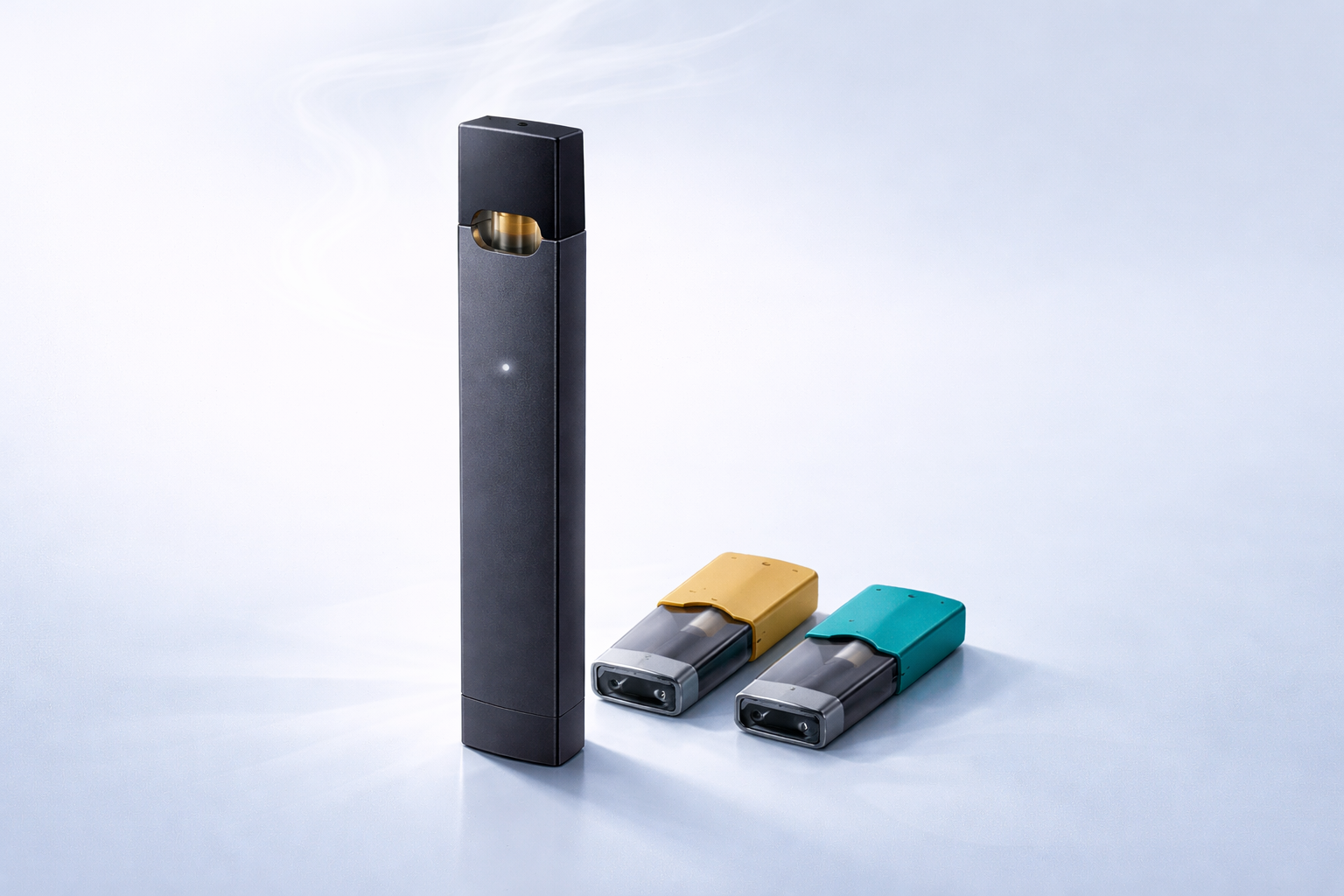
    JUUL is a closed-system electronic cigarette consisting of two main components: a rechargeable battery device and a disposable cartridge known as a JUULpod. The pod contains a liquid made of nicotine, propylene glycol, glycerin and flavorings. A small heating element inside the device vaporizes the liquid, producing an aerosol that can be inhaled.

    JUUL involves no combustion. Instead, the device generates a vapor containing nicotine and other substances. This difference is central to the harm-reduction argument often made by supporters of vaping: many of the toxic chemicals found in cigarette smoke are created during combustion.

    The design of JUUL was intentionally minimalist. Roughly the size of a USB flash drive, the device can be charged directly using a small USB charger. Its discreet appearance and simplicity helped distinguish it from earlier, bulkier e-cigarettes.

    One technical feature set JUUL apart from many earlier vaping products: the use of nicotine salts. This formulation allows relatively high concentrations of nicotine to be inhaled with less throat irritation than traditional “free-base” nicotine liquids. As a result, the device can deliver nicotine in a way that more closely resembles the sensation of smoking a cigarette.


    How the device is used

    Using a JUUL is intentionally straightforward. After charging the device, the user inserts a cartridge into the top of the battery. The device has no buttons or settings. It activates automatically when the user inhales through the mouthpiece, producing vapor almost immediately.

    Each cartridge contains a fixed quantity of liquid and typically lasts several hundred puffs. For many users this corresponds roughly to the nicotine intake of a pack of cigarettes, although individual consumption patterns vary widely.

    The closed-pod system means that users do not refill the device manually. When the liquid is finished, the cartridge is replaced.


    Models and product evolution

    Compared with other vaping brands, JUUL has released relatively few device models. The company has generally focused on refining a simple and recognizable design rather than offering numerous variations.

    The original JUUL device, introduced in 2015, established the format that would become widely imitated: a slim rectangular body, a magnetic charger and a cartridge that snaps into place at the top.

    A later version known as the JUUL C1 added Bluetooth connectivity. Through a smartphone application, users could locate a misplaced device or monitor usage patterns. The feature was presented as a way to help users track nicotine consumption.

    More recently the company introduced JUUL2, a redesigned device with modified pods intended to reduce leakage and improve performance. Availability of this newer generation varies by market, and in many regions the original system remains the most widely recognized version.


    Nicotine concentrations

    One of the distinctive characteristics of JUUL products has been their relatively high nicotine content. In the United States the most common pods contain nicotine concentrations of 5 percent or 3 percent by weight, corresponding to roughly 59 mg/mL and 35 mg/mL respectively.

    These levels are significantly higher than those found in many e-cigarette liquids. The use of nicotine salts makes these concentrations easier to inhale without the harsh throat sensation that would typically accompany such levels.

    Regulations in other regions impose stricter limits. In the European Union, for example, nicotine concentrations in vaping liquids are capped at 20 mg/mL under the Tobacco Products Directive. JUUL pods sold in those markets therefore contain lower nicotine levels than their American counterparts.


    Flavors

    Flavors played a major role in the early growth of JUUL. In its first years on the market the company offered a wide range of varieties, including fruit and dessert flavors. These products quickly became some of the most popular options among users.

    However, flavors also became the focus of intense criticism from public health advocates and regulators, who argued that sweet varieties were particularly appealing to adolescents.

    In response to mounting regulatory pressure, JUUL removed most flavored pods from the U.S. market. The products currently authorized there are primarily tobacco-flavored and menthol pods, a restriction intended to reduce the appeal of the product to young people while still offering alternatives to adult smokers.


    Can JUUL help smokers quit?

    Whether JUUL helps smokers stop smoking remains a subject of debate. Some studies indicate that certain smokers switch completely from cigarettes to vaping products, thereby reducing exposure to the toxic substances produced by burning tobacco.

    Regulators in the United States concluded that evidence submitted by the company showed that some adult smokers successfully transitioned away from cigarettes when using the device. On that basis, the product was considered to have potential benefits for smokers who would otherwise continue to use combustible tobacco.

    At the same time, JUUL has never been approved as a smoking-cessation medicine. Unlike nicotine replacement therapies such as patches or gums, it is not marketed as a therapeutic product designed to treat nicotine dependence.


    Youth vaping and the controversy surrounding JUUL

    The rise of JUUL coincided with a sharp increase in youth vaping in the United States during the late 2010s. Within a few years the brand captured a large share of the American e-cigarette market, and surveys reported growing experimentation among adolescents.

    Several factors likely contributed to the product’s popularity among teenagers. The discreet design made it easy to conceal, the nicotine delivery was strong compared with earlier vaping devices, and early marketing campaigns made heavy use of social media imagery that critics said resembled lifestyle advertising.

    The surge in youth use triggered investigations, lawsuits and regulatory action. The company eventually agreed to large financial settlements with several U.S. states over allegations related to youth marketing.

    These events turned JUUL into a central figure in the debate over vaping and youth nicotine use.


    The gateway question

    A key issue in that debate is whether vaping products act as a gateway to cigarette smoking among young people. Some studies have observed that adolescents who experiment with e-cigarettes are statistically more likely to try cigarettes later.

    Researchers disagree about how this relationship should be interpreted. Some argue that nicotine exposure may increase the likelihood of later tobacco use. Others point out that the same underlying factors—such as sensation-seeking behavior or social influences—may lead young people to experiment with multiple products.

    Because of these competing explanations, the gateway hypothesis remains a subject of ongoing scientific discussion rather than a settled conclusion.


    Public health impact

    Assessing JUUL’s overall impact on public health requires balancing potential benefits against possible harms. On one side of the equation is the possibility that some smokers may switch from combustible cigarettes to a product that does not involve burning tobacco. On the other side are concerns about youth nicotine addiction and long-term dependence on vaping products.

    Public health authorities increasingly evaluate nicotine products at the population level, asking whether the number of smokers who move away from cigarettes outweighs the number of non-smokers who begin using nicotine.

    The answer may vary across countries and over time as regulations, marketing practices and social attitudes change.


    FDA authorization in the United States

    JUUL’s regulatory path in the United States has been complex. After several years of review, the U.S. Food and Drug Administration authorized the marketing of the JUUL device and certain pods through its premarket tobacco product application process.

    The authorization covers the device together with tobacco-flavored and menthol pods in specific nicotine strengths. According to the FDA, the available evidence indicated that these products could be considered “appropriate for the protection of public health,” a legal standard that weighs potential benefits for adult smokers against the risks to youth.

    The agency emphasized that this authorization does not mean the product is safe. It simply allows the company to market the product legally under strict regulatory oversight, with continued monitoring of youth use and marketing practices.


    A product that reshaped the nicotine debate

    Few consumer products have had such a rapid and polarizing effect on the nicotine market. JUUL reshaped the e-cigarette industry, accelerated the debate over tobacco harm reduction and forced regulators to confront difficult trade-offs between protecting young people and providing alternatives for adult smokers.

    Over a decade after its introduction, JUUL remains both a symbol of the promise of reduced-risk nicotine products and a reminder of the complex challenges they pose for public health.


    Use the ‘Comments’ field below to share your experience with JUUL or to suggest improvements to this article.

  • Health effects of e-cigarettes

    Health effects of e-cigarettes

    E-cigarettes are often presented as a safer alternative to traditional cigarettes. But how do they truly compare across the spectrum of our health? Let’s delve into the known effects, always drawing comparisons to the harms of combustible tobacco.

    Sensory Experience: Taste and Throat Hit

    One of the initial appeals of e-cigarettes lies in their diverse flavor profiles, ranging from tobacco to mint to fruits to desserts, a stark contrast to the often harsh, smoky taste of traditional cigarettes. E-cigarettes offer a “throat hit” that mimics smoking, it’s produced by nicotine. Traditional cigarettes deliver this sensation through the burning of tobacco and the inhalation of hot smoke and tar.

    Effects on Breath and Oral Health

    Switching to e-cigarettes generally leads to an improvement in breath odor compared to the persistent stale smell associated with cigarette smoking. The tar and chemicals in traditional cigarettes famously stain teeth and contribute to gum disease and halitosis (bad breath). E-cigarettes still contain nicotine, xxx.

    Lungs and Respiratory System

    Traditional cigarettes are notorious for their devastating impact on the lungs, causing chronic bronchitis, emphysema, and a dramatically increased risk of lung cancer. They introduce thousands of chemicals, including known carcinogens, directly into the delicate lung tissue. E-cigarettes, while free of tobacco combustion byproducts like tar and carbon monoxide, are not harmless to the lungs. The heated aerosols contain xxx. These can cause xxx.

    Heart and Circulatory System

    Traditional cigarettes pose significant risks to the heart and circulatory system. This chronic stress on the cardiovascular system can lead to an increased risk of heart attacks and strokes. Traditional cigarettes compound this risk with carbon monoxide, which reduces the blood’s oxygen-carrying capacity, and other chemicals that promote atherosclerosis (hardening of the arteries). While e-cigarettes eliminate carbon monoxide, xxx.

    Brain:

    Addiction

    Mood

    Nicotine’s impact on neurotransmitters can affect mood regulation, potentially contributing to or worsening feelings of depression and anxiety, rather than alleviating them.

    Cancer Risk

    Traditional cigarettes are a leading cause of cancer, responsible for cancers of the lung, throat, mouth, esophagus, bladder, and many others, due to the myriad of carcinogens produced during combustion. E-cigarettes, by contrast, do not involve combustion and therefore eliminate exposure to many of the tar and tobacco-specific carcinogens found in traditional smoke. However, xxx. The full extent of this risk is still under investigation.

    Appetite and Weight Gain

    Smoking traditional cigarettes is known to suppress appetite and increase metabolism, leading to a tendency for smokers to weigh less than non-smokers. Consequently, quitting smoking often results in weight gain, a significant concern for many who are trying to quit. Nicotine in e-cigarettes also has appetite-suppressing effects. Therefore, the overall health benefits of avoiding traditional cigarettes far outweigh potential concerns about weight changes.

    Effects on Mothers: Fertility, Pregnancy, and Breastfeeding

    Traditional cigarette smoking poses serious risks during conception, pregnancy, and breastfeeding. For fertility, smoking can negatively impact both male and female reproductive health, making conception more difficult. During pregnancy, exposure to smoke can lead to complications such as premature birth, low birth weight, and developmental issues in the fetus. During breastfeeding, nicotine passes into breast milk, which can affect the infant’s sleep patterns, heart rate, and overall well-being. While traditional cigarettes introduce thousands of additional harmful chemicals beyond nicotine, the presence of nicotine in e-cigarettes still makes them a significant concern for pregnant and breastfeeding mothers.

    Therapeutic Effects of Nicotine on Certain Diseases

    Interestingly, nicotine itself, separate from the harmful delivery mechanisms, has shown some intriguing therapeutic potential in specific contexts. Research has explored its effects on cognitive function, attention, and memory, leading to studies on its potential role in treating conditions like Parkinson’s disease, Tourette’s syndrome, and even some aspects of Alzheimer’s disease. The mechanism involves nicotine’s interaction with specific receptors in the brain. However, it is crucial to emphasize that these are areas of ongoing scientific investigation, typically involving controlled doses of pharmaceutical-grade nicotine, not through smoking or vaping. The potential benefits are being studied in a medical context, completely detached from recreational use.


  • Nicotine salts

    Nicotine salts


    Here is what vapers and smokers need to know about nicotine salts in e-liquids, what “nic salts” are, the difference between protonated nicotine and freebase nicotine, why some e-liquids contain nicotine salts, who should use them and who should not, the advantages and disadvantages of e-liquids containing nicotine salts, how they change the vaping experience, and the risks and precautions for use.

    Nicotine salts, often just called “nic salts,” have dramatically changed the landscape of vaping. If you’re currently smoking or vaping, you’ve likely heard of them, especially if you’re looking for a more satisfying nicotine experience.


    What Exactly Are Nicotine Salts?

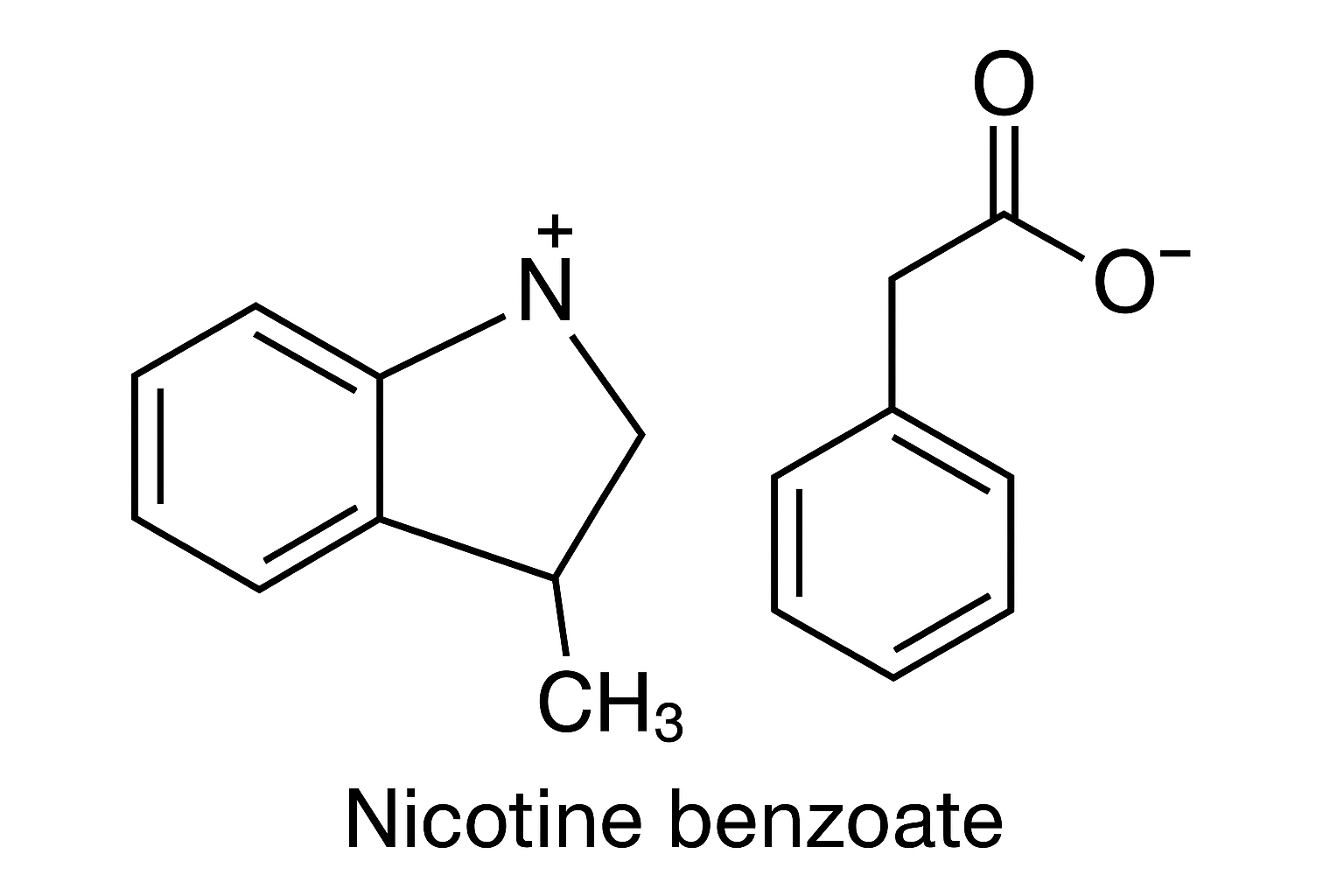
    For use in e-liquids, manufacturers modify the chemical structure of the standard nicotine (called freebase nicotine) by adding an organic acid—commonly benzoic acid. This chemical reaction creates the nicotine salt.

    The nicotine found in traditional nicotine is also extracted from tobacco and the chemically purified, it is called nicotine base or freebase.

    The crucial difference lies in the chemistry:

    FeatureFreebase Nicotine (Traditional E-liquid)Nicotine Salts (Nic Salt E-liquid)
    Chemical FormPure NicotineNicotine bound to an acid (e.g., Benzoate)
    pH LevelHigher, alkaline, pH=8Lower, acidic, pH=5-6
    Vapor FeelHarsh at high concentrationsSmooth at high concentrations
    AbsorptionAbout the sameAbout the same
    Best Used WithHigh-wattage, sub-ohm devicesLow-wattage, pod-style devices

    The Chemical Key: Freebase vs. Protonated Nicotine

    The terms freebase nicotine and protonated nicotine (which is what a nic salt is) refer to the chemical state of the nicotine molecule.

    • Freebase Nicotine: This is nicotine in its purest, deprotonated form. Because it has a high pH level (it’s alkaline), it becomes very harsh on the throat at high concentrations (typically above 12 mg/mL). The higher the concentration, the harsher the “throat hit.” This harshness means traditional high-nicotine e-liquids are often unpleasant.
    • Protonated Nicotine (Nic Salts): By adding an acid like benzoic acid, the nicotine molecule becomes protonated. This lowers the pH, making the nicotine vapor significantly smoother on the throat, even at high concentrations (up to 50 mg/mL). This smoothness is the biggest game-changer. It allows vapers to use high concentrations of nicotine without the painful throat hit.

    Why E-Liquids Contain Nicotine Salts

    The main reason manufacturers use nicotine salts is to deliver a higher nicotine dose in a smaller volume of vapor and with fewer puffs, resulting in a better user experience and less strain on the lungs from the substances contained in the vapor. The goal is to create an experience that is closer to that of smoking cigarettes and to deliver a satisfying amount of nicotine with fewer puffs, whereas vaping conventional e-liquids requires more puffs.

    • Mimics the Smoking Experience: The lower pH of nic salts leads to a easier inhalation, which is crucial for satisfying the immediate craving that ex-smokers often experience.
    • Reduced Vaping: Because nic salts are so effective at satisfying cravings quickly, many users find they don’t have to vape as frequently or as much to feel satisfied.
    • Smoother Vape: The elimination of the harsh throat hit means you can use 50 mg/mL in a small device and find it comfortable, something that would be nearly impossible with freebase nicotine.

    Advantages and Disadvantages of Nicotine Salt E-Liquids

    ✅ Advantages❌ Disadvantages
    Extremely Smooth: Comfortably allows for higher nicotine strengths.Misleading Smoothness: The lack of a harsh throat hit can mask the high nicotine concentration, potentially leading to overconsumption.
    Less frequent vaping: you can obtain a satisfying amount of nicotine in a few puffs, no more need to vape constantlyRequires specific device : Requires low-wattage devices (like pod systems) because high-wattage devices would deliver an overwhelming amount of nicotine.
    Better Flavor:The lower pH of nic salts often allows e-liquid flavors to be purer and less distorted by the taste of the alkaline freebase nicotine.Higher Cost: Nic salt e-liquids are sometimes more expensive than traditional e-liquids.
    Less E-liquid Consumption: Due to the higher strength, you use less e-liquid over time, and you expose your lung to a smaller amount of vapor.

    You also produce less vapor and disturb other people less.
    Nicotine Tolerance: Some users may develop nicotine tolerance more quickly due to the higher concentration in the e-liquid.

    Who Should Use Them and Who Should Not?

    👍 You Should Consider Nicotine Salts If:

    • You are a smoker who is new to vaping: and you want a easier, smoother inhalation, while still obtaining a satisfying amout of nicotine.
    • You’re a Heavy Smoker looking for an alternative. Nic salts can provide the high nicotine strength and quick satisfaction you need to make the switch successful.
    • You Want a Stealthier, Smaller Device. Nic salts work best in compact, low-power pod systems, which are discreet and easy to carry.
    • You Dislike the Harshness of freebase e-liquids at higher strengths.
    • You have a lung or throat disease like COPD or emphysema, you nevertheless want to vape but you want to inhale as little vapor as possible.

    👎 You Should Not Use Nicotine Salts If:

    • You Are a Casual or Light Smoker/Vaper already using 6 mg/mL or less. Nic salts may deliver too much nicotine for your needs.
    • You Use High-Wattage Devices (Sub-Ohm tanks). Nic salt concentrations are too high for powerful devices and can lead to immediate nausea or nicotine sickness.
    • You Are Trying to Taper Down Your Nicotine Intake. Starting on a high dose of nic salts may make it harder to reduce your dependency later.

    Risks and Precautions for Use ⚠️

    The main risk associated with nic salts comes from their effectiveness.

    1. Risk of Nicotine Overconsumption: The primary precaution is to be mindful of the high concentration. Because they are so smooth, it’s easy to inhale significantly more nicotine than you are used to without feeling the warning signs of a harsh throat hit. Pay attention to how you feel.
      • Symptoms of excessive nicotine intake include dizziness, nausea, headaches, and sweating. If you feel this, stop vaping immediately.
    2. Device Compatibility: avoid using high-strength nic salt e-liquids (20 mg/mL and above) in large, high-power vaping mods or sub-ohm tanks. They are designed exclusively for low-wattage Mouth-to-Lung (MTL) devices, where the vapor production is limited.

    If you’re looking for a powerful tool to transition away from smoking, nicotine salts offer a highly effective and satisfying path. Just remember to respect their potency and use them in the appropriate device.


    Rate this article by clicking on the desired number of stars:
    1 Star2 Stars3 Stars4 Stars5 Stars (No Ratings Yet)
    Loading...

    Please use the “Comments” field below to share your experience or suggest improvements to this article.

  • Nicotine strength for e-cigs

    Nicotine strength for e-cigs

    It is essential to choose the right nicotine concentration for your e-liquid: here is a brief explanation of how to do this. We have also developed a brief questionnaire to help you choose the nicotine concentration you need.

    What nicotine strength for my e-cigarette?

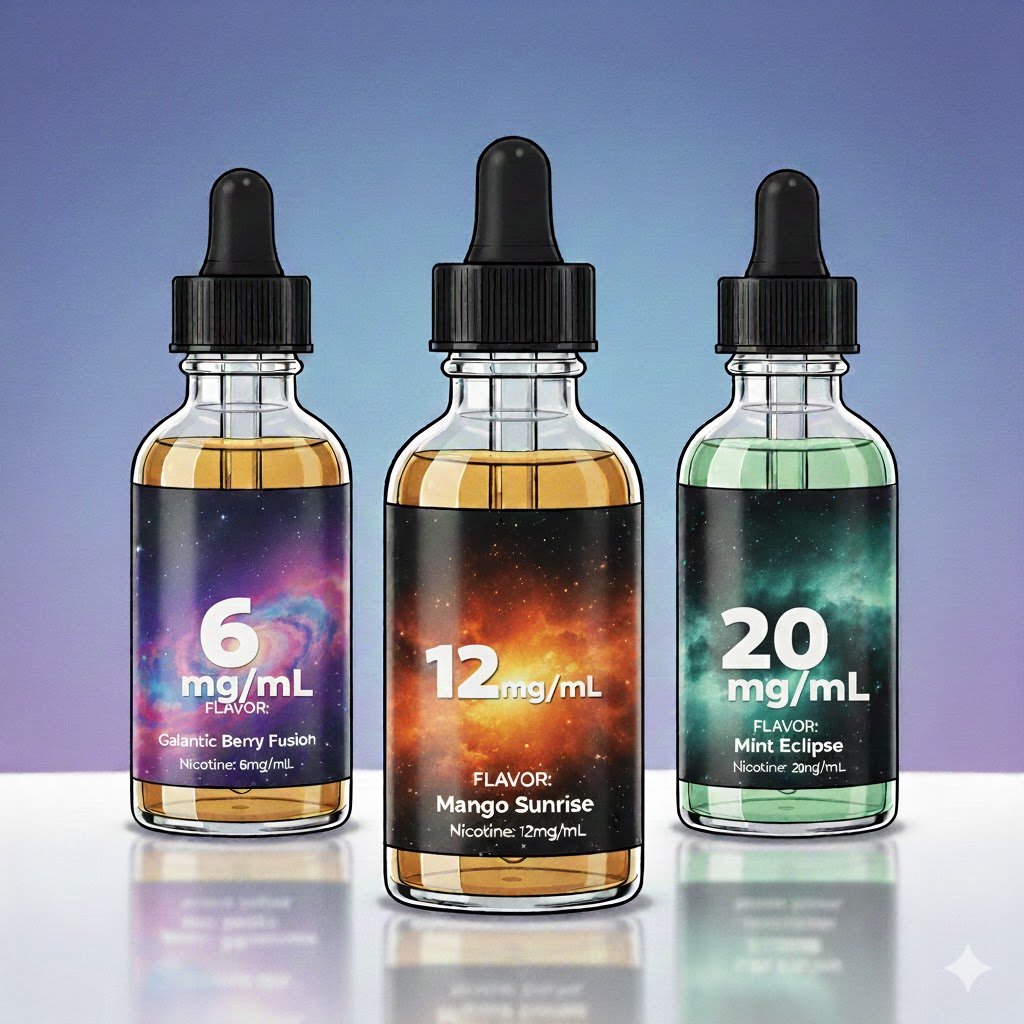
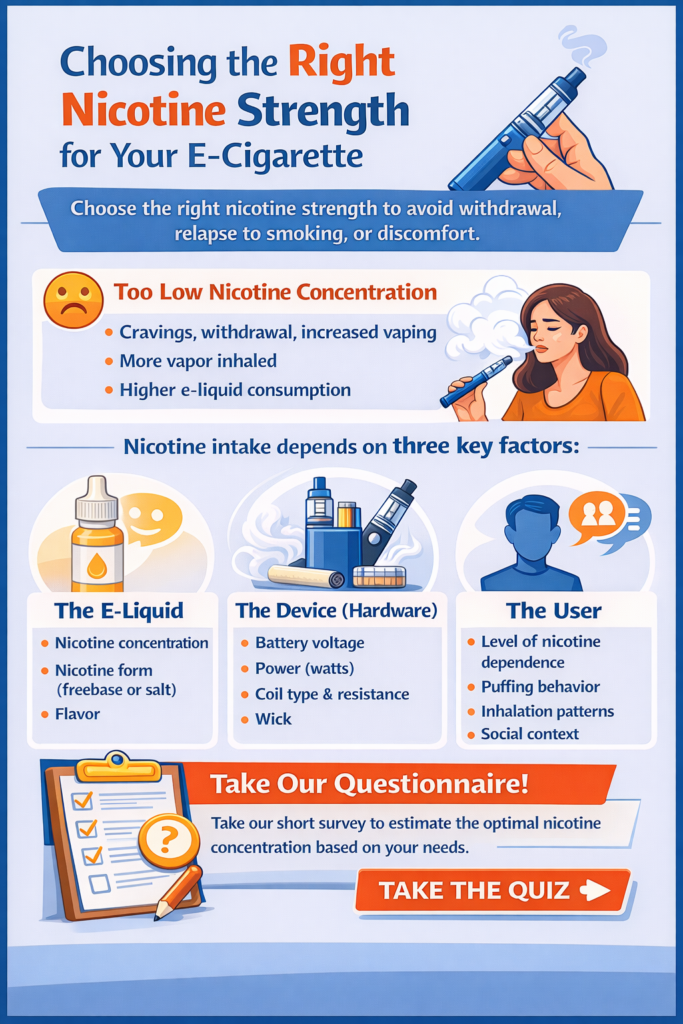
    If the nicotine level in your e-liquid is too low, you may not get enough nicotine, you may experience nicotine withdrawal symptoms and you may start smoking again. In addition, you will expose your lungs to excessive amounts of vapour, as you will vape more to achieve a satisfactory level of nicotine in your blood and brain. You will also need to buy more e-liquid to get the amount of nicotine your brain needs.

    With too high a nicotine level, you will experience throat irritation that will prevent you from inhaling, but there is no risk of overdose, as you will automatically stop inhaling when you have obtained the necessary dose of nicotine or when you feel signs of excessive dosing.

    The amount of nicotine you get from an e-cigarette:

    There is no simple calculation to convert the number of cigarettes you smoked per day into mg/mL (milligrams of nicotine per millilitre of e-liquid), because the amount of nicotine you get from your e-cigarette depends on the interaction of 3 factors, the liquid, the hardware and yourself :

    The liquid:

    • its nicotine concentration,
    • the chemical form of nicotine (salt or freebase),
    • the flavor (people tend to vape more if they like the flavor),
    • the amount of liquid you use per day,

    The hardware:

    • the battery, its tension measured in Volt (V), its duration,
    • the coil, its composition, its resistance (R) measured in Ohm,
    • the power of the device measured in Watt (W)
    • the wick.

    Yourself:

    • your level of nicotine addiction, as your brain acts as a thermostat and regulates the amount of nicotine you need,
    • your behavior: the number, frequency and volume of puffs, the depth of inhalation, how long you hold your breath between inhalation and exhalation,
    • your social interactions (people tend to vape more if they are around other smokers and vapers than if they are around people who disapprove of their vaping).

    A questionnaire to calculate the amount of nicotine you need:

    You can use our short questionnaire to help you calculate the optimal nicotine concentration for your e-liquid, this concentration will be determined by the number of point you obtain. Vapers who successfully quit smoking and answered our questionnaire and obtained :

    • 0-4 points used e-liquids containing 10 mg / mL
    • 5-9 points used e-liquids containing 10-12 mg / mL
    • 10-14 points used e-liquids containing 12 mg / mL
    • 15-19 points used e-liquids containing 16 mg / mL
    • 20-25 points used e-liquids containing 18 mg / mL

    The amount of nicotine you get from smoking a cigarette:

    The amount of nicotine you absorb when smoking a cigarette depends largely on your own behaviour, not just on the characteristics of the cigarette itself. Each manufactured cigarette contains between 6 and 17 milligrams (mg) of nicotine, but smokers only inhale between 1 and 2 mg of nicotine per cigarette. The number of nicotine mg indicated on cigarette packets is not useful, as it is obtained from machines that do not perfectly replicate your own behaviour. As a result, these figures often underestimate the amount you absorb when smoking a cigarette.

    Furthermore, the relationship between the number of cigarettes smoked per day and the concentration of nicotine in the blood is not linear (it does not increase significantly beyond 20 cigarettes per day).Therefore, you cannot use your number of cigarettes per day and the nicotine concentration indicated on your cigarette pack to calculate or deduce the amount of nicotine you absorb each day with your e-cigarette.


    Rate this article by clicking on the desired number of stars:
    1 Star2 Stars3 Stars4 Stars5 Stars (1 votes, average: 5.00 out of 5)
    Loading...

    Please use the “Comments” field below to share your experience or suggest improvements to this article.

  • E-cigarette

    E-cigarette

    For decades, aids to quit smoking were,limited: counseling, and approved medications like nicotine replacement therapy (NRT). The arrival of e-cigarettes—or vaping—has radically complicated that equation, offering smokers a potentially more effective, yet controversial, tool in their cessation journey. The core debate centers on one critical point: are these devices a vital bridge to a smoke-free life, or are they a Trojan horse that risks creating a new generation of nicotine users?

    Efficacy: Vaping vs. Nicotine Medications

    The effectiveness of e-cigarettes for smoking cessation has become the subject of intense international research. The most rigorous systematic reviews, which pool data from multiple randomized controlled trials, now provide strong evidence that nicotine e-cigarettes are more effective than traditional NRT (such as patches, gum, or lozenges) at helping people quit smoking entirely.

    In absolute terms, research suggests that for every 100 people using nicotine e-cigarettes to quit, 8 to 11 people might successfully stop smoking. This superiority is believed to stem from e-cigarettes’ ability to mimic the hand-to-mouth ritual, the throat hit, and the fast nicotine delivery that smokers are accustomed to, addressing both the chemical and behavioral aspects of addiction simultaneously.

    Who Should and Should Not Use E-Cigarettes

    E-cigarettes are not a universally recommended :

    • Who Should Consider Them: E-cigarettes are primarily recommended for adult smokers who want to stop smoking. For this group, switching completely to vaping nicotine is recognized by many health bodies as significantly less harmful than continuing to smoke combustible cigarettes, as it eliminates tar and carbon monoxide.
    • Who Should Not Use Them: The consensus among public health experts is clear: non-smokers, especially young people and never-users of tobacco, should not use e-cigarettes. Nicotine is addictive. Furthermore, pregnant women should rely on licensed NRT products under medical supervision as the primary medication path, although some health guidance suggests vaping is still safer than continuing to smoke during pregnancy.

    The Most Effective Vaping Devices

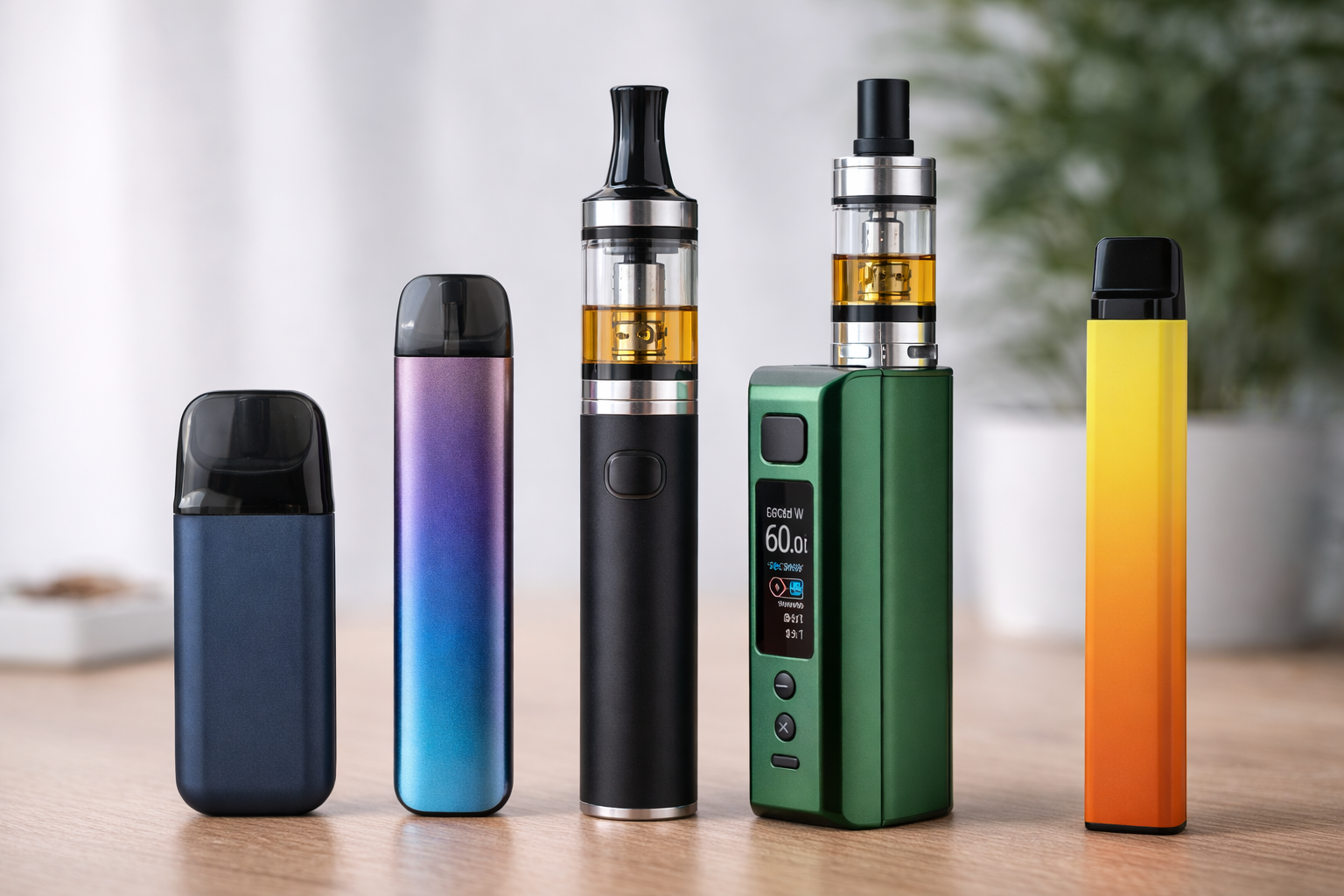
    The efficacy of e-cigarettes depends heavily on the device type. Smokers who use rechargeable systems with higher nicotine concentrations—often pod devices or tank systems—tend to have greater success in quitting. These devices deliver nicotine more effectively and mimic the rapid “nicotine hit” of a traditional cigarette better than other models. The goal is to provide a satisfying nicotine dose that fully suppresses the cravings for tobacco smoke.

    Adverse Effects: What is the Real Risk?

    While vaping is widely considered less harmful than smoking because it eliminates combustion and its resulting toxins (tar, carbon monoxide), it is not harmless. The aerosol contains a variety of potentially toxic substances, although in concentrations much lower than in tobacco smoke.

    The most commonly reported adverse effects are non-serious, such as throat or mouth irritation, cough, nausea, and headache, which often diminish over time. However, the long-term effects of inhaling heated e-cigarette aerosols and flavorings remain under intense study.

    The Absolute Rule: Not One Puff

    The crucial step for any smoker attempting to quit with e-cigarettes is total and immediate cessation of combustible tobacco. Using both e-cigarettes and regular cigarettes, known as dual use, is counterproductive as it increases the risk of relapsing to smoking. Smoking even a few tobacco cigarettes a day can still carry substantial health risks. E-cigarettes should be used as a complete, 100% substitute for all smoked tobacco products. Failure to adhere to a zero-tolerance policy for tobacco smoke significantly diminishes your chances of quitting smoking.

    The Controversy: A Public Health Paradox

    The role of e-cigarettes in public health is fiercely debated. Proponents view them as a game-changing harm reduction tool that saves millions of lives by moving people away from deadly smoke. They point to countries that have embraced vaping and seen rapid declines in smoking rates.

    Critics, however, raise serious public health concerns:

    • Youth Uptake: The appealing flavors and sleek designs of many e-cigarettes have led to alarming rates of use among adolescents who had never smoked.
    • Gateway Effect: There are still concerns that vaping could act as a gateway and increase the likelihood that non-smokers will switch to traditional cigarettes later in life. However, this point is controversial, and not all experts agree that there is a significant gateway effect. They point to the declining prevalence of smoking among young people in countries where vaping among young people is on the rise.
    • Permanent Dependency: There is worry that many successful quitters may remain dependent on the e-cigarette indefinitely, which, while safer than smoking, is not risk-free.

    E-cigarettes present policymakers and individuals with a difficult trade-off: they must weigh the proven health risks of smoking against the uncertain risks of long-term nicotine vaping. For current smokers, however, the emerging scientific consensus offers a pragmatic choice: switching completely to a non-combustible product is far healthier than smoking.


    Use the ‘Comments’ field below to share your experience with e-cigarettes or to suggest improvements to this page.


    Rate this article by clicking on the desired number of stars:
    1 Star2 Stars3 Stars4 Stars5 Stars (1 votes, average: 5.00 out of 5)
    Loading...