The first few days after quitting smoking can feel less like a victory and more like a descent into unusual anger. This sudden and brutal increase in irritability, where a misplaced set of keys or a slow-moving queue is perceived as a personal offense, is one of the most common obstacles on the path to a smoke-free life. Understanding that this “short temper” is a biological side effect of the healing process, rather than a permanent personality change, is the first step toward easing the tension.
The Chemistry of a Quitter’s Temper
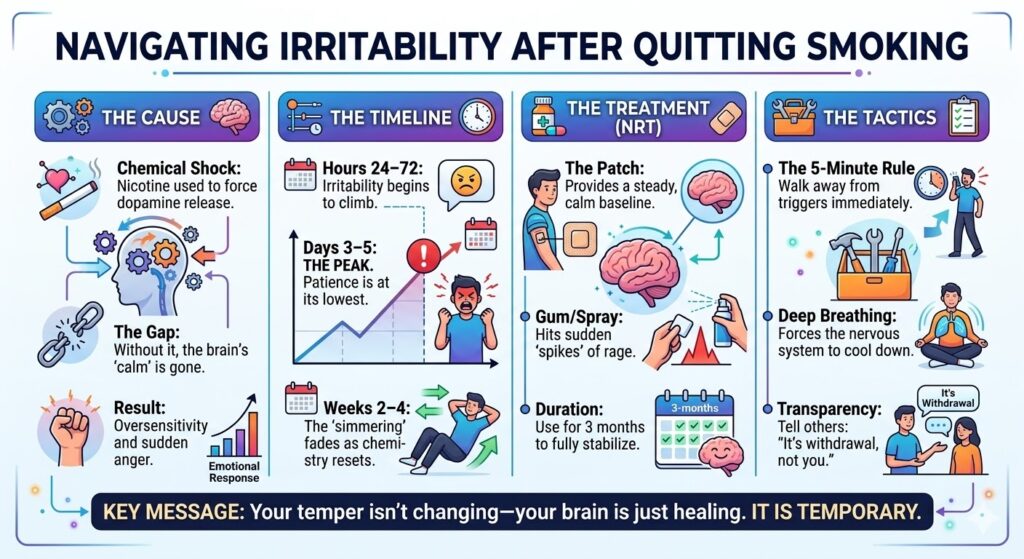
Irritability during the early stages of quitting smoking is largely caused by the brain’s dependence on nicotine. For years, nicotine has stimulated the release of dopamine—the chemical linked to pleasure and relaxation. When nicotine intake suddenly stops, the brain’s reward system experiences a shock. This creates a temporary chemical imbalance that makes the nervous system more sensitive to stress. Without the calming effect of cigarettes, even minor frustrations can trigger impatience or anger.
The Peak and the Plateau
This irritability usually follows a predictable timeline. Symptoms often appear within the first 24 hours after the last cigarette and peak between the third and fifth days, when cravings are strongest and emotional tolerance is lowest. Fortunately, the brain gradually adapts. After about a month, the intensity of anger typically decreases as brain chemistry begins to rebalance. Within a few months, most people find their mood returning to normal, although occasional flashes of frustration may still occur, especially in long-term heavy smokers.
Pharmaceutical Support
Nicotine Replacement Therapy (NRT) can help reduce irritability by preventing the sudden drop in nicotine levels. Products such as patches, gum, or lozenges deliver controlled doses of nicotine without the harmful toxins of smoke. Many experts recommend combining a long-acting patch with a short-acting product like gum or spray to manage sudden cravings. Using these treatments at the proper dose for the recommended period—often around three months—gives the brain time to adjust.
Behavioral Strategies
Alongside medication, simple behavioral strategies can help manage anger. Stepping away from a stressful situation for a few minutes allows the body’s stress response to settle. Deep breathing can also calm the nervous system. Being open with friends, family, or colleagues about temporary withdrawal irritability can encourage understanding and support. Regular exercise is particularly helpful, as it releases tension and provides a healthy outlet for restless energy.
Use the ‘Commets’ field below to share your experience or to suggest improvements to this article.
For many attempting to quit smoking, the sudden inability to focus on a work report, follow a conversation, or even read a paragraph without the mind wandering feels like a permanent cognitive decline. Difficulty concentrating is a hallmark of nicotine withdrawal, yet it is frequently misunderstood as a personal failing rather than a predictable physiological response. Understanding the mechanics behind this mental haze is the first step in navigating through it without reaching for a pack.
The Chemistry of Distraction
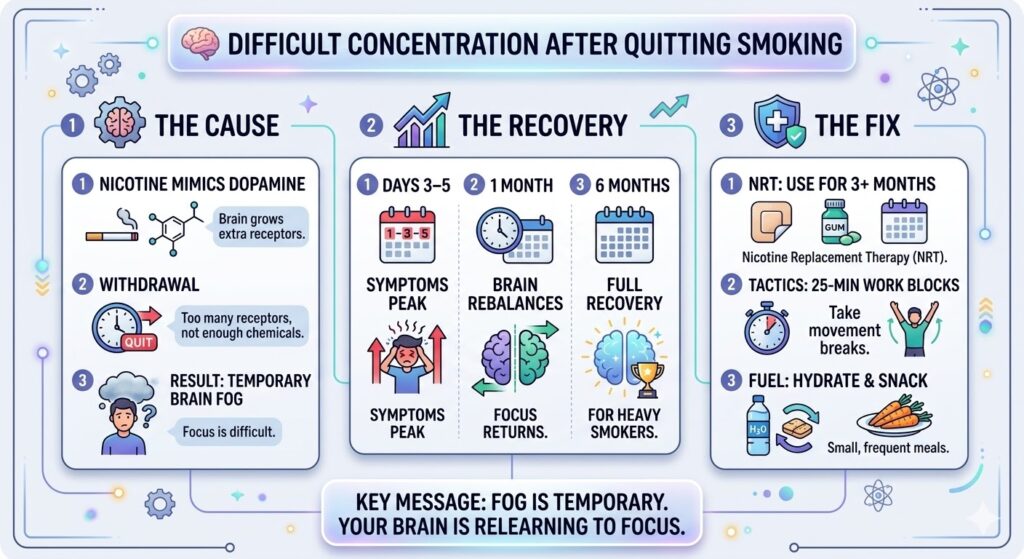
Nicotine is a potent psychoactive substance that, over time, rewires the brain’s chemistry. When a person smokes regularly, nicotine binds to acetylcholine receptors, triggering the release of neurotransmitters like dopamine and norepinephrine. These chemicals sharpen attention, improve memory, and create a sense of alertness. The brain eventually adapts to this constant chemical prodding by reducing its own natural production of these neurotransmitters and increasing the number of receptors waiting for the next hit. When nicotine intake stops abruptly, the brain is left with an overabundance of nicotinic receptors and a shortage of the chemicals needed to activate them. The result is a temporary communication breakdown in the neural pathways responsible for focus and executive function. It is not that the capacity to think has vanished; rather, the brain’s engine is sputtering as it learns to run on its own fuel again.
Mapping the Timeline of Recovery
The timeline for this cognitive disruption is relatively short, though it feels interminable while it lasts. Symptoms typically peak within the first three to five days after quitting, coinciding with the highest levels of physical withdrawal. For most people, the acute phase of brain fog begins to lift within one month as the brain starts to downregulate the excess receptors and restore natural neurotransmitter balance. However, the duration can vary depending on the length and intensity of the smoking habit. Heavy smokers may experience lingering periods of distractibility for up to 6 months, but these episodes become less frequent and less intense over time. Recognizing that this state is temporary provides a crucial psychological anchor.
Managing this symptom requires a shift in strategy rather than a battle of willpower. Since the brain is currently operating with reduced efficiency, attempting to force intense concentration often leads to frustration and relapse. Instead, it is more effective to work with the limitation by breaking tasks into smaller, manageable segments. The Pomodoro technique, which involves working for short bursts (25 minutes) followed by brief breaks, aligns well with the withdrawn brain’s reduced attention span. Physical movement also plays a critical role; a brisk walk or even a few minutes of stretching increases blood flow to the brain and stimulates the release of endorphins, which can temporarily clear the mental haze. Hydration is another often-overlooked factor, as dehydration exacerbates confusion and fatigue, mimicking and worsening withdrawal symptoms.
Fueling the Healing Brain
Dietary adjustments can further smooth the transition. Nicotine affects blood sugar levels, and its absence can lead to fluctuations that impair cognitive function. Eating small, frequent meals rich in protein and carbohydrates helps maintain steady glucose levels, providing the brain with a consistent energy source. Some individuals find that replacing the oral fixation of smoking with crunchy vegetables or sugar-free gum helps ground their attention. Mindfulness practices, such as deep breathing or brief meditation, are not just clichés but practical tools that train the brain to recognize when it has wandered and gently guide it back to the present task. This practice essentially jumpstarts the focusing mechanism that nicotine used to artificially sustain.
Use the ‘Comments’ field below to share your experience or to suggest improvements to this article.
Insomnia After Quitting Smoking: Why It Happens and How to Get Through It
For many smokers, the first nights after quitting are surprisingly restless. People who expected irritability or cravings are often caught off guard by something else entirely: an inability to sleep. They fall asleep late, wake up repeatedly during the night, or rise far earlier than usual. Insomnia is one of the most common, and least discussed, symptoms of nicotine withdrawal.
The good news is that it is temporary. But understanding why it happens, how long it typically lasts, and what can help along the way can make the difference between persevering through the first difficult weeks and relapsing out of sheer exhaustion.
Why nicotine withdrawal disrupts sleep
Nicotine is a stimulant, and for years the smoker’s brain has adapted to receiving regular doses of it. Paradoxically, many smokers feel that cigarettes help them relax before bed. In reality, nicotine alters several neurotransmitter systems involved in alertness, reward, and sleep regulation, including dopamine, acetylcholine, and norepinephrine.
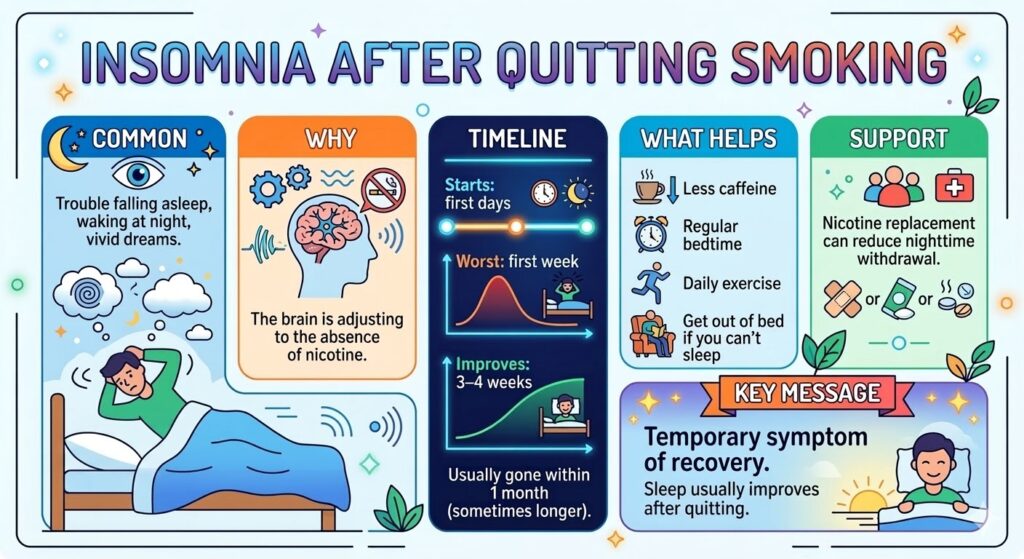
When nicotine intake suddenly stops, the brain has to recalibrate. During this adjustment period, sleep can become fragmented. People may take longer to fall asleep, wake frequently, or experience vivid dreams. Some report a sense of agitation at night or an unusual level of mental alertness just when they would normally be winding down.
Part of the problem is also behavioral. Smokers are used to punctuating their day—and sometimes their night—with cigarettes. Removing those habitual cues can disturb long-established routines, including those associated with bedtime.
The typical timeline
Sleep problems usually appear quickly after the last cigarette. Many people notice them during the first two or three nights of abstinence. The first week is often the most difficult, as nicotine withdrawal symptoms peak during this period.
By the third and fourth weeks, sleep typically begins to stabilize. The brain’s receptors are gradually adapting to the absence of nicotine, and the body’s stress response settles. For most people, insomnia linked to withdrawal fades within a month, but it may last for as much as 6 months after quitting. There are exceptions. Heavy smokers or people who already had sleep difficulties may experience more prolonged disturbances.
Interestingly, long-term studies suggest that former smokers often end up sleeping better than they did while smoking. Once the withdrawal phase passes, the nightly cycle of nicotine stimulation and withdrawal disappears, and sleep becomes more stable.
Getting through the sleepless phase
The most important thing for people experiencing insomnia after quitting smoking is reassurance. The sleeplessness is a symptom of recovery, not a sign that something has gone wrong.
Simple changes to your evening routine can help. Limiting your caffeine intake after noon reduces the risk of insomnia. Establishing a regular bedtime routine (dim lights, quiet activities, and regular sleep times) helps the body rebuild its internal clock.
Physical activity during the day also makes a difference. Even moderate exercise, such as a brisk walk, improves sleep quality and reduces withdrawal-related stress. What matters most is consistency rather than intensity.
Another common recommendation is to avoid lying awake in bed for long periods. If sleep does not come after twenty minutes or so, getting up briefly to read or listen to music in low light can prevent the bed from becoming associated with frustration.
When nicotine replacement can help
For some people, insomnia is partly driven by nighttime nicotine withdrawal. If the brain has been accustomed to nicotine every hour of the day, a sudden overnight absence can trigger restlessness.
Nicotine medications can ease this transition. Products such as patches, gum, lozenges, or inhalers deliver nicotine without the harmful combustion products found in cigarettes. By stabilizing nicotine levels in the body, they reduce the intensity of withdrawal symptoms, including sleep disruption.
Nicotine patches, which provide a steady dose over many hours, are particularly helpful for some individuals. However, wearing a patch overnight can occasionally lead to vivid dreams or lighter sleep. When that happens, removing the patch before bedtime often solves the problem without compromising daytime craving control.
Short-acting forms of nicotine replacement, such as gum or lozenges, can also be useful in the evening if cravings or restlessness build up before sleep.
Nicotine pouches are not medications but provide nicotine in about the same an mounts as nicotine gums.
The aim is not to replace one dependency with another, but to support the brain through a short transition period while it adapts to life without cigarettes.
Medical options for persistent insomnia
If sleep difficulties continue for several weeks and significantly affect daily life, medical advice may be warranted. In some cases, clinicians may suggest temporary sleep aids or behavioral therapies designed specifically for insomnia.
Another possibility is to use medications such as varenicline or bupropion, which target the brain pathways involved in nicotine dependence.
A temporary price for long-term benefits
Few people quit smoking without encountering at least a few uncomfortable days or nights. Insomnia can be one of the more discouraging symptoms, especially when fatigue sets in. Yet it is almost always short-lived.
What often helps most is perspective. The brain is recalibrating after years of nicotine exposure, and disturbed sleep is part of that process. Within a few weeks or months, the vast majority of people find that their nights settle down again.
When that happens, many former smokers discover something unexpected: not only have they broken free from cigarettes, but they are also sleeping more soundly than they have in years.
Use the ‘Comments’ field below to share your experience or to suggest improvements to this page.