
Quitting smoking is a major achievement, but the weeks and months that follow are often the most fragile period. Many former smokers relapse not because they lack motivation, but because nicotine dependence combines with habits, routines, and emotional triggers that can reappear unexpectedly.
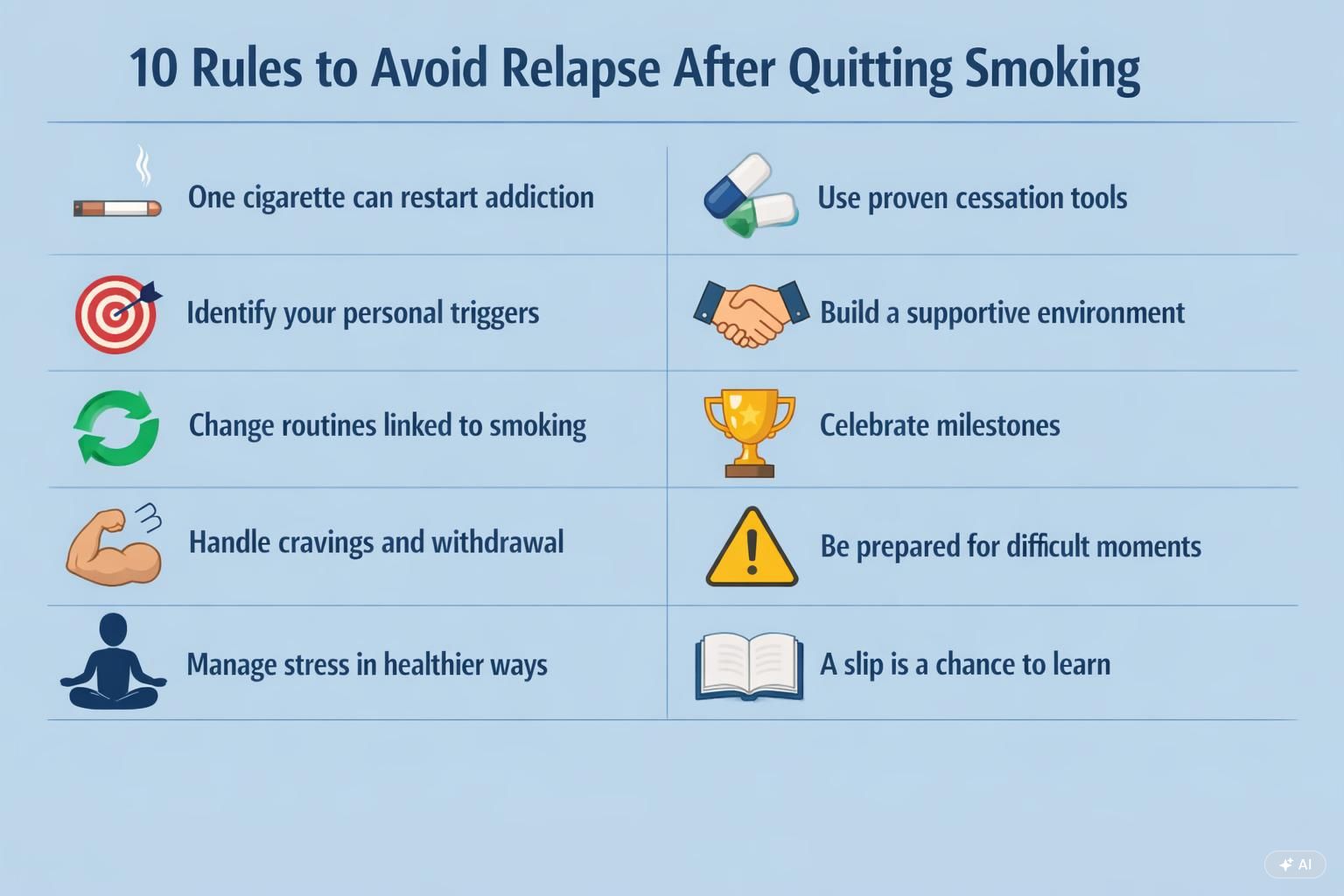
Understanding how relapse happens is the first step to preventing it. The following ten rules can help protect your quit attempt and strengthen your chances of staying smoke-free for the long term.
1. Remember that one cigarette can restart the addiction
Many relapses begin with the idea that “just one cigarette” will not matter. For most former smokers, however, nicotine dependence can be reactivated quickly. What starts as a single cigarette during a stressful moment or a social event can easily turn into regular smoking again.
Treat complete abstinence as the safest rule. Avoid experimenting with “occasional” smoking, especially during the first months after quitting.
2. Identify your personal triggers
Smoking is closely linked to habits, places, and emotional states. Certain situations (drinking alcohol or coffee, finishing a meal, being around smokers), certain places (smoking areas, an armchair), and certain emotional states (stress or boredom) can automatically trigger the urge to smoke.
Take time to identify the situations, places and moments when cravings are most likely to appear. Once you recognize these triggers, you can avoid them or prepare alternative responses before the urge strikes.
3. Change the routines linked to smoking
Many smokers associate cigarettes with daily rituals: the morning coffee, the break at work, the drive home, or the drink in the evening. When you stop smoking, these routines can suddenly feel incomplete.
One effective strategy is to modify the routine itself. Drink tea instead of coffee for a while, take a short walk during your break, or replace the cigarette after meals with brushing your teeth or chewing gum. Small changes can weaken the automatic link between routine and smoking.
4. Learn how to handle cravings and other withdrawal symptoms
Cravings usually last only a few minutes, even if they feel intense. Developing simple techniques to get through those moments can make a big difference.
Deep breathing, drinking water, chewing a nicotine gum, or briefly distracting yourself with another activity can help the urge pass. Many people find that waiting ten minutes before acting on a craving allows it to fade naturally.
The other nicotine withdrawal symptoms usually improve over time (irritability, anxiety, impatience, mood swings, depressed mood, difficulty concentrating, insomnia, increased appetite), but weight gain is usually permanent. You can attenuate all these symptoms if you use nicotine medications or non-combustible nicotine sources (nicotine pouches, e-cigarettes).
Quitting smoking also brings about a rapid improvement in smell and taste.
5. Manage stress in healthier ways
Stress is a common causes of relapse. Cigarettes may have served as a quick coping mechanism in the past, even though they did not actually solve the underlying problem.
It is essential to find other ways to manage tension. Physical activity, relaxation techniques, meditation, or even a short walk outdoors can reduce stress and help prevent the urge to smoke.
However, the best solution is still to tackle the underlying problem head-on.
6. Use proven cessation tools if needed
Quitting without assistance works for some people, but many former smokers benefit from additional support. Nicotine replacement therapies such as patches, gum, lozenges, or inhalers can reduce withdrawal symptoms. Prescription medications may also help some smokers manage cravings (varenicline, cytisine and bupropion). E-cigarettes are also effective at helping smokers quit and avoid relapse.
These tools do not replace motivation, but they can make the transition away from cigarettes easier and reduce the risk of relapse.
7. Build a supportive environment
Quitting smoking is easier when the people around you support your decision. Friends, family members, or colleagues who understand your goal can provide encouragement during difficult moments.
If possible, spend less time in environments where many people are smoking, especially during the early stages of quitting. Reducing exposure to cigarettes can significantly lower temptation.
8. Celebrate milestones
Staying smoke-free for a week, a month, or a year is a real achievement. Recognizing these milestones reinforces motivation and reminds you of the progress already made.
Some people find it helpful to reward themselves with the money saved from not buying cigarettes. Others keep a journal of their progress or track improvements in health, breathing, or physical fitness.
9. Be prepared for difficult moments
Even long after quitting, unexpected cravings can appear. Stressful events, alcohol consumption, or encounters with old smoking habits may briefly revive the desire to smoke.
Instead of being surprised by these moments, expect them. Remind yourself that cravings are temporary and that giving in would mean restarting the cycle you worked so hard to escape.
10. If a slip happens, act quickly
A lapse does not have to become a full relapse. Some people smoke a cigarette during a difficult moment and immediately assume they have failed, which leads them to resume smoking entirely.
The most important step is to stop again immediately. Treat the episode as a warning sign, analyze what triggered it, and strengthen your strategy for the future.
Staying smoke-free is a long-term process
The good news is that the risk of relapse decreases steadily as weeks and months pass. Each day without cigarettes weakens nicotine dependence and strengthens new habits.
If you fail, consider it an opportunity to learn and try again. Most former smokers made several attempts before successfully quitting cigarettes for good.
Use de ‘Comments’ field below to share your experience and to suggest improvements to this article.