The first few days after quitting smoking can feel less like a victory and more like a descent into unusual anger. This sudden and brutal increase in irritability, where a misplaced set of keys or a slow-moving queue is perceived as a personal offense, is one of the most common obstacles on the path to a smoke-free life. Understanding that this “short temper” is a biological side effect of the healing process, rather than a permanent personality change, is the first step toward easing the tension.
The Chemistry of a Quitter’s Temper
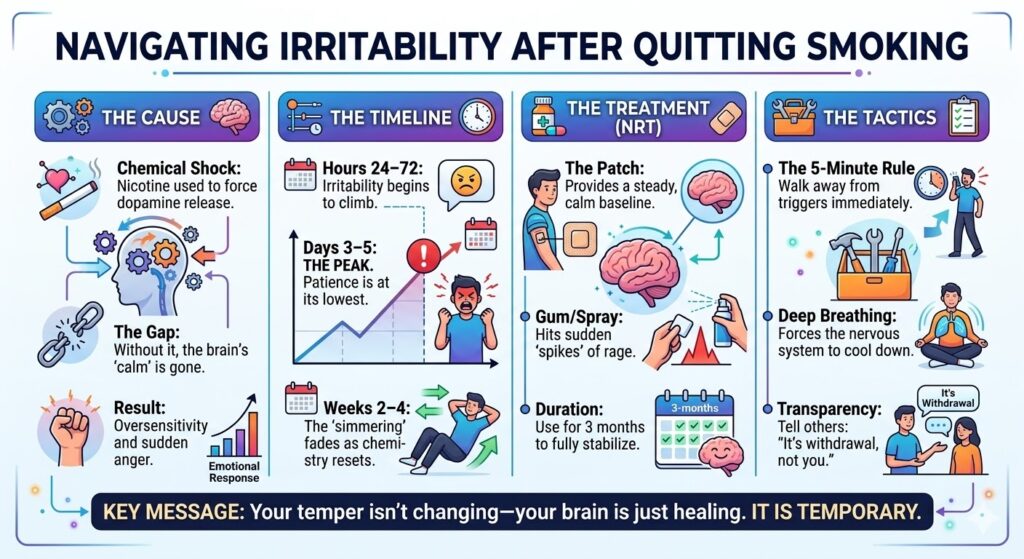
Irritability during the early stages of quitting smoking is largely caused by the brain’s dependence on nicotine. For years, nicotine has stimulated the release of dopamine—the chemical linked to pleasure and relaxation. When nicotine intake suddenly stops, the brain’s reward system experiences a shock. This creates a temporary chemical imbalance that makes the nervous system more sensitive to stress. Without the calming effect of cigarettes, even minor frustrations can trigger impatience or anger.
The Peak and the Plateau
This irritability usually follows a predictable timeline. Symptoms often appear within the first 24 hours after the last cigarette and peak between the third and fifth days, when cravings are strongest and emotional tolerance is lowest. Fortunately, the brain gradually adapts. After about a month, the intensity of anger typically decreases as brain chemistry begins to rebalance. Within a few months, most people find their mood returning to normal, although occasional flashes of frustration may still occur, especially in long-term heavy smokers.
Pharmaceutical Support
Nicotine Replacement Therapy (NRT) can help reduce irritability by preventing the sudden drop in nicotine levels. Products such as patches, gum, or lozenges deliver controlled doses of nicotine without the harmful toxins of smoke. Many experts recommend combining a long-acting patch with a short-acting product like gum or spray to manage sudden cravings. Using these treatments at the proper dose for the recommended period—often around three months—gives the brain time to adjust.
Behavioral Strategies
Alongside medication, simple behavioral strategies can help manage anger. Stepping away from a stressful situation for a few minutes allows the body’s stress response to settle. Deep breathing can also calm the nervous system. Being open with friends, family, or colleagues about temporary withdrawal irritability can encourage understanding and support. Regular exercise is particularly helpful, as it releases tension and provides a healthy outlet for restless energy.
Use the ‘Commets’ field below to share your experience or to suggest improvements to this article.
For many attempting to quit smoking, the sudden inability to focus on a work report, follow a conversation, or even read a paragraph without the mind wandering feels like a permanent cognitive decline. Difficulty concentrating is a hallmark of nicotine withdrawal, yet it is frequently misunderstood as a personal failing rather than a predictable physiological response. Understanding the mechanics behind this mental haze is the first step in navigating through it without reaching for a pack.
The Chemistry of Distraction
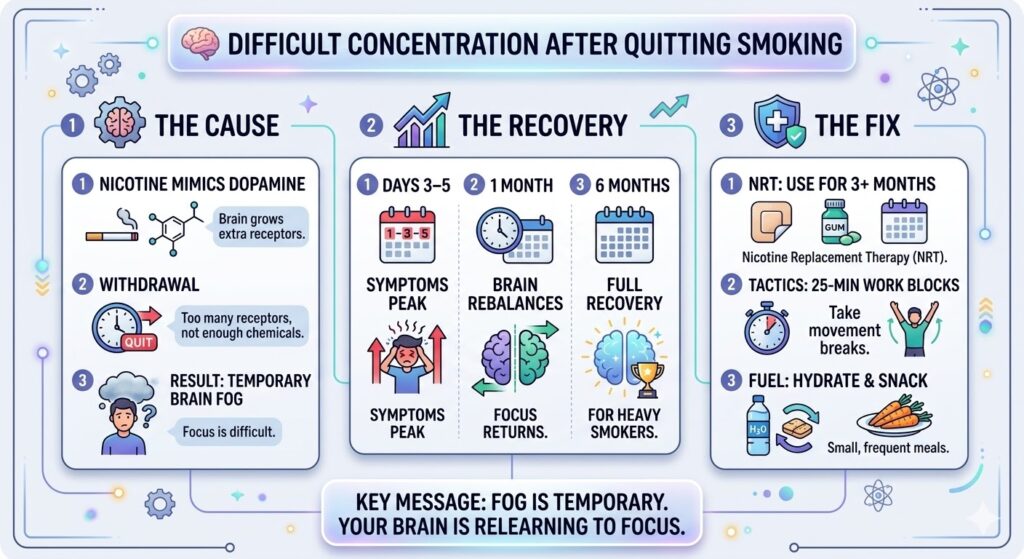
Nicotine is a potent psychoactive substance that, over time, rewires the brain’s chemistry. When a person smokes regularly, nicotine binds to acetylcholine receptors, triggering the release of neurotransmitters like dopamine and norepinephrine. These chemicals sharpen attention, improve memory, and create a sense of alertness. The brain eventually adapts to this constant chemical prodding by reducing its own natural production of these neurotransmitters and increasing the number of receptors waiting for the next hit. When nicotine intake stops abruptly, the brain is left with an overabundance of nicotinic receptors and a shortage of the chemicals needed to activate them. The result is a temporary communication breakdown in the neural pathways responsible for focus and executive function. It is not that the capacity to think has vanished; rather, the brain’s engine is sputtering as it learns to run on its own fuel again.
Mapping the Timeline of Recovery
The timeline for this cognitive disruption is relatively short, though it feels interminable while it lasts. Symptoms typically peak within the first three to five days after quitting, coinciding with the highest levels of physical withdrawal. For most people, the acute phase of brain fog begins to lift within one month as the brain starts to downregulate the excess receptors and restore natural neurotransmitter balance. However, the duration can vary depending on the length and intensity of the smoking habit. Heavy smokers may experience lingering periods of distractibility for up to 6 months, but these episodes become less frequent and less intense over time. Recognizing that this state is temporary provides a crucial psychological anchor.
Managing this symptom requires a shift in strategy rather than a battle of willpower. Since the brain is currently operating with reduced efficiency, attempting to force intense concentration often leads to frustration and relapse. Instead, it is more effective to work with the limitation by breaking tasks into smaller, manageable segments. The Pomodoro technique, which involves working for short bursts (25 minutes) followed by brief breaks, aligns well with the withdrawn brain’s reduced attention span. Physical movement also plays a critical role; a brisk walk or even a few minutes of stretching increases blood flow to the brain and stimulates the release of endorphins, which can temporarily clear the mental haze. Hydration is another often-overlooked factor, as dehydration exacerbates confusion and fatigue, mimicking and worsening withdrawal symptoms.
Fueling the Healing Brain
Dietary adjustments can further smooth the transition. Nicotine affects blood sugar levels, and its absence can lead to fluctuations that impair cognitive function. Eating small, frequent meals rich in protein and carbohydrates helps maintain steady glucose levels, providing the brain with a consistent energy source. Some individuals find that replacing the oral fixation of smoking with crunchy vegetables or sugar-free gum helps ground their attention. Mindfulness practices, such as deep breathing or brief meditation, are not just clichés but practical tools that train the brain to recognize when it has wandered and gently guide it back to the present task. This practice essentially jumpstarts the focusing mechanism that nicotine used to artificially sustain.
Use the ‘Comments’ field below to share your experience or to suggest improvements to this article.
Insomnia After Quitting Smoking: Why It Happens and How to Get Through It
For many smokers, the first nights after quitting are surprisingly restless. People who expected irritability or cravings are often caught off guard by something else entirely: an inability to sleep. They fall asleep late, wake up repeatedly during the night, or rise far earlier than usual. Insomnia is one of the most common, and least discussed, symptoms of nicotine withdrawal.
The good news is that it is temporary. But understanding why it happens, how long it typically lasts, and what can help along the way can make the difference between persevering through the first difficult weeks and relapsing out of sheer exhaustion.
Why nicotine withdrawal disrupts sleep
Nicotine is a stimulant, and for years the smoker’s brain has adapted to receiving regular doses of it. Paradoxically, many smokers feel that cigarettes help them relax before bed. In reality, nicotine alters several neurotransmitter systems involved in alertness, reward, and sleep regulation, including dopamine, acetylcholine, and norepinephrine.
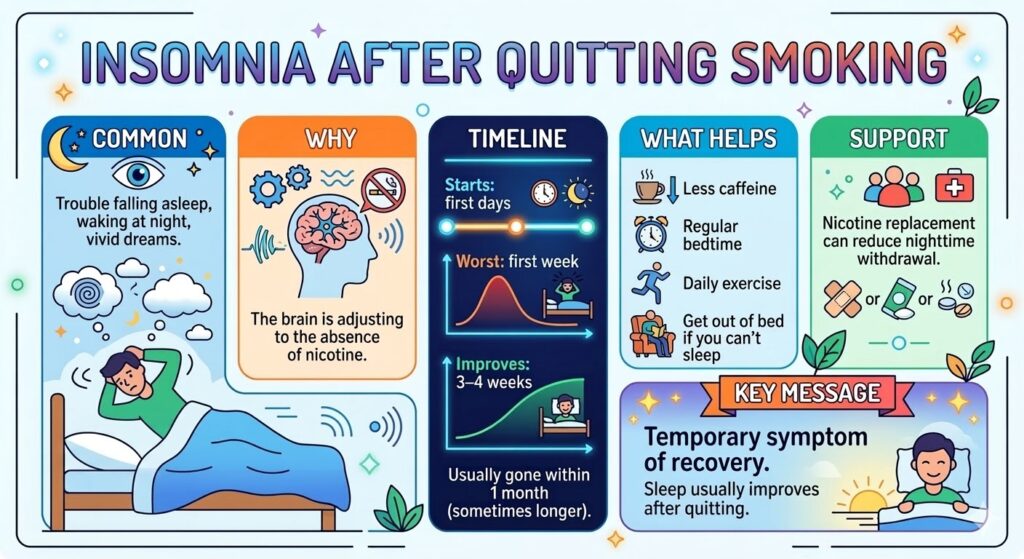
When nicotine intake suddenly stops, the brain has to recalibrate. During this adjustment period, sleep can become fragmented. People may take longer to fall asleep, wake frequently, or experience vivid dreams. Some report a sense of agitation at night or an unusual level of mental alertness just when they would normally be winding down.
Part of the problem is also behavioral. Smokers are used to punctuating their day—and sometimes their night—with cigarettes. Removing those habitual cues can disturb long-established routines, including those associated with bedtime.
The typical timeline
Sleep problems usually appear quickly after the last cigarette. Many people notice them during the first two or three nights of abstinence. The first week is often the most difficult, as nicotine withdrawal symptoms peak during this period.
By the third and fourth weeks, sleep typically begins to stabilize. The brain’s receptors are gradually adapting to the absence of nicotine, and the body’s stress response settles. For most people, insomnia linked to withdrawal fades within a month, but it may last for as much as 6 months after quitting. There are exceptions. Heavy smokers or people who already had sleep difficulties may experience more prolonged disturbances.
Interestingly, long-term studies suggest that former smokers often end up sleeping better than they did while smoking. Once the withdrawal phase passes, the nightly cycle of nicotine stimulation and withdrawal disappears, and sleep becomes more stable.
Getting through the sleepless phase
The most important thing for people experiencing insomnia after quitting smoking is reassurance. The sleeplessness is a symptom of recovery, not a sign that something has gone wrong.
Simple changes to your evening routine can help. Limiting your caffeine intake after noon reduces the risk of insomnia. Establishing a regular bedtime routine (dim lights, quiet activities, and regular sleep times) helps the body rebuild its internal clock.
Physical activity during the day also makes a difference. Even moderate exercise, such as a brisk walk, improves sleep quality and reduces withdrawal-related stress. What matters most is consistency rather than intensity.
Another common recommendation is to avoid lying awake in bed for long periods. If sleep does not come after twenty minutes or so, getting up briefly to read or listen to music in low light can prevent the bed from becoming associated with frustration.
When nicotine replacement can help
For some people, insomnia is partly driven by nighttime nicotine withdrawal. If the brain has been accustomed to nicotine every hour of the day, a sudden overnight absence can trigger restlessness.
Nicotine medications can ease this transition. Products such as patches, gum, lozenges, or inhalers deliver nicotine without the harmful combustion products found in cigarettes. By stabilizing nicotine levels in the body, they reduce the intensity of withdrawal symptoms, including sleep disruption.
Nicotine patches, which provide a steady dose over many hours, are particularly helpful for some individuals. However, wearing a patch overnight can occasionally lead to vivid dreams or lighter sleep. When that happens, removing the patch before bedtime often solves the problem without compromising daytime craving control.
Short-acting forms of nicotine replacement, such as gum or lozenges, can also be useful in the evening if cravings or restlessness build up before sleep.
Nicotine pouches are not medications but provide nicotine in about the same an mounts as nicotine gums.
The aim is not to replace one dependency with another, but to support the brain through a short transition period while it adapts to life without cigarettes.
Medical options for persistent insomnia
If sleep difficulties continue for several weeks and significantly affect daily life, medical advice may be warranted. In some cases, clinicians may suggest temporary sleep aids or behavioral therapies designed specifically for insomnia.
Another possibility is to use medications such as varenicline or bupropion, which target the brain pathways involved in nicotine dependence.
A temporary price for long-term benefits
Few people quit smoking without encountering at least a few uncomfortable days or nights. Insomnia can be one of the more discouraging symptoms, especially when fatigue sets in. Yet it is almost always short-lived.
What often helps most is perspective. The brain is recalibrating after years of nicotine exposure, and disturbed sleep is part of that process. Within a few weeks or months, the vast majority of people find that their nights settle down again.
When that happens, many former smokers discover something unexpected: not only have they broken free from cigarettes, but they are also sleeping more soundly than they have in years.
Use the ‘Comments’ field below to share your experience or to suggest improvements to this page.
Nicotinic receptors in the brain, hungry for their nicotine meal
Craving, the irresistible and uncontrollable urge to light a cigarette is a major obstacle when trying to quit smoking. Understanding what a craving is, where it comes from, and how to deal with it is essential to successfully quitting smoking.
What is a Craving and What Causes It?
Simply put, a smoking craving is a powerful physical and psychological impulse to smoke or to use nicotine immediately.
The Root Cause: Nicotine Addiction
The core of the craving is your brain’s dependence on nicotine. When it is inhaled in tobacco smoke, nicotine is highly addictive (but the same nicotine in a nicotine patch is not addictive at all), and it alters the chemistry and the structure of your brain. Over time, your brain adapts: the number of nicotinic receptors increases and you start to need nicotine to feel “normal.” When you quit smoking, the nicotine level in your blood drops, and your brain sends out a distress signal, which we experience as a craving.
The Triggers: Conditioning and Habit
Smoking is heavily linked to daily routines and emotional states.5 Your brain has been conditioned to associate certain activities or feelings with smoking.6 These triggers fall into several categories:
Routine: Coffee, after a meal, driving, taking a break.7
Emotional: Stress, boredom, feeling happy or sad.8
Social: Being with friends who smoke, having a drink.9
Environmental: A specific armchair, a smoking spot outside work where you used to smoke.
The 5-Minute Rule: a Powerful Tool
Here’s the single most important fact to remember about a craving: It’s intense, but it’s short-lived.
Research shows that the strongest part of a craving usually peaks and disappears after about five minutes.10
Your job isn’t to make the craving vanish instantly; it’s to ride the wave for those few minutes until it naturally subsides. Remind yourself: “I just need to make it through the next five minutes.”
The Role of Nicotine Replacement and Other Aids
Don’t feel you have to fight this battle on willpower alone. Nicotine Replacement Therapy (NRT) and other aids are designed to give your brain the small, clean dose of nicotine it craves, without the thousands of toxins in cigarette smoke, helping you manage withdrawal symptoms.13
Nicotine Replacement Therapy (NRT): Patches provide a steady background dose, while gums, lozenges, inhalers, or sprays are “quick-response” aids you can use immediately when a craving strikes.14 They are excellent for helping you get past that critical 5-minute peak.
E-Cigarettes (Vaping): Vaping can serve as a transition tool.15 It mimics the hand-to-mouth action and provides nicotine in good flavors.
Oral Tobacco (Snus/Nicotine Pouches): These are sometimes used for harm reduction in places where they are legally available, offering a smoke-free nicotine source.16
How to Deal with the Urge: Distraction is Key
Since the urge is temporary, your strategy is simple: Distract yourself until the five minutes pass. You need quick, engaging activities that interrupt the thought process.
Distraction Techniques
Move Your Body: Get up and walk around the house or office. Do 10 quick squats or push-ups.
Engage Your Hands: Play a quick game on your phone, doodle, chew gum, sip water slowly, or crunch on a carrot stick.11
Change Your Scenery: Step outside for a breath of fresh air (away from smoking areas), or move to a different room.12
Focus on Your Breath: Take five slow, deep breaths, counting to four on the inhale and four on the exhale.
Talk it Out: Send a text to a friend, or call a quitting support line.
Specific Triggers and How to Control Them
Triggers require a pre-planned response. Think of them as battle zones where you need a prepared counter-strategy.
If the Urge Strikes…
Try This Action Plan
When you wake up
Don’t leave the bedroom immediately. Drink a large glass of water, do a 2-minute stretch, chew a piece of nicotine gum, or brush your teeth.
After a meal
Replace the ritual. Immediately get up and clean the dishes, brush your teeth, chew a piece of nicotine gum, or call a friend for a quick chat.
In the presence of smokers
Distance yourself. Announce, “I’m going to grab a drink/fresh air,” and walk away for 5-10 minutes until they’ve finished their cigarette. Chew a piece of nicotine gum.
In a stressful situation
Focus on breathing. Use deep-breathing exercises. Take a 5-minute time-out to write down what’s stressing you, then crumple the paper.
In a place you used to smoke
Change the environment. Sit in a different chair, or physically block the usual smoking area (e.g., place a flowerpot there) to break the association.
Every time you beat a craving, you weaken the addiction and strengthen your resolve. You are retraining your brain, one five-minute victory at a time. Keep going !
Rate this article by clicking on the desired number of stars: (1 votes, average: 5.00 out of 5)
Please use the “Comments” field below to share your experience or suggest improvements to this article.
Most people know that nicotine makes cigarettes addictive, but few know how much nicotine is actually in a cigarette, or how much nicotine you absorb when you smoke. Understanding these numbers can help you choose an alternative product that does not involve burning tobacco or inhaling smoke.
How much nicotine is in a cigarette?
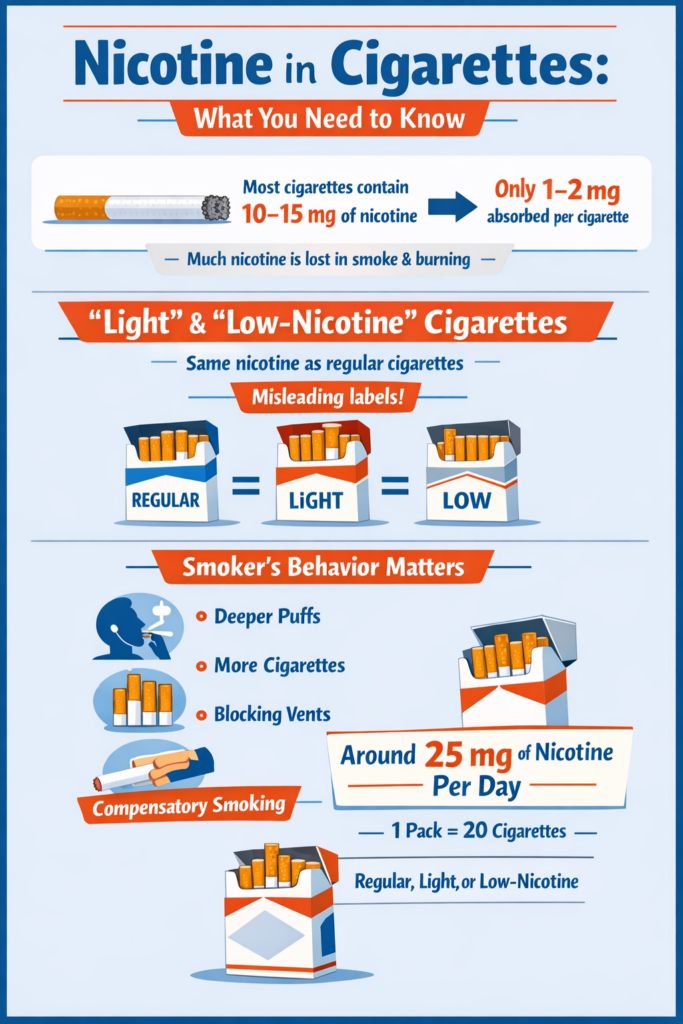
The total amount of nicotine in a cigarette varies, but most commercial cigarettes contain between 10 and 15 milligrams (mg) of nicotine. This is the amount present in the tobacco before the cigarette is lit, but this figure does not reflect the whole picture. Most of the nicotine in a cigarette is destroyed by combustion or remains in the sidestream smoke that you do not inhale. What really matters is the amount of nicotine that enters your bloodstream.
‘Light’ or ‘low-nicotine’ cigarettes:
Don’t be fooled by these labels! Studies have shown that cigarettes marketed as ‘light’ or ‘low-nicotine’ contain about the same amount of nicotine as regular cigarettes. The real difference lies in their design (air holes around the filter), which can affect how you smoke.
How much nicotine do you actually inhale?
You do not inhale all of the 10 to 15 mg of nicotine contained in a cigarette. When you light a cigarette and take a puff, a significant amount of nicotine is destroyed by heat or escapes as sidestream smoke. The amount of nicotine that enters your lungs and is absorbed in your blood (bioavailability) depends on many factors, including how the cigarette is manufactured and, most importantly, how you smoke it. A person who smokes one cigarette absorbs approximately 1 to 2 mg of nicotine. Although this amount may seem small compared to the total 15 mg, it is enough to deliver a powerful dose to your brain and satisfy your nicotine addiction.
The smoker’s behavior matters
The way a person smokes is the most important variable in the actual dose received. Each person behaves differently, and two people smoking the same cigarette may absorb different amounts of nicotine. Your brain acts like a thermostat that determines how much nicotine you need to feel good and to avoid nicotine withdrawal symptoms. As a result, people who smoke “low nicotine” or “light” cigarettes do so differently than normal cigarettes. This is called compensatory smoking:
Deeper puffs: If you use a low-nicotine cigarette, your body compensates by taking deeper, longer puffs to get the amount of nicotine your brain needs.
Smoking more often: You may also simply smoke more cigarettes throughout the day.
Blocking the vents: Some ‘light’ cigarettes have ventilation holes near the filter. Smokers often cover these with their fingers or lips, either unconsciously or intentionally, which increases the concentration of smoke inhaled and, consequently, the dose of nicotine.
This means that a heavy smoker can easily absorb 25 mg of nicotine per day by smoking a pack of 20 cigarettes, whether these are regular, low-nicotine or light cigarettes.
Why it is important to understand nicotine levels and the speed of delivery:
Nicotine is the main addictive chemical in tobacco, it is what drives you to smoke one cigarette after another. When you inhale smoke, nicotine quickly enters your bloodstream and reaches your brain. This rush causes the release of a chemical that makes you feel good (dopamine), which is why smoking can be enjoyable or soothing. But this feeling is temporary, as the nicotine level in your blood drops quickly, leading to withdrawal symptoms.
When you smoke, nicotine reaches your brain within 10 to 20 seconds of inhalation. This rapid effect is one of the reasons why cigarettes are so addictive. Your brain learns to anticipate this rapid rush, and cravings develop when nicotine levels drop. Nicotine replacement therapies (patches, gum, tablets) release nicotine at a much slower rate and therefore do not create or maintain addiction, even though the molecule is the same.
Understanding how nicotine works helps to understand why nicotine replacement therapies (such as patches, gum or lozenges) are designed in this way: to provide controlled, lower doses of nicotine at a slower rate of delivery and without the toxic chemicals found in cigarette smoke.
Knowing all this can make it easier to quit smoking.
Knowing these things can help you understand how cigarettes are designed to make you addicted. The tobacco industry adjusts the chemical composition so that nicotine reaches your brain quickly and reliably, not only by controlling the amount of nicotine in cigarettes with the same precision used by drug manufacturers to produce prescription drugs, but also by using chemical additives.
To quit smoking without experiencing nicotine withdrawal symptoms, you need to replace the “dirty” nicotine you currently get from smoking with “clean” nicotine from nicotine replacement therapy (NRT): products such as patches, gums, tablets and lozenges deliver a controlled and steady dose of nicotine without the thousands of other toxic chemicals found in cigarette smoke. Nicotine-based medicines release nicotine at a much slower rate than cigarettes, which is why these products are not addictive. They help you manage withdrawal symptoms when you quit smoking.
Behavioural support from a healthcare professional increases the effectiveness of nicotine replacement therapy. Peer support groups and quit-smoking helplines can also help you manage the psychological and behavioral aspects of quitting smoking.
If you do not want to use nicotine medications, you can also get nicotine from electronic cigarettes or nicotine pouches, these products deliver sufficient amounts of nicotine but no smoke, and are therefore much less dangerous than cigarettes.
Rate this article by clicking on the desired number of stars: (2 votes, average: 5.00 out of 5)
Please use the “Comments” field below to share your experience or suggest improvements to this article.
The nicotine patch is a small, bandage-like patch that you apply directly to your skin, typically on your arm or torso. It’s designed to deliver a controlled, steady dose of nicotine into your bloodstream throughout the day. It provides you with nicotine in a controlled manner, without the harmful substances (tar, carbon monoxide) found in cigarette smoke.
It is designed to alleviate the discomfort associated with cigarette withdrawal symptoms (craving for cigarettes, irritability, bad mood, depression, anxiety, difficulty consentrating, trouble sleeping, increased appetite and weight gain).
How Does the Patch Work?
The nicotine patch slowly releases nicotine through your skin, which is then absorbed by your body.
The patch can be used by smokers who wish to quit smoking, but also by those who are not yet ready to quit and who continue to smoke while wearing the patch:
After you quit smoking, the patch relieves cravings and other nicotine withdrawal symptoms, so that you suffer less during the first days, weeks and months after quitting.
The patch increase your chances of successfully quitting smoking.
Smokers who are not ready to quit immediately can use nicotine patches for a few weeks before quitting smoking, in addition to cigarettes. This way, most of their nicotine needs will be met by the patch, they will smoke fewer cigarettes, and it will be easier for them to quit after a few weeks of combined use.
Smokers who do not wish to quit smoking, or feel unable to do so, can use nicotine patches to reduce their cigarette consumption. This means that part of their nicotine requirement will be satisfied by the patch, and they will smoke fewer cigarettes, thereby inhaling less smoke and fewer toxic components present in cigarette smoke. This dual use can be continued in the long term, over several months or years.
Is the patch effective to quit smoking?
In smokers willing to quit, a synthesis of 51 high-quality studies involving 25,754 participants concluded that nicotine patches increase their chances of quitting smoking by a factor of 1.64 (i.e. +64%), compared to a control group that did not use patches. However, it is difficult to quit smoking, and the median quit rate in the control group was only xx per cent after 6 months, while the quit rate in the group using the patch was xx per cent. This shows that the patch is effective, but that it only increases your chances of quitting smoking by a few percentage points.
To increase your chances of quitting smoking, you can combine two nicotine medications, e.g. patch and gum, or patch and inhaler, or patch and tablet. This will further increase your chances of quitting by a factor x1.27 (i.e. +27%).
There is evidence that higher-doses patches (21-25 mg) are more effective than lower doses patches (14-15 mg), and that patches with 42-44 mg are as effective as patched with 21-22 mg.
The Importance of compliance and of not smoking after you quit, not even a puff
For the treatment to be effective, you must follow the instructions. It is essential that you use the patch every day, at the recommended dosage, for 3 months after quitting smoking, without stopping the treatment prematurely. If you do not do so, you increase the risk of relapse.
You can smoke while wearing the patch; it is not dangerous. However, it is best not to smoke at all after quitting, even a single puff, as this increases the risk of relapse.
Consulting a healthcare professional (doctor, psychologist, pharmacist) can significantly increase your chances of success.
How to Use the Patch?
Some brands of patches are designed to be worn for 16 hours a day, from morning until bedtime. The idea is to simulate the fluctuations in nicotine levels experienced by a smoker without supplying nicotine during sleep, which could disrupt sleep. Other brands are designed to be worn for 24 hours. The idea is to reduce the urge to smoke and withdrawal symptoms in the morning.
With the 16-hour patch that you remove before going to bed, you may wake up with very low nicotine levels in your blood and experience cigarette cravings and other nicotine withdrawal symptoms in the morning. The patch slowly releases nicotine through the skin, and you will not feel its full effects until two hours after applying it. Therefore, you should use the patch in combination with a faster-acting product, such as nicotine gum or lozenges, to avoid withdrawal symptoms in the morning.
Dosage depends on your initial cigarette consumption:
Heavy smokers (more than 15 cigarettes/day): Start with the highest dose (25 mg/16h) for 8 weeks, then reduce (15 mg/16h for 2 weeks, then 10 mg/16h for 2 weeks).
Moderate/light smokers (fewer than 15 cigarettes/day): Start directly with the medium dose (15 mg/16h) for 8 weeks, then switch to the low dose (10 mg/16h) for 4 weeks.
Treatment lasts 3 months. It is very important not to stop treatment prematurely, as this would increase the risk of relapse.
Practical Tip: Change the application site every day to minimize skin irritation.
Precautions and Contraindications
The nicotine patch should not be used by non-smokers or non-users of tobacco or e-cigarettes, children under 12, and in principle, adolescents, unless there are already addicted to cigarettes or e-cigarettes.
Health Conditions:
If you suffer from recent or severe heart problems (recent heart attack, unstable or worsening angina, uncontrolled high blood pressure), or other conditions such as diabetes, kidney/liver diseases, or epilepsy, you must consult your doctor before starting treatment.
Pregnancy and Breastfeeding:
Nicotine, even in the form of a medication, can harm the fetus or infant. Pregnant or breastfeeding women should only use the nicotine patch after consulting a healthcare professional. If smoking cessation is not achieved, flexible-dose nicotine products (like gum or lozenges) are preferred.
What Side Effects Can You Expect?
Side effects of the patch are often confused with cigarette withdrawal symptoms.
Common side effects of the patch: Itching at the application site, headache, nausea, or vomiting. Not to be confused with cigarette withdrawal symptoms: Irritability, depression, anxiety, bad mood, difficulty concentrating, sleep disturbances, increased appetite, or smoking cravings.
Most skin reactions are mild and disappear quickly after removing the patch. If you experience severe effects (chest pain, irregular pulse), stop treatment and seek medical advice.
If you absorb too much nicotine, you may feel nauseous, dizzy or weak, and have a bad taste in your mouth, similar to the feeling you get when you smoke too much. If this happens, remove the patch immediately and the effect will disappear after a few minutes. There is no risk of nicotine overdose with nicotine patches in former smokers or tobacco users.
The nicotine patch is a valuable tool, but ultimate success depends on your willingness to quit smoking, your ability to avoid places where you used to smoke and the presence of other smokers, and, ideally, medical supervision.
Rate this article by clicking on the desired number of stars: (1 votes, average: 5.00 out of 5)
Please use the “Comments” field below to share your experience or suggest improvements to this article.
Quitting smoking is often a difficult break from a powerful addiction. However, the real test of resilience often begins after the initial withdrawal phase. A relapse is not a failure, but a common obstacle—a sign that the addiction pathways in the brain are still active. To remain abstinent in the long term, you must not only stay away from smoking, but actively build a life in which smoking no longer plays a role. This transition requires practical strategies and an unwavering commitment.
Identifying the Enemy: High-Risk Triggers
The majority of relapses occur in predictable situations that act as powerful psychological cues. Understanding these personal triggers is the first line of defense. They fall broadly into four categories:
Social Triggers: Being around other smokers is perhaps the most immediate danger. Attending a party where everyone steps outside for a smoke break or going to a bar where smoking is allowed can easily compromise resolve.
Emotional Triggers: Stress, anxiety, boredom, anger, sadness, or even a celebration can all signal the brain that it needs the soothing or stimulating effect of nicotine. For example, the former smoker who always reached for a cigarette after a heated argument with a spouse must have a replacement plan ready before the next disagreement even begins.
Routine Triggers: These are the habitual pairings—the ritualistic moments in the day tied to a cigarette. The first cup of coffee in the morning, the end of a meal, or getting into the car are all prime examples. These triggers are the most ingrained and require consistent, active substitution.
Craving and other nicotine withdrawal symptoms: a very strong urge to smoke (craving), being in a bad mood (sad or depressed, angry, irritable, impatient or agitated, anxious or nervous, rapid mood swings), poor sleep (insomnia), difficulty concentrating, increased hunger and weight gain. But quitting smoking also brings about a rapid improvement in smell and taste. These symptoms are alleviated by nicotine replacement therapy.
The Escape Plan: Avoidance and Substitution
To successfully navigate these high-risk moments, preparation is key. Avoidance is the simplest tactic for the immediate term. For instance, if a specific coffee shop was the regular smoking spot, the former smoker should temporarily change their morning routine, perhaps opting for tea at home or taking a different route to work.
When avoidance is impossible, substitution becomes the main tool. This is where the commitment to a new behavior must override the old habit. If stress is the trigger, a five-minute substitution could involve deep-breathing exercises, a quick walk around the block, or texting a supportive friend. If the trigger is the end of a meal, the former smoker needs to immediately engage the mouth and hands with something else—brushing teeth right away, chewing nicotine gum, or eating a piece of hard candy. The crucial action is disrupting the old routine instantly.
Navigating Cravings: The Four D’s
Cravings, even months after quitting, are intense but short-lived. They typically peak within three to five minutes. Former smokers need a repertoire of rapid response mechanisms to survive this brief window of desire. In addition to taking a nicotine gum of lozenge, experts recommend the “Four D’s” strategy:
Delay: Wait it out. Tell oneself, “I will wait five minutes and see how I feel then.” By delaying, the intensity often subsides before the person gives in.
Deep Breathe: Take ten slow, deep breaths. This not only distracts but also helps manage the anxiety often associated with the craving.
Drink Water: Sip a glass of water slowly. The physical act engages the mouth and provides a minor distraction.
Do Something Else: Immediately change activities. If one is sitting, they should stand up and move. If they are talking, they should shift the topic. A quick distraction breaks the mental focus on the craving.
Weight Gain
Many former smokers gain a few pounds after quitting smoking. Weight gain can be delayed by using nicotine replacement products (patches, gum, tablet). This way, you can tackle one difficulty at a time: first, you quit smoking, then you use nicotine replacement products for a few months, and only when you stop using these products will you possibly gain weight.
The Relapse Management Protocol
The ultimate mistake is to treat a single slip as a total failure. A single cigarette is a slip, not a surrender. The danger lies in the self-defeating mindset that follows, leading to the full return to regular smoking.
A successful relapse management protocol requires compassion and immediate action. If a former smoker has a cigarette, the focus must be on what happened just before that moment, identifying the trigger (Was it alcohol? Stress? A specific person?) and analyzing what defensive measure was skipped. The goal is to learn from the mistake and immediately recommit to the quit effort, disposing of any remaining cigarettes and reinforcing the substitution tactics for the next high-risk situation.
Long-term success is built on the realization that abstinence is a continuous, conscious effort. It requires maintaining motivation, celebrating every smoke-free day, and understanding that managing the urge to smoke is a skill that improves, but never entirely disappears. Staying vigilant against the triggers is the true path to a permanently smoke-free life.
Use the ‘Comments’ field below to share your experience or to suggest improvements to this article.
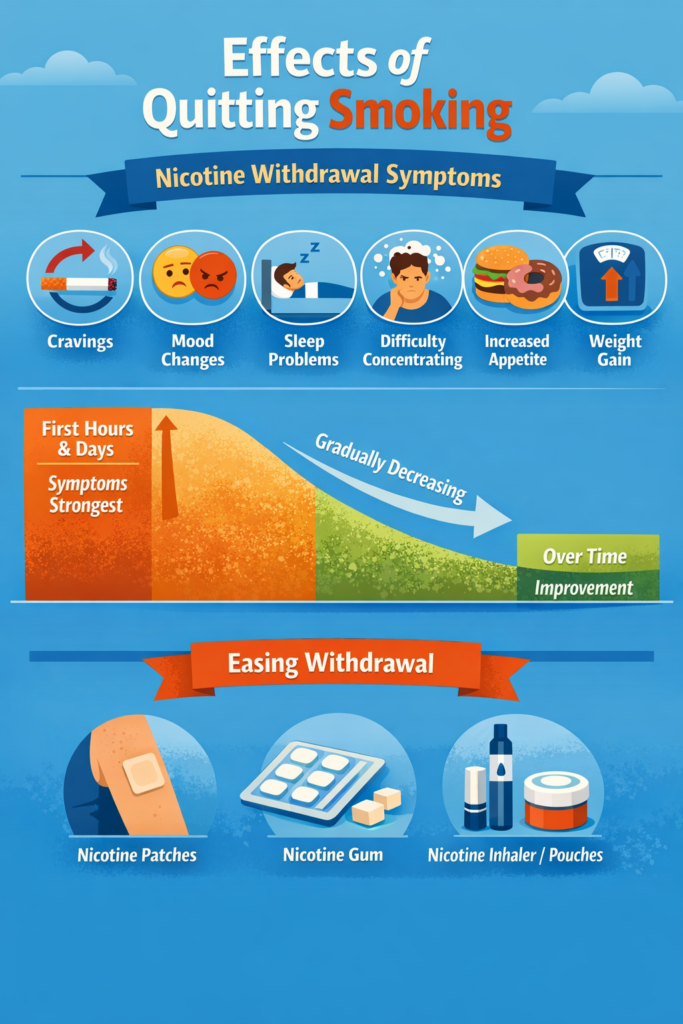
Quitting smoking causes nicotine withdrawal: cravings, mood changes (irritability, sadness, anxiety), sleep problems, difficulty concentrating, increased appetite and weight gain. Withdrawal symptoms can be eased with nicotine replacement therapies or other non-combustible nicotine sources (Video▶️).
What happens when you stop smoking?
When you stop smoking, your body no longer gets its dose of nicotine, and it’s normal to feel uncomfortable. Here are the withdrawal symptoms you may experience:
But quitting smoking also brings about a rapid improvement in smell and taste.
How long do these symptoms last?
These symptoms are most intense during the first few hours and days after your last cigarette. After the first few days, these feelings diminish significantly, but be aware that some symptoms may last longer: – The urge to smoke may return at times for several months. This is normal, but it will pass. – Some people feel sad or depressed for a long time. Talk to your doctor if this is the case for you. – Weight gain may be permanent.
What can you do ?
To attenuate these withdrawal symptoms, you can use nicotine medications (patch, gum, tablet, inhaler). You can also use another nicotine source that does not burn tobacco, such as an electronic cigarette or a nicotine pouch. Cravings last just a few minutes, so just wait 5 minutes and it will pass
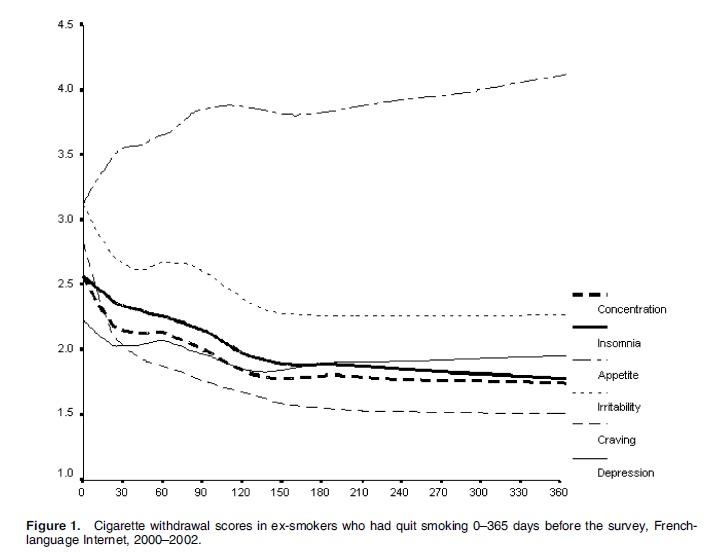
Change in symptom intensity over the course of a year
The graph below, taken from one of our scientific publications, shows how the intensity of withdrawal symptoms changes during the first year after quitting smoking. – The most striking feature is that appetite and weight gain increase, while the intensity of all other symptoms decreases over time. – The symptom that decreases most rapidly in intensity is craving, i.e. the strong urge to smoke. – The intensity of all symptoms changes most rapidly during the first 30 days after quitting smoking. – After about 6 months, symptoms remain stable.
References:
Jean-François Etter, A Self-Administered Questionnaire to Measure Cigarette Withdrawal Symptoms: The Cigarette Withdrawal Scale, Nicotine & Tobacco Research, Volume 7, Issue 1, February 2005, Pages 47–57, https://doi.org/10.1080/14622200412331328501
Etter JF, Hughes J. A comparison of the psychometric properties of three cigarette withdrawal scales. Addiction, 2006,101,262-372.
Please rate this article by clicking on the desired number of stars: (1 votes, average: 5.00 out of 5)
Please use the “Comments” field below to share your experience or suggest improvements to this article.