Tag: nicotine

  • Craving: the urge to smoke

    Craving: the urge to smoke

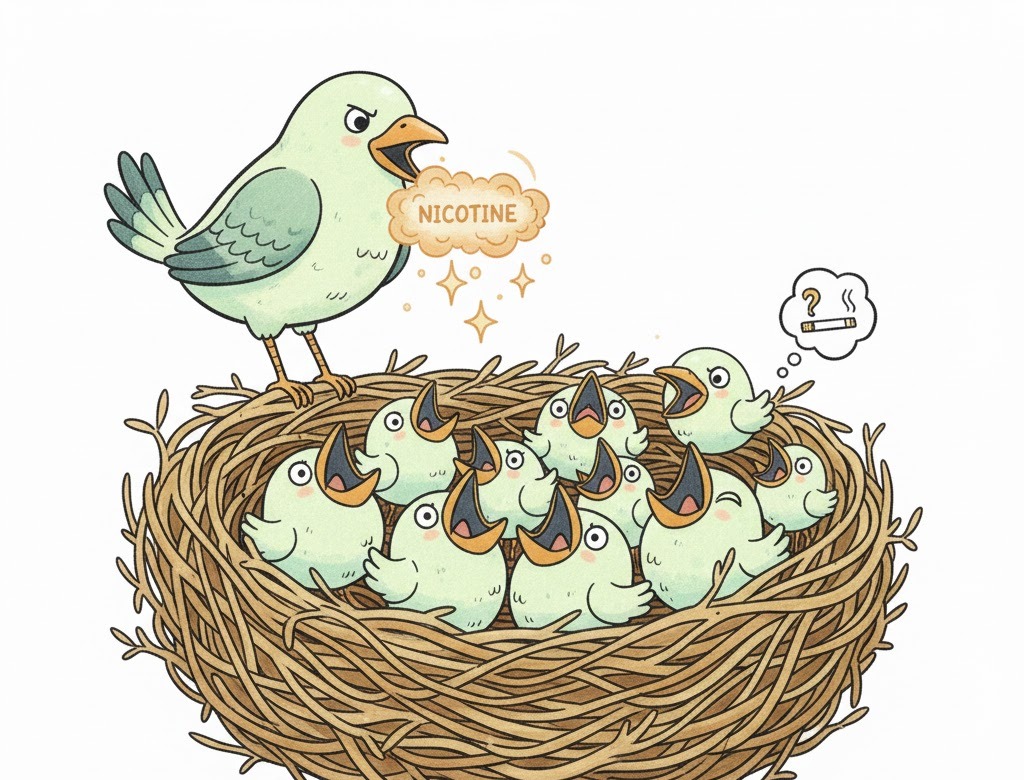
    Nicotinic receptors in the brain, hungry for their nicotine meal


    Craving, the irresistible and uncontrollable urge to light a cigarette is a major obstacle when trying to quit smoking. Understanding what a craving is, where it comes from, and how to deal with it is essential to successfully quitting smoking.


    What is a Craving and What Causes It?

    Simply put, a smoking craving is a powerful physical and psychological impulse to smoke or to use nicotine immediately.

    The Root Cause: Nicotine Addiction

    The core of the craving is your brain’s dependence on nicotine. When it is inhaled in tobacco smoke, nicotine is highly addictive (but the same nicotine in a nicotine patch is not addictive at all), and it alters the chemistry and the structure of your brain. Over time, your brain adapts: the number of nicotinic receptors increases and you start to need nicotine to feel “normal.” When you quit smoking, the nicotine level in your blood drops, and your brain sends out a distress signal, which we experience as a craving.

    The Triggers: Conditioning and Habit

    Smoking is heavily linked to daily routines and emotional states.5 Your brain has been conditioned to associate certain activities or feelings with smoking.6 These triggers fall into several categories:

    • Routine: Coffee, after a meal, driving, taking a break.7
    • Emotional: Stress, boredom, feeling happy or sad.8
    • Social: Being with friends who smoke, having a drink.9
    • Environmental: A specific armchair, a smoking spot outside work where you used to smoke.

    The 5-Minute Rule: a Powerful Tool

    Here’s the single most important fact to remember about a craving: It’s intense, but it’s short-lived.

    Research shows that the strongest part of a craving usually peaks and disappears after about five minutes.10

    Your job isn’t to make the craving vanish instantly; it’s to ride the wave for those few minutes until it naturally subsides. Remind yourself: “I just need to make it through the next five minutes.”


    The Role of Nicotine Replacement and Other Aids

    Don’t feel you have to fight this battle on willpower alone. Nicotine Replacement Therapy (NRT) and other aids are designed to give your brain the small, clean dose of nicotine it craves, without the thousands of toxins in cigarette smoke, helping you manage withdrawal symptoms.13

    • Nicotine Replacement Therapy (NRT): Patches provide a steady background dose, while gums, lozenges, inhalers, or sprays are “quick-response” aids you can use immediately when a craving strikes.14 They are excellent for helping you get past that critical 5-minute peak.
    • E-Cigarettes (Vaping): Vaping can serve as a transition tool.15 It mimics the hand-to-mouth action and provides nicotine in good flavors.
    • Oral Tobacco (Snus/Nicotine Pouches): These are sometimes used for harm reduction in places where they are legally available, offering a smoke-free nicotine source.16

    How to Deal with the Urge: Distraction is Key

    Since the urge is temporary, your strategy is simple: Distract yourself until the five minutes pass. You need quick, engaging activities that interrupt the thought process.

    Distraction Techniques

    • Move Your Body: Get up and walk around the house or office. Do 10 quick squats or push-ups.
    • Engage Your Hands: Play a quick game on your phone, doodle, chew gum, sip water slowly, or crunch on a carrot stick.11
    • Change Your Scenery: Step outside for a breath of fresh air (away from smoking areas), or move to a different room.12
    • Focus on Your Breath: Take five slow, deep breaths, counting to four on the inhale and four on the exhale.
    • Talk it Out: Send a text to a friend, or call a quitting support line.

    Specific Triggers and How to Control Them

    Triggers require a pre-planned response. Think of them as battle zones where you need a prepared counter-strategy.

    If the Urge Strikes…Try This Action Plan
    When you wake upDon’t leave the bedroom immediately. Drink a large glass of water, do a 2-minute stretch, chew a piece of nicotine gum, or brush your teeth.
    After a mealReplace the ritual. Immediately get up and clean the dishes, brush your teeth, chew a piece of nicotine gum, or call a friend for a quick chat.
    In the presence of smokersDistance yourself. Announce, “I’m going to grab a drink/fresh air,” and walk away for 5-10 minutes until they’ve finished their cigarette. Chew a piece of nicotine gum.
    In a stressful situationFocus on breathing. Use deep-breathing exercises. Take a 5-minute time-out to write down what’s stressing you, then crumple the paper.
    In a place you used to smokeChange the environment. Sit in a different chair, or physically block the usual smoking area (e.g., place a flowerpot there) to break the association.

    Every time you beat a craving, you weaken the addiction and strengthen your resolve. You are retraining your brain, one five-minute victory at a time. Keep going !


    Rate this article by clicking on the desired number of stars:
    1 Star2 Stars3 Stars4 Stars5 Stars (1 votes, average: 5.00 out of 5)
    Loading...


    Please use the “Comments” field below to share your experience or suggest improvements to this article.


  • Nicotine salts

    Nicotine salts


    Here is what vapers and smokers need to know about nicotine salts in e-liquids, what “nic salts” are, the difference between protonated nicotine and freebase nicotine, why some e-liquids contain nicotine salts, who should use them and who should not, the advantages and disadvantages of e-liquids containing nicotine salts, how they change the vaping experience, and the risks and precautions for use.

    Nicotine salts, often just called “nic salts,” have dramatically changed the landscape of vaping. If you’re currently smoking or vaping, you’ve likely heard of them, especially if you’re looking for a more satisfying nicotine experience.


    What Exactly Are Nicotine Salts?

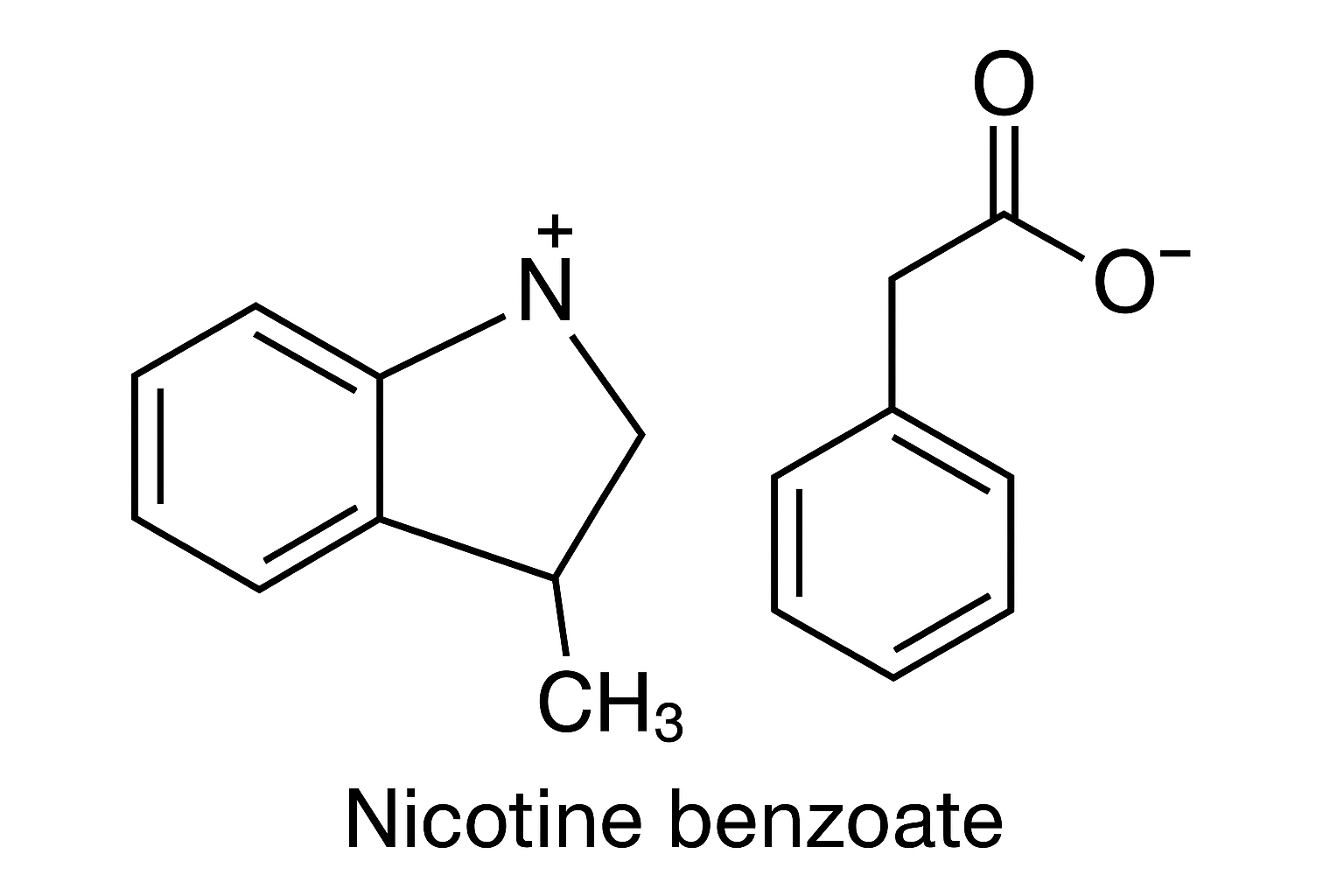
    For use in e-liquids, manufacturers modify the chemical structure of the standard nicotine (called freebase nicotine) by adding an organic acid—commonly benzoic acid. This chemical reaction creates the nicotine salt.

    The nicotine found in traditional nicotine is also extracted from tobacco and the chemically purified, it is called nicotine base or freebase.

    The crucial difference lies in the chemistry:

    FeatureFreebase Nicotine (Traditional E-liquid)Nicotine Salts (Nic Salt E-liquid)
    Chemical FormPure NicotineNicotine bound to an acid (e.g., Benzoate)
    pH LevelHigher, alkaline, pH=8Lower, acidic, pH=5-6
    Vapor FeelHarsh at high concentrationsSmooth at high concentrations
    AbsorptionAbout the sameAbout the same
    Best Used WithHigh-wattage, sub-ohm devicesLow-wattage, pod-style devices

    The Chemical Key: Freebase vs. Protonated Nicotine

    The terms freebase nicotine and protonated nicotine (which is what a nic salt is) refer to the chemical state of the nicotine molecule.

    • Freebase Nicotine: This is nicotine in its purest, deprotonated form. Because it has a high pH level (it’s alkaline), it becomes very harsh on the throat at high concentrations (typically above 12 mg/mL). The higher the concentration, the harsher the “throat hit.” This harshness means traditional high-nicotine e-liquids are often unpleasant.
    • Protonated Nicotine (Nic Salts): By adding an acid like benzoic acid, the nicotine molecule becomes protonated. This lowers the pH, making the nicotine vapor significantly smoother on the throat, even at high concentrations (up to 50 mg/mL). This smoothness is the biggest game-changer. It allows vapers to use high concentrations of nicotine without the painful throat hit.

    Why E-Liquids Contain Nicotine Salts

    The main reason manufacturers use nicotine salts is to deliver a higher nicotine dose in a smaller volume of vapor and with fewer puffs, resulting in a better user experience and less strain on the lungs from the substances contained in the vapor. The goal is to create an experience that is closer to that of smoking cigarettes and to deliver a satisfying amount of nicotine with fewer puffs, whereas vaping conventional e-liquids requires more puffs.

    • Mimics the Smoking Experience: The lower pH of nic salts leads to a easier inhalation, which is crucial for satisfying the immediate craving that ex-smokers often experience.
    • Reduced Vaping: Because nic salts are so effective at satisfying cravings quickly, many users find they don’t have to vape as frequently or as much to feel satisfied.
    • Smoother Vape: The elimination of the harsh throat hit means you can use 50 mg/mL in a small device and find it comfortable, something that would be nearly impossible with freebase nicotine.

    Advantages and Disadvantages of Nicotine Salt E-Liquids

    ✅ Advantages❌ Disadvantages
    Extremely Smooth: Comfortably allows for higher nicotine strengths.Misleading Smoothness: The lack of a harsh throat hit can mask the high nicotine concentration, potentially leading to overconsumption.
    Less frequent vaping: you can obtain a satisfying amount of nicotine in a few puffs, no more need to vape constantlyRequires specific device : Requires low-wattage devices (like pod systems) because high-wattage devices would deliver an overwhelming amount of nicotine.
    Better Flavor:The lower pH of nic salts often allows e-liquid flavors to be purer and less distorted by the taste of the alkaline freebase nicotine.Higher Cost: Nic salt e-liquids are sometimes more expensive than traditional e-liquids.
    Less E-liquid Consumption: Due to the higher strength, you use less e-liquid over time, and you expose your lung to a smaller amount of vapor.

    You also produce less vapor and disturb other people less.
    Nicotine Tolerance: Some users may develop nicotine tolerance more quickly due to the higher concentration in the e-liquid.

    Who Should Use Them and Who Should Not?

    👍 You Should Consider Nicotine Salts If:

    • You are a smoker who is new to vaping: and you want a easier, smoother inhalation, while still obtaining a satisfying amout of nicotine.
    • You’re a Heavy Smoker looking for an alternative. Nic salts can provide the high nicotine strength and quick satisfaction you need to make the switch successful.
    • You Want a Stealthier, Smaller Device. Nic salts work best in compact, low-power pod systems, which are discreet and easy to carry.
    • You Dislike the Harshness of freebase e-liquids at higher strengths.
    • You have a lung or throat disease like COPD or emphysema, you nevertheless want to vape but you want to inhale as little vapor as possible.

    👎 You Should Not Use Nicotine Salts If:

    • You Are a Casual or Light Smoker/Vaper already using 6 mg/mL or less. Nic salts may deliver too much nicotine for your needs.
    • You Use High-Wattage Devices (Sub-Ohm tanks). Nic salt concentrations are too high for powerful devices and can lead to immediate nausea or nicotine sickness.
    • You Are Trying to Taper Down Your Nicotine Intake. Starting on a high dose of nic salts may make it harder to reduce your dependency later.

    Risks and Precautions for Use ⚠️

    The main risk associated with nic salts comes from their effectiveness.

    1. Risk of Nicotine Overconsumption: The primary precaution is to be mindful of the high concentration. Because they are so smooth, it’s easy to inhale significantly more nicotine than you are used to without feeling the warning signs of a harsh throat hit. Pay attention to how you feel.
      • Symptoms of excessive nicotine intake include dizziness, nausea, headaches, and sweating. If you feel this, stop vaping immediately.
    2. Device Compatibility: avoid using high-strength nic salt e-liquids (20 mg/mL and above) in large, high-power vaping mods or sub-ohm tanks. They are designed exclusively for low-wattage Mouth-to-Lung (MTL) devices, where the vapor production is limited.

    If you’re looking for a powerful tool to transition away from smoking, nicotine salts offer a highly effective and satisfying path. Just remember to respect their potency and use them in the appropriate device.


    Rate this article by clicking on the desired number of stars:
    1 Star2 Stars3 Stars4 Stars5 Stars (No Ratings Yet)
    Loading...

    Please use the “Comments” field below to share your experience or suggest improvements to this article.

  • Cigars

    Cigars

    Here is what you need to know about cigars: their nicotine content, the amount of nicotine absorbed by cigar smokers compared to cigarette smokers, the toxicity and addictiveness of cigars compared to cigarettes, a comparison between the smoking behaviour of cigar smokers and cigarette smokers, and finally, whether cigars help people quit smoking cigarettes or reduce the number of cigarettes smoked per day


    🧪 Nicotine Content and Absorption

    A cigar is a roll of fermented and dried tobacco leaves, wrapped in another tobacco leaf. They come in various sizes, from small “cigarillos” (which can resemble cigarettes) to large, premium cigars.

    • High Nicotine Content:
      • A single large cigar can contain as much nicotine as a whole pack of cigarettes (20 cigarettes). This can range from 100 to 200 milligrams (mg) of nicotine, with some larger cigars exceeding 500 mg.
      • In contrast, an average cigarette contains about 10-12 mg of nicotine.
    • Absorption in Cigar Smokers:
      • Even if cigar smokers usually don’t inhale cigar smoke as deeply into their lungs as cigarette smokers, some nicotine is inhaled ans some is readily absorbed through the lining of the mouth. This means cigar smokers still get significant amounts of nicotine into their bloodstream, leading to addiction.
      • For those who do inhale cigar smoke (especially people who switch from cigarettes or smoke smaller cigars), the nicotine absorption is even higher, similar to cigarette smokers.

    ☠️ Toxicity and Addictiveness Compared to Cigarettes

    While the method of use differs, cigars are toxic and addictive, though the pattern of risk can vary.

    • Toxicity:
      • Like cigarettes, cigar smoke contains toxic and cancer-causing chemicals (carcinogens). These include carbon monoxide, hydrogen cyanide, ammonia, and cancer-causing nitrosamines.
      • Oral Risks: Because the smoke is held in the mouth, cigar smoking significantly increases the risk of oral cancers (mouth, throat, larynx, esophagus), gum disease, and tooth loss.
      • Lung Risks: While cigar smokers may inhale less deeply, many do inhale, especially those previously used to cigarettes. This leads to increased risks of lung cancer, emphysema, and chronic bronchitis.
      • Heart Disease: The carbon monoxide and nicotine in cigar smoke also increase the risk of heart disease and stroke, just like with cigarettes.
      • Secondhand Smoke: Cigar smoke contributes to secondhand smoke, exposing non-smokers to harmful chemicals.
    • Addictiveness:
      • Highly Addictive: The high nicotine content in cigars makes them just as addictive as cigarettes. Even if you don’t inhale, the nicotine absorbed through the mouth is enough to establish and maintain dependence.
      • Withdrawal: Cigar smokers experience the same nicotine withdrawal symptoms (cravings, irritability, anxiety, difficulty concentrating, insomnia, increased appetite and weight gain) when they try to quit.

    💨 Smoking Behavior: Cigars vs. Cigarettes

    There are typical differences in how people smoke cigars compared to cigarettes, though these aren’t universal.

    • Cigarette Smokers: Tend to smoke many cigarettes throughout the day, often inhaling deeply and frequently. The goal is rapid nicotine delivery.
    • Cigar Smokers:
      • Less Frequent: Many cigar smokers may smoke fewer cigars per day or week compared to a cigarette smoker’s daily cigarette count.
      • “Puffing” vs. Inhaling: Traditionally, cigar smokers tend to “puff” on the cigar and hold the smoke in their mouth, rather than inhaling into the lungs. However, this is not always the case, especially with smaller cigars or among former cigarette smokers.
      • Longer Smoking Time: A single cigar can take 30 minutes to over an hour to smoke.

    🛑 Can Cigars Help You Quit Cigarettes?

    No, cigars do NOT help you quit smoking cigarettes or reduce your overall tobacco use.

    • Maintaining Nicotine Addiction: Switching to cigars simply means you are replacing one form of nicotine and tobacco addiction with another. You are still exposing yourself to harmful chemicals and maintaining your dependence on nicotine.
    • Dual use: Many people who try to switch to cigars end up becoming ‘dual users’, meaning they smoke both cigarettes and cigars. However, they absorb about the same amount of nicotine as when they smoked only cigarettes, and the health risks are roughly the same as those associated with smoking cigarettes exclusively.
    • No Approved Cessation Aid: Health authorities and medical professionals do not recommend cigars as a method for quitting smoking.

    Rate this article by clicking on the desired number of stars:
    1 Star2 Stars3 Stars4 Stars5 Stars (No Ratings Yet)
    Loading...

    Please use the “Comments” field below to share your experience or suggest improvements to this article.

  • Snus, smokeless tobacco

    Snus, smokeless tobacco

    Snus (pronounced “snoos”) is a type of smokeless tobacco that has received attention as a potential alternative to cigarettes, particularly in Scandinavian countries. Here is what to know about its effects, its toxicity compared with cigarettes, and whether it can help you quit smoking


    🌿 What is Snus?

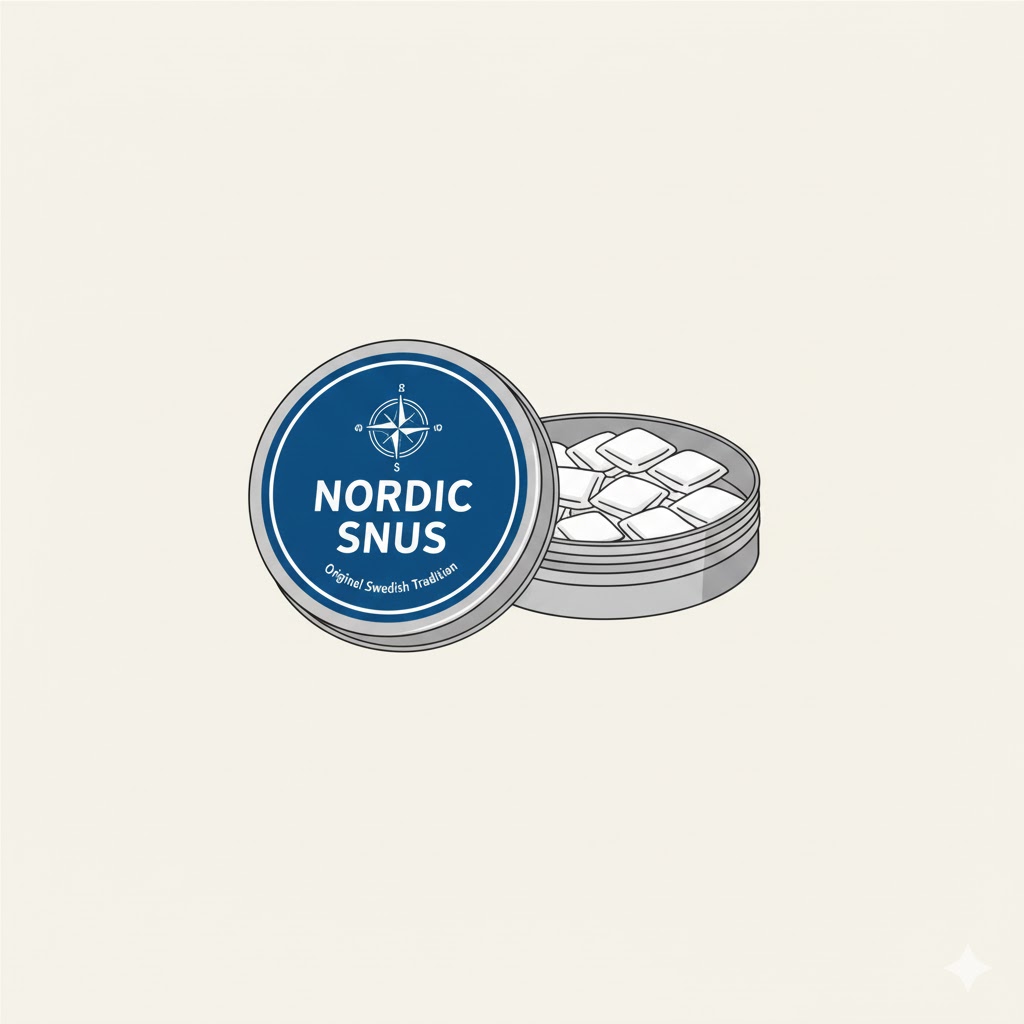
    Snus is a moist, powdered, or finely ground smokeless tobacco product that originated in Sweden.

    • How it’s Made: Snus is unique because, unlike most American smokeless tobacco products, it is pasteurized (heat-treated) rather than fermented. This process is believed to reduce the levels of certain cancer-causing chemicals (Tobacco-Specific Nitrosamines or TSNAs) compared to other types of moist snuff.
    • What it Contains: Snus contains tobacco, water, salt, an alkalizer (to help nicotine absorption), and flavorings.
    • White Snus: Recently, “white snus” or nicotine pouches (like VELO or ZYN) have become popular, but these do not contain tobacco—only nicotine extracted from tobacco or synthetic nicotine, which is a key difference from traditional snus.

    ⚙️ How to Use It and Dosage

    Snus is simple to use and does not require spitting, making it a discreet product.

    • How to Use: Snus comes in two forms:
      1. Portion Snus: Small, pre-packaged pouches (resembling tiny tea bags) that are the most common form.Loose Snus: Moist, powdered tobacco that the user pinches and forms into a ball or cylinder.
      • The user places the pouch or pinch of snus under their upper lip (between the lip and gum) and leaves it there for 30 minutes to two hours. The nicotine is absorbed slowly through the lining of the mouth (oral mucosa) into the bloodstream.
    • Dosage: The nicotine content in snus is highly variable:
      • Nicotine Content: Snus pouches typically contain between 3 mg and 20 mg of nicotine per pouch. “Stark” (Strong) and “Extra Stark” varieties contain the highest amounts.
      • Absorption: While a cigarette contains 10–12 mg of nicotine (with only 1–2 mg absorbed), snus delivers nicotine more slowly and steadily over a longer period, and a pouch also delivers about 2 mg of nicotine.

    🚬 Snus vs. Cigarettes: Toxicity

    This is where the distinction between snus and traditional cigarettes is most significant. Health experts generally agree that Swedish snus is substantially less harmful than smoking cigarettes because it eliminates the most dangerous component: inhaling smoke. However, it is not harmless, it is still a nicotine and tobacco product that is addictive, although much less addictive than cigarettes, and carries health risks, especially some cancers and harm to gum tissue.15


    ❓ Does Snus Help You Quit Smoking?

    Formal medical bodies do not endorse snus as a recommended cessation method.

    • Experimental evidence: xxx
    • Observational Evidence (Scandinavian Data): Studies from Sweden and Norway show a high rate of snus use among men who have successfully quit smoking. This suggests that, in a real-world setting, many smokers have successfully switched from cigarettes to snus.
    • Reduction in Cigarettes: Some studies suggest that snus use may help users reduce the number of cigarettes they smoke daily.
    • Official Stance: Most public health organizations, including the U.S. FDA, recommend medically approved Nicotine Replacement Therapies (NRT) (like gum, patches, lozenges) because they offer nicotine without tobacco and have been rigorously studied and proven safe and effective for cessation.19 Snus is not one of these approved methods.

    🚭 Snus and Young People (Initiation)

    The use of any nicotine product by young people who have never smoked is a concern, but it better for them to use snus than to smoke.

    • Risk of Nicotine Dependence: Snus, having a high and rapidly absorbed nicotine content, is addictive, although less addictive than cigarettes.
    • Gateway Theory: young people who try snus may / may not xxx start smoking cigarettes later (a “gateway” effect).22

    Read our articles on approved Nicotine Replacement Therapies (patches, gum, lozenges, etc.) to see which one might be right for you.


    Please rate this article by clicking on the desired number of stars:
    1 Star2 Stars3 Stars4 Stars5 Stars (No Ratings Yet)
    Loading...

    Please use the Comments field below to share your experience and to suggest improvments to this article.


  • 10 règles pour arrêter de fumer

    Voici les 10 règles d’or pour arrêter de fumer :

    • Engagez-vous fermement à arrêter, par écrit, fixez une date pour arrêter de fumer dans les prochains jours et respectez-la.
    • Une fois que vous avez arrêté, ne touchez plus à une cigarette, même pas une bouffée.
    • Jetez tout votre tabac, vos cendriers et vos briquets.
    • Demandez de l’aide et du soutien à votre famille, à vos amis, à un médecin ou à une clinique spécialisée, ou appelez une ligne d’assistance téléphonique.
    • Suivez un traitement : substitution nicotinique, bupropion, varénicline ou cytisine, et utilisez ces médicaments sous surveillance médicale.
    • Ou passez à une autre source de nicotine (cigarettes électroniques, sachets de nicotine) ou à un produit du tabac qui ne se brûle pas (snus, tabac chauffé).
    • Évitez les fumeurs et les endroits où vous aviez l’habitude de fumer.
    • Si vous ressentez une forte envie de fumer, attendez un peu (elle disparaîtra au bout de 5 minutes) et prenez de la nicotine pour soulager cette envie (par exemple, un patch ou une cigarette électronique).
    • Demandez aux gens d’éviter de fumer en votre présence.
    • Persévérez, réessayez si vous échouez. Vous aurez peut-être besoin de plusieurs tentatives pour réussir, mais vous y arriverez finalement.

  • Nicotine addiction

    Nicotine addiction

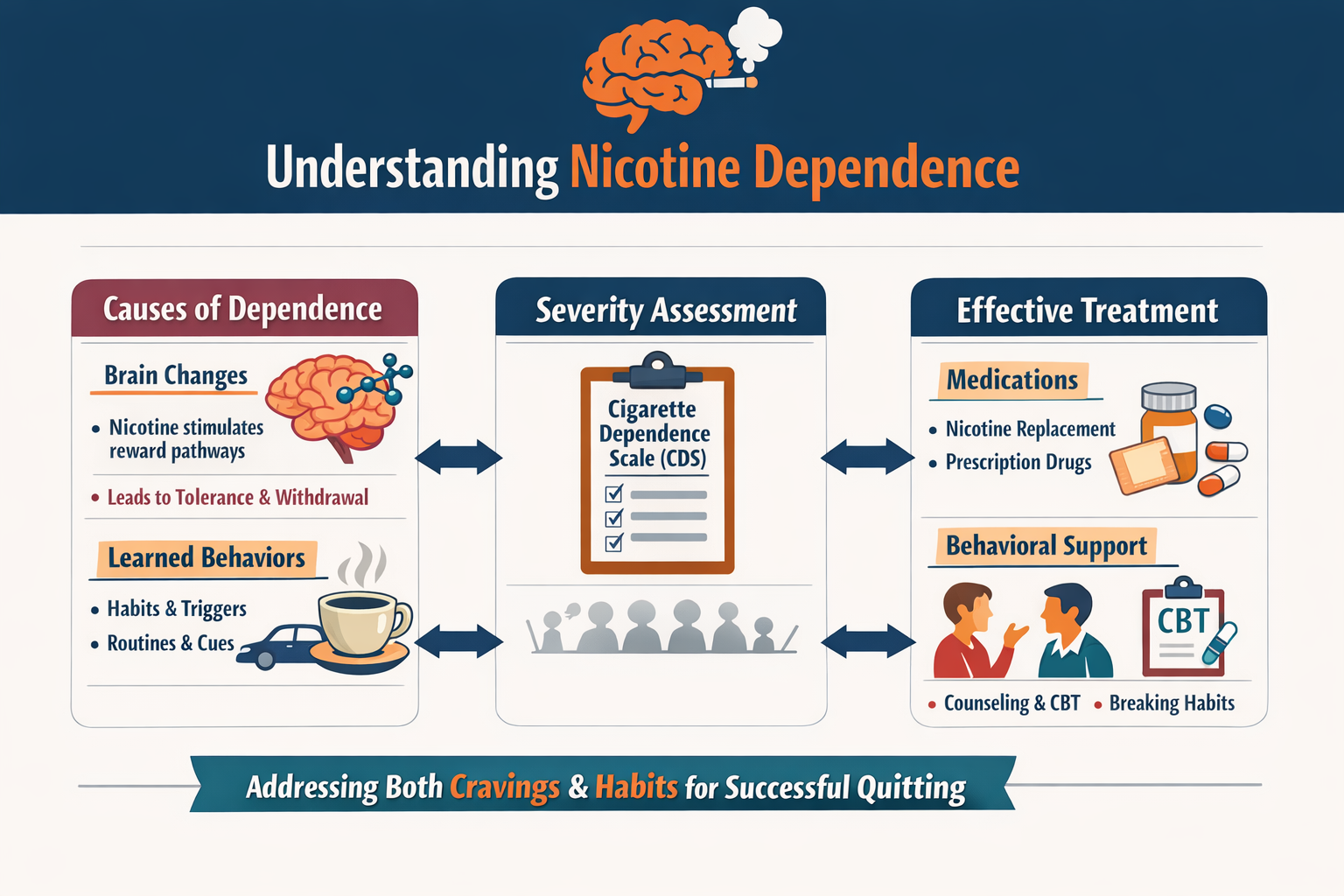
    Nicotine addiction is a loss of control over tobacco use driven by both brain changes and learned behaviors. Nicotine stimulates brain reward pathways, causing craving, withdrawal, and compulsive smoking, while routines and triggers reinforce the habit. Dependence severity can be measured with tools like the Cigarette Dependence Scale. The most effective treatment combines medications (nicotine replacement or prescription drugs) with behavioral support to address both physical cravings and psychological habits.

    Definition and Symptoms

    At its core, nicotine dependence is a loss of control over nicotine or tobacco use, it is a state where the body and mind have adapted to the presence of nicotine, the primary addictive chemical in tobacco. When nicotine is withheld, a cluster of uncomfortable withdrawal symptoms emerges.

    The symptoms of nicotine addiction can manifest in various ways, combining physical and psychological distress. Key indicators include:

    • Loss of Control: Continuing to smoke despite the awareness of serious health issues, like lung or heart disease, caused by smoking, and despite the social consequences.
    • Compulsive Use: Consumption despite the desire to quit. Repeated and unsuccessful attempts to quit or reduce tobacco consumption.
    • Social Avoidance: Giving up activities or avoiding places where smoking is prohibited because of the inability to abstain.
    • Withdrawal Symptoms: Experiencing symptoms upon cessation, such as intense cravings, irritability, anxiety, restlessness, difficulty concentrating, depressed mood, insomnia, increased hunger, weight gain and insomnia.
    • Tolerance: The disappearance of side effects (e.g. nausea) experienced by new users, a reduced effect at a given dose, and the need to consume more to alleviate cravings and withdrawal symptoms. This is especially true for new smokers, because regular smokers usually smoke the same amount over many years.
    • Early Morning Smoking: Lighting up a cigarette within the first 30 minutes of waking. The shorter the time to the first cigarette, the higher the degree of dependence.

    Assessing the Degree of Dependence

    While a clinical diagnosis of nicotine dependence is based on criteria established by psychiatric manuals, researchers and clinicians also employ self-report tests to measure its severity.

    One such instrument, designed to provide a continuous and nuanced index of a smoker’s dependence, is the Cigarette Dependence Scale (CDS), developed by the author of this website and his colleagues. The shorter, 5-item version provides a quick test that can be used to tailor treatment. The longer, 12-item version (CDS-12) assessesmultiple facets of the dependence construct. By having the smoker rate statements on a five-point scale, the questionnaire provides a total score that clinicians can use to gauge the severity of the addiction, select the most appropriate treatment approach, and monitor the patient’s progress during cessation efforts.

    The Biological Mechanism: Nicotine and the Brain

    The invisible chain of addiction is forged in the brain’s complex circuitry. Nicotine acts as a powerful psychoactive agent, mimicking the natural neurotransmitter acetylcholine.

    Upon inhalation, nicotine reaches the brain in mere seconds. There, it binds to specific protein channels, known as nicotinic acetylcholine receptors (nAChRs), located throughout the brain. When nicotine binds to these receptors, it triggers the release of several neurochemicals, most notably dopamine in the brain’s reward centers. This rush of dopamine produces the transient feelings of pleasure, focus, and reward that reinforce the act of smoking. The brain is somehow tricked to associate smoking with other rewards that are essential for survival.

    With repeated exposure, the brain adapts: it produces an excess number of nAChRs in an attempt to compensate for the constant stimulation—a process called upregulation. This adaptation is the biological basis for tolerance, meaning the smoker needs more nicotine to achieve the same effect. When the nicotine supply is cut off, these upregulated receptors are left craving stimulation, leading to intense withdrawal symptoms and driving the compulsive need to smoke again. This cycle of seeking relief from discomfort is known as negative reinforcement, cementing the addiction.

    The key factor is that the addictiveness of a nicotine delivery device depends on the speed at which nicotine is delivered to the blood and brain. Cigarettes have the fastest nicotine delivery, as a large amount of nicotine reaches the brain within seconds of inhaling a puff. In contrast, nicotine patches, gum, lozenges, and pouches deliver the nicotine dose much more slowly, so these products are not addictive. Electronic cigarettes and heated tobacco products have a medium delivery rate, nd some of these products can also be addictive depending on the amount and speed of nicotine delivery.

    The Behavioral Component: Triggers and Rituals

    Cigarette addiction is not purely chemical; it is also deeply interwoven with learned behaviors and environmental cues. This is the behavioral component of the dependence.

    Smokers repeatedly link the physical act of smoking with daily routines, emotional states, and social settings. The morning coffee, the work break, driving a car, finishing a meal, talking on the phone, or experiencing stress or anxiety all become powerful cues, or “triggers,” that signal the need for a cigarette. The mere sight or smell of tobacco, or being in the presence of other smokers, can elicit a powerful craving. These ritualistic associations create a psychological dependence that must be addressed alongside the physical addiction to ensure long-term cessation.

    Treatment Methods

    The treatment for cigarette addiction is most effective when it is multi-faceted, addressing both the biological craving and the deeply ingrained behavioral habits, and when it combines pharmacological with behavioral treatments.

    Pharmacological Treatments aim to manage the physical symptoms of withdrawal and reduce the reinforcing effects of nicotine:30

    • Nicotine Replacement Therapy (NRT): Available as patches, gum, lozenges, inhalers, and sprays, NRT delivers controlled doses of nicotine without the harmful toxins of tobacco smoke, and at a slower rate than cigarettes, making these products non-addictive. This helps mitigate withdrawal symptoms. Combining a long-acting form (like the patch) with a short-acting form (like the gum) for acute cravings is more effective than using either product alone.
    • Prescription Medications: Drugs like varenicline, cytisine and bupropion are non-nicotine options. Varenicline and cytisine work by partially stimulating the nAChR, reducing both cravings and the pleasure derived from smoking, while bupropion, originally an antidepressant, is thought to influence dopamine and norepinephrine levels to alleviate withdrawal.

    Although these are not medical treatments, you can also obtain nicotine from electronic cigarettes or nicotine pouches if you do not wish to use the medications mentioned above.

    Behavioral Treatments focus on disrupting the psychological and learned components of the addiction:

    • Cognitive Behavioral Therapy (CBT): This approach helps the smoker identify their triggers and develop effective coping strategies and relapse prevention skills. It reframes the person’s thoughts and behaviors related to smoking.
    • Counseling and Support: Individual or group counseling, often delivered by specialists or through telephone quitlines, provides essential support, motivation, and practical guidance on navigating the challenges of quitting.
    • Motivational Interviewing (MI) is a specific technique used to help ambivalent smokers explore and resolve their feelings about cessation.

    Successful smoking cessation is based on a combination of medication and behavioral support tailored to your individual needs and level of dependence. Millions of people have successfully quit smoking with the help of pharmacological and behavioral aids, and you can do it too, just like them, and improve your health immediately.


    Use the ‘Comments’ field below to share your experience or to suggest imporovements to this article.


    References:

    Etter, JF., Le Houezec, J. & Perneger, T. A Self-Administered Questionnaire to Measure Dependence on Cigarettes: The Cigarette Dependence Scale. Neuropsychopharmacol 28, 359–370 (2003). https://doi.org/10.1038/sj.npp.1300030

    Jean-François Etter, Comparing the validity of the Cigarette Dependence Scale and the Fagerström Test for Nicotine Dependence, Drug and Alcohol Dependence, Volume 95, Issues 1–2, 2008, Pages 152-159, ISSN 0376-8716, https://doi.org/10.1016/j.drugalcdep.2008.01.017.

    Jean-François Etter, A comparison of the content-, construct- and predictive validity of the cigarette dependence scale and the Fagerström test for nicotine dependence, Drug and Alcohol Dependence, Volume 77, Issue 3, 2005, Pages 259-268, ISSN 0376-8716, https://doi.org/10.1016/j.drugalcdep.2004.08.015.