
Tag: addiction to cigarettes

  • Asthma

    Asthma

    Asthma is a chronic condition in which the airways become inflamed, narrowed, and overly sensitive. Smoking has a profound impact on asthma, not only increasing the risk of developing the disease but also making symptoms more severe and harder to control.


    How smoking causes and worsens asthma

    Cigarette smoke contains thousands of chemicals that irritate and damage the airways. In people with asthma, the airways are already inflamed and reactive. Smoking adds a constant source of irritation, which intensifies this inflammation and makes the airways even more sensitive to triggers such as allergens, cold air, or exercise.

    Over time, smoking alters the structure of the airways. It increases mucus production, damages the lining of the lungs, and reduces the effectiveness of the natural defense mechanisms that clear irritants. This leads to more frequent symptoms such as wheezing, coughing, chest tightness, and shortness of breath.

    Smoking also reduces the effectiveness of asthma medications, particularly inhaled corticosteroids, which are the cornerstone of asthma treatment. As a result, smokers with asthma often experience poorer disease control, more frequent exacerbations, and a higher risk of hospitalization.

    In some individuals, long-term smoking can lead to a combination of asthma and chronic obstructive pulmonary disease (often referred to as asthma-COPD overlap), which is associated with more severe and persistent airflow limitation.


    The impact of secondhand smoke on asthma

    Even if you do not smoke, exposure to secondhand smoke can significantly affect asthma. In children, it is a major risk factor for developing asthma in the first place. In both children and adults who already have asthma, secondhand smoke can trigger attacks and worsen daily symptoms.

    Regular exposure to smoke increases airway inflammation and sensitivity. It can lead to more frequent use of rescue inhalers, more missed school or work days, and a reduced quality of life. For people with severe asthma, even brief exposure can provoke serious symptoms.

    Creating a smoke-free environment at home and in cars is therefore critical, especially when someone in the household has asthma.


    How quitting smoking improves asthma

    Quitting smoking is one of the most effective ways to improve asthma control. Once exposure to smoke stops, airway irritation begins to decrease, and the lungs start to recover.

    People who quit smoking often notice that their symptoms become less frequent and less severe. They may experience fewer asthma attacks, better breathing, and improved response to medications. Over time, lung function can stabilize or even improve, particularly if quitting occurs before significant long-term damage has developed.

    Quitting also reduces the risk of developing more severe lung disease and helps protect against infections that can trigger asthma exacerbations.


    How quickly do improvements occur?

    The timeline of improvement after quitting smoking varies depending on the severity and duration of asthma, as well as how long the person has smoked.

    Within the first few days to weeks, carbon monoxide levels drop and oxygen delivery improves. Some people begin to notice easier breathing and less coughing within the first two to four weeks, as airway irritation starts to subside.

    Over the next one to three months, lung function can improve measurably. Airways become less reactive, and the frequency of symptoms and exacerbations often decreases. Medications may start to work more effectively during this period.

    In people with mild to moderate asthma, significant improvements are often seen within a few months, with better overall control and fewer limitations in daily activities.

    For those with more advanced or long-standing asthma, especially if there has been structural damage to the airways, improvements may be slower and less complete. However, even in these cases, quitting smoking reduces further decline, decreases exacerbations, and improves quality of life.

    After one year and beyond, the benefits continue to accumulate. The risk of severe complications decreases, and lung function decline slows compared to those who continue smoking.

  • Cannabis and tobacco

    Cannabis and tobacco

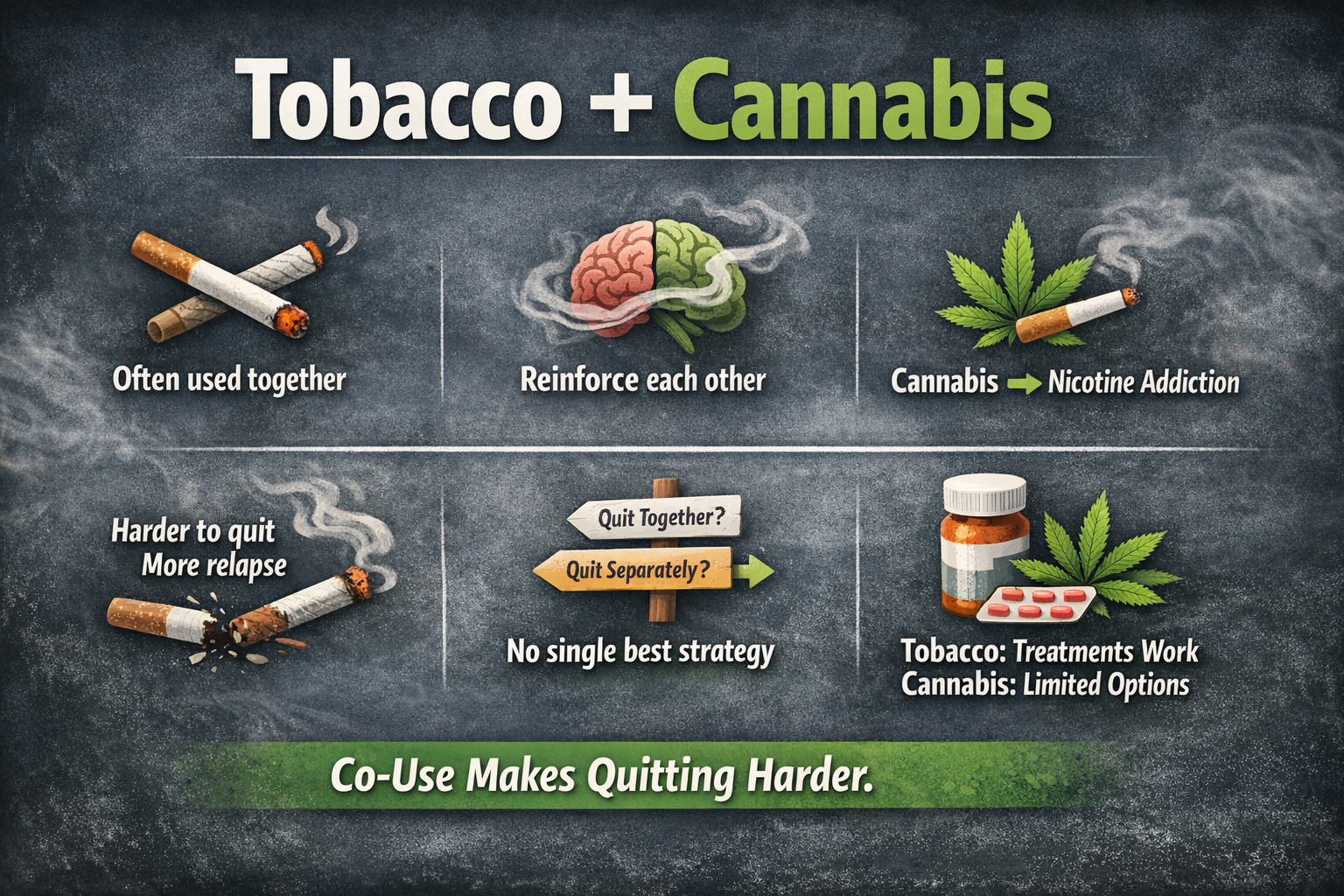
    The article explains how tobacco and cannabis reinforce each other biologically and behaviorally. While THC and nicotine target distinct but interacting systems in the brain, cannabis often acts as a gateway that leads to or sustains nicotine addiction. Because cannabis use is a major trigger for tobacco relapse, experts generally recommend quitting both simultaneously to break the cycle. While specific medications for cannabis are limited, combining traditional nicotine replacement therapy with behavioral support offers the best chance at a clean break.

    A shared landscape of use

    Globally, tobacco remains one of the most widely consumed psychoactive substances, with more than a billion users. Cannabis, once more marginal, now counts nearly 200 million users worldwide. What is striking is not only the scale of each phenomenon, but their intersection. Among people who use tobacco, cannabis use is disproportionately common, and vice versa. In some populations, more than half of cannabis users also smoke tobacco (1).

    This overlap is not incidental. In countries where both substances are widely available, roughly one in three tobacco users also consumes cannabis (2), and daily cannabis use is markedly higher among smokers than among non-smokers (3). Among young users of nicotine products, co-use rates can exceed 50% (4). What emerges is not two parallel epidemics, but a shared behavioral ecosystem.

    Why people use both

    The reasons for co-use are as much cultural as they are pharmacological. For some, tobacco enhances the psychoactive effects of cannabis; for others, cannabis softens the stimulation of nicotine. Mixing the two is common practice in many regions.

    But beyond habit and ritual lies a deeper interaction. Users report that one substance can trigger cravings for the other, or serve as a substitute when the preferred drug is unavailable. This behavioral coupling reflects overlapping reward pathways in the brain, where both nicotine and THC act on interconnected neurochemical systems.

    Social context also plays a decisive role. Initiation often occurs in shared environments—peer groups, nightlife, or informal settings—where the boundary between substances is blurred. Over time, this proximity fosters conditioning: the act of smoking, regardless of the substance, becomes a cue in itself.

    From cannabis use to nicotine dependence

    One of the most underappreciated pathways in addiction is the role cannabis can play in initiating or reinforcing nicotine dependence. This occurs through several mechanisms.

    First, co-administration—mixing tobacco with cannabis—introduces nicotine to individuals who might not otherwise use tobacco. This is particularly evident when cannabis is consumed with tobacco rather than in pure form.

    Second, repeated exposure to nicotine, even at low doses, can lead to dependence. Evidence suggests that cannabis users who also smoke tobacco exhibit higher levels of nicotine dependence than those who smoke cigarettes alone.

    Third, the relationship is bidirectional. Tobacco use appears to increase the risk of cannabis dependence and relapse, while cannabis use increases the likelihood of developing nicotine dependence and makes quitting tobacco more difficult.

    In short, cannabis does not merely coexist with tobacco; it can act as a gateway into sustained nicotine addiction.

    Nicotine, THC, and the brain

    Nicotine and THC operate through distinct but interacting systems in the brain. Nicotine stimulates nicotinic acetylcholine receptors, leading to the release of dopamine in reward circuits. THC, the main psychoactive compound in cannabis, acts primarily on the endocannabinoid system, modulating neurotransmitter release and influencing mood, memory, and perception.

    Where it becomes complex is in their interaction. Experimental and clinical studies suggest that nicotine may partially offset some cognitive impairments associated with cannabis use, particularly in memory (5). This “compensatory” effect may reinforce co-use: users perceive a functional benefit in combining the two.

    At the same time, the endocannabinoid system appears to play a role in nicotine dependence itself, influencing craving and withdrawal. The two substances are not simply additive; they are biologically intertwined.

    Quitting tobacco in the context of cannabis use

    One of the most challenging realities is that cannabis use complicates smoking cessation. People who use both substances tend to experience more intense withdrawal symptoms during tobacco quit attempts, at least in the early stages (6).

    Relapse is also more common. Cannabis can act as a trigger—both behaviorally and neurochemically—reactivating the urge to smoke tobacco. Conversely, quitting tobacco may lead some individuals to increase cannabis use as a form of compensation, a phenomenon observed in several studies.

    The evidence is not entirely consistent, but the overall picture is clear: co-use introduces instability into the quitting process.

    Quit together or separately?

    This question has no universal answer, and the scientific literature reflects that ambiguity. Some data suggest that addressing both substances simultaneously may prevent substitution effects and improve overall outcomes. Others indicate that focusing on one substance at a time may be more manageable for certain individuals.

    What is increasingly recognized is that co-users are not a homogeneous group (7). Patterns of use vary—simultaneous versus separate, daily versus occasional, dependent versus recreational—and these differences matter. Tailored approaches, rather than one-size-fits-all strategies, are likely to be more effective.

    Treatment options: what works, what doesn’t

    For tobacco cessation, the evidence base is strong. Nicotine replacement therapies, varenicline, cytisine and bupropion remain the cornerstone treatments, combined with behavioral support.

    For cannabis, the situation is more uncertain. No pharmacological treatment has yet demonstrated consistent efficacy for cannabis use disorder. Behavioral interventions—cognitive-behavioral therapy, motivational interviewing, contingency management—remain the primary tools.

    For people who use both substances, integrated treatment approaches are still rare. Clinical trials have only begun to address co-use directly, and the results are modest. Interventions may reduce cannabis consumption, but their impact on tobacco cessation is less clear (8).

    This gap reflects a broader issue: healthcare systems are still largely organized around single-substance models, while real-world use is increasingly multi-substance.


    Use the ‘Comments’ field below to share your experience and to suggest improvements to this article, or write a testimonial.


  • Alcohol and tobacco

    Alcohol and tobacco

    For many smokers, the link is visceral. The smell of beer or the taste of wine triggers an almost instinctive reflex to reach for a cigarette. This powerful link between tobacco and alcohol is not only a difficult habit to break, it is a synergistic threat that greatly amplifies the health risks, far beyond the sum of its parts. Understanding why these two substances are so often consumed together and the amplified dangers they create is crucial for anyone trying to break free from the grip of tobacco.

    The Science of the Sinister Pair

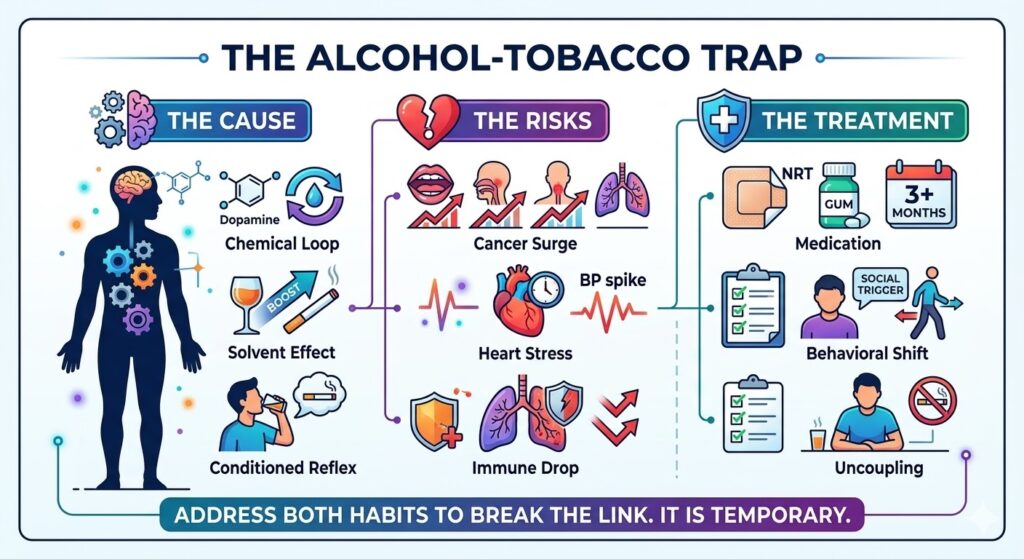
    Why do alcohol and tobacco seem so inseparable? The reason lies in the intricate interplay of chemistry and habit. Nicotine, a powerful stimulant, works on the brain’s reward pathways by releasing dopamine. Alcohol, conversely, is a central nervous system depressant. Paradoxically, alcohol can heighten the pleasant effects of nicotine while simultaneously dulling its stimulant edge. This can lead smokers to consume more cigarettes to maintain the desired effect, creating a escalating cycle. Beyond the physical, there is the powerful associative learning. Years of pairing cigarettes with drinks in social settings or during stress create potent neural pathways. The very atmosphere of a bar, or the taste of a specific beverage, becomes a signal to the brain, igniting a forceful craving.

    A Compound Crisis: The Amplified Health Threats

    While either habit alone is a significant health burden, consuming tobacco and alcohol together creates a compounding crisis. This synergy dramatically accelerates the risk of various cancers. Alcohol acts as a solvent, increasing the body’s absorption of the carcinogenic chemicals in tobacco smoke. Nowhere is this devastating teamwork more apparent than in cancers of the mouth, throat, and esophagus. Studies consistently show that the risk of developing these diseases is exponentially higher for combined users compared to those who only smoke or only drink. The relationship is not simply additive; it is multiplicative. Cardiovascular risks also surge. Both substances stress the heart and blood vessels—alcohol can raise blood pressure, while nicotine constricts arteries and boosts heart rate. Together, they form a perfect storm for heart attacks, strokes, and peripheral arterial disease. Respiratory diseases, too, are exacerbated, as alcohol weakens the immune response in the lungs, leaving them more vulnerable to the damage caused by tobacco smoke.

    Devising a Treatment Strategy: Breaking the Double Habit

    Successful cessation in the context of combined alcohol and tobacco use requires a comprehensive, integrated approach. The most effective strategies utilize a dual-pronged assault, combining pharmacological support with robust behavioral therapies. On the medication front, several options can help. Nicotine Replacement Therapies (NRT) like patches, gum, and lozenges can manage nicotine withdrawal, reducing the urge to smoke when alcohol triggers arise. Prescription medications such as Varenicline (Chantix) or Bupropion (Zyban) work differently, targeting nicotine receptors or neurotransmitters in the brain to decrease both the pleasure of smoking and the intensity of cravings. It’s essential to consult a healthcare provider to determine the safest and most suitable medication, especially if there are underlying health conditions linked to alcohol use.

    The Behavioral Blueprint: Rewriting the Script

    Medication provides a critical foundation, but behavioral therapy offers the essential toolkit for long-term success. Cognitive Behavioral Therapy (CBT) is highly effective, helping individuals identify the unique, interconnected triggers that link their drinking to their smoking. Individuals learn to anticipate high-risk situations—the post-work pint or the weekend gathering—and develop specific, actionable coping mechanisms. These strategies might involve developing assertive refusal skills, planning smoke-free social activities, or finding alternative ways to manage stress that don’t involve either substance. Furthermore, counseling addresses the underlying emotional drivers. Support groups provide a powerful sense of community and shared struggle. Many cessation programs now explicitly address the tobacco-alcohol link, helping participants systematically uncouple the habits. Learning to socialize without a drink in one hand and a cigarette in the other involves essentially relearning how to navigate social spaces. By developing these new skills and rewriting the ingrained behavioral script, individuals can systematically break the chain that binds tobacco and alcohol.


    Use the ‘Comments’ field below to share your experience or to suggest improvements to this page.


  • IQOS

    IQOS

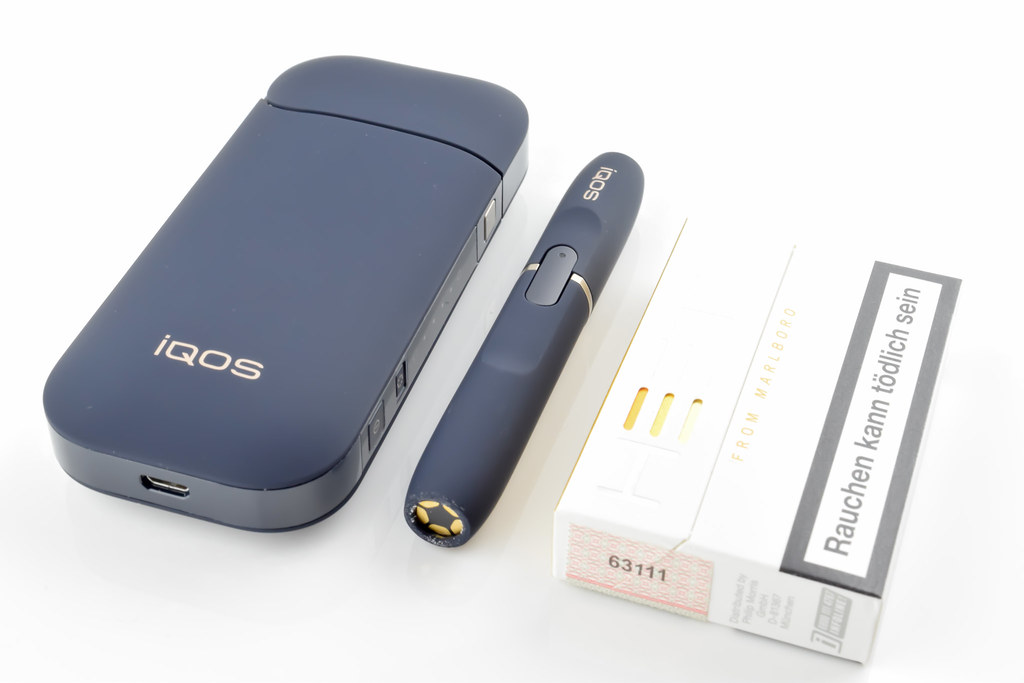
    Here is a summary about IQOS: what it is, how it works, the difference between combustion and pyrolysis, the composition of the aerosol compared to cigarette smoke, nicotine exposure: amount and speed of absorption into the blood and brain, can it help smokers quit, impact on cigarette sales in Japan, who should and should not use it, the fact that the US FDA has authorized it as a reduced exposure product but not as a reduced risk product, does it reduce health risks compared to cigarettes, impact on PMI’s sales and profits, the problem of the scarcity of manufacturer-independent research, and the controversy surrounding tobacco harm reduction. Use a journalistic style without bullet points or numbered lists, and avoid words, phrases, and transitional sentences typical of AI-generated content.

    IQOS, the flagship heated tobacco product from Philip Morris International (PMI), has become a fixture in the global debate over smoking and public health. Marketed as a revolutionary alternative to cigarettes, the device and its success, particularly in Japan, represent a high-stakes experiment in the contentious world of tobacco harm reduction.

    How Heating Differs from Burning

    At its core, IQOS is an electronic device designed to heat specially prepared tobacco sticks, called HEETS or HeatSticks, to a precise temperature, typically around 350 °C. This is the crucial distinction from a conventional cigarette, which combusts tobacco at temperatures often exceeding 800 °C.

    The difference lies in the process: Cigarettes rely on combustion (burning), which generates smoke filled with complex byproducts, including solid particles and toxic chemicals.5 IQOS employs a process closer to pyrolysis (thermal decomposition in the absence of oxygen). This heating process generates an aerosol—a vapor composed primarily of nicotine and water, rather than smoke.6

    What’s In the Cloud: Aerosol Composition

    Because it avoids combustion, the aerosol produced by IQOS contains significantly lower levels of many harmful and potentially harmful chemical constituents compared to cigarette smoke.7 Manufacturer-sponsored studies often claim reductions of 90-95% for certain key toxicants, excluding nicotine.8 However, independent research has noted that while levels of many harmful substances are indeed reduced, the aerosol still contains nicotine and measurable concentrations of some toxicants, and the full long-term health impact is not yet known.9 Some independent analyses have even noted that certain chemicals may be present in higher concentrations compared to traditional smoke.10

    Nicotine Delivery and Addiction

    The device is specifically engineered to ensure that the user receives an amount and rate of nicotine absorption comparable to smoking a conventional cigarette.11 While the nicotine content in the specific tobacco sticks might be lower than in a cigarette, the delivery mechanism is highly efficient.12 This rapid and substantial dose of nicotine is what makes the product satisfying to current smokers, but it also ensures the user remains exposed to and dependent on an addictive substance.13 The amount of nicotine absorbed is similar to a cigarette, establishing a theoretical one-to-one usage ratio.14

    The Japan Experiment: Impact on Cigarette Sales

    Japan has become the key real-world laboratory for heated tobacco products.15 Following the widespread introduction of IQOS in 2014-2015, independent studies noted a dramatic, accelerated decline in sales of traditional cigarettes.16 Where cigarette sales were already falling slowly, the decline accelerated significantly, suggesting that a large number of smokers in Japan made a complete switch to the heated product.17 The experience there is frequently cited as proof that heated tobacco products can displace cigarette are are an alternative to them. Smoking rates among the general japanese population may not change as a result, as IQOS users may continue to smoke a few cigarettes.

    The Regulatory Status: Reduced Exposure, Not Reduced Risk

    In the United States, the Food and Drug Administration (FDA) authorized IQOS for marketing with a reduced exposure claim in 2020. This allows the company to communicate that “Scientific studies have shown that switching completely from conventional cigarettes to the IQOS system significantly reduces your body’s exposure to harmful or potentially harmful chemicals.”18

    Crucially, the FDA explicitly stated that this authorization did not mean IQOS had been proven to reduce the risk of disease or harm.19 The agency found that the evidence did not yet support a reduced risk claim, meaning users cannot assume that switching guarantees an improvement in long-term health outcomes compared to continued smoking, though the exposure is lower.

    Who Should Use It?

    IQOS is not a smoking cessation product; it is a tobacco product. Health authorities and the manufacturer agree that the product is intended only for adult smokers who would otherwise continue to smoke.20 It should not be used by non-smokers, former smokers, or young people, as it delivers addictive nicotine and carries health risks.21 Whether it genuinely helps smokers quit completely, rather than merely switching products, remains a subject of ongoing debate and research.

    The Conflict of Research and Profit

    The majority of the data initially supporting IQOS’s reduced-exposure claims came from PMI-sponsored studies, leading to persistent concerns within the public health community about the scarcity of fully manufacturer-independent research. While the number of independent studies is growing, there remains a lack of long-term data on health outcomes.22

    The controversy is central to the broader tobacco harm reduction debate.23 Advocates argue that providing a significantly less harmful nicotine delivery system offers smokers who are unwilling or unable to quit an invaluable path away from deadly cigarettes.24 Critics fear that these products, while potentially less harmful than smoking, risk addicting a new generation of users, undermine decades of successful tobacco control efforts, and serve primarily to boost the profits of tobacco companies like PMI, whose market share and revenue have significantly benefited from the global uptake of IQOS.

    The verdict on whether heated tobacco products serve the overall public health interest will not be rendered by initial sales figures or regulatory labels, but by decades of independent research tracking population health outcomes.


    Use the Comments field below to share your experience with IQOS or to suggest improvements to this article.


  • Non-daily and occasional smoking

    Non-daily and occasional smoking

    You often hear about daily smokers, but what about those who only smoke occasionally—maybe a cigarette on the weekend, a few times a month, or even just during a yearly vacation? If you’re a former smoker who sometimes considers “just one puff,” or if you currently identify as a non-daily or occasional smoker, this article is for you.


    Not All Smokers Are Addicted

    It’s true that not every person who smokes is addicted to nicotine. While many non-daily smokers do have some level of dependence, others smoke primarily due to habit, social cues, or psychological triggers (like stress or boredom) without experiencing severe withdrawal symptoms when they stop.

    • Occasional Smokers: These individuals might smoke a few times a month or a year. Their behavior is often tied to specific social situations (e.g., parties, bars) or emotional states.1 They may not feel a strong physical need for nicotine.
    • Non-Daily Smokers: These individuals smoke, but not every day. They might smoke a few cigarettes on the weekend but none during the week. This pattern is often the grey area where dependence is developing or already present, but perhaps not as intense as in a daily smoker.

    However, regardless of the level of addiction, any level of smoking carries risks.


    The Surprising Health Risks of Occasional Smoking

    The idea that “just a few” cigarettes can’t hurt is a dangerous myth. Research shows that non-daily and occasional smoking poses significant health risks.

    • Heart Disease: Occasional smoking significantly increases the risk of heart disease, almost doubling it compared to non-smokers. Even small amounts of smoke can damage blood vessels and increase the risk of blood clots.
    • Lung Cancer: While the risk is lower than for heavy smokers, occasional smokers are still several times more likely to develop lung cancer than people who have never smoked. There is no truly “safe” threshold for cigarette smoke exposure.
    • Other Cancers: Occasional smoking increases the risk of other cancers, including those of the esophagus, stomach, and bladder.
    • Respiratory Issues: Even occasional smoking can impair lung function and increase the risk of respiratory infections.

    The takeaway? When it comes to the toxic substances in tobacco smoke, your body suffers damage with every puff, although the risk increases with the number of cigarettes smoked per day, the frequency, and the duration of smoking.


    The High Risk of Relapse for Former Smokers

    If you have already quit smoking, the biggest threat is the thought that you can handle “just one” cigarette or “just a puff.”

    • Nicotine’s Power: Nicotine is highly effective at re-awakening the dormant addiction pathways in your brain. A single puff is often enough to remind your brain of the “reward” it used to receive.
    • The “Slippery Slope”: That single puff can easily lead to one cigarette the next week, then two the week after, and soon you find yourself back to daily smoking. Relapse rarely happens overnight; it starts with an occasional exception.
    • The Re-Establishment of Triggers: Even an occasional cigarette re-establishes the psychological connection between smoking and your daily life (stress, coffee, alcohol). This makes future cravings much stronger and harder to manage.

    Your Golden Rule: Not Even a Single Puff

    For anyone serious about staying quit, the most important rule is the simplest: You must never take another puff of tobacco.

    This strict policy is your strongest defense against relapse. It eliminates the need for decision-making in a weak moment: the answer is always no.

    If you are currently an occasional smoker who wants to stop before a full addiction takes hold, or a former smoker fighting the urge to try just one, remember: There is no healthy or safe level of smoking.


    Rate this article by clicking on the desired number of stars:
    1 Star2 Stars3 Stars4 Stars5 Stars (1 votes, average: 1.00 out of 5)
    Loading...

    Please use the “Comments” field below to share your experience or suggest improvements to this article.


  • Craving: the urge to smoke

    Craving: the urge to smoke

    Nicotinic receptors in the brain, hungry for their nicotine meal


    Craving, the irresistible and uncontrollable urge to light a cigarette is a major obstacle when trying to quit smoking. Understanding what a craving is, where it comes from, and how to deal with it is essential to successfully quitting smoking.


    What is a Craving and What Causes It?

    Simply put, a smoking craving is a powerful physical and psychological impulse to smoke or to use nicotine immediately.

    The Root Cause: Nicotine Addiction

    The core of the craving is your brain’s dependence on nicotine. When it is inhaled in tobacco smoke, nicotine is highly addictive (but the same nicotine in a nicotine patch is not addictive at all), and it alters the chemistry and the structure of your brain. Over time, your brain adapts: the number of nicotinic receptors increases and you start to need nicotine to feel “normal.” When you quit smoking, the nicotine level in your blood drops, and your brain sends out a distress signal, which we experience as a craving.

    The Triggers: Conditioning and Habit

    Smoking is heavily linked to daily routines and emotional states.5 Your brain has been conditioned to associate certain activities or feelings with smoking.6 These triggers fall into several categories:

    • Routine: Coffee, after a meal, driving, taking a break.7
    • Emotional: Stress, boredom, feeling happy or sad.8
    • Social: Being with friends who smoke, having a drink.9
    • Environmental: A specific armchair, a smoking spot outside work where you used to smoke.

    The 5-Minute Rule: a Powerful Tool

    Here’s the single most important fact to remember about a craving: It’s intense, but it’s short-lived.

    Research shows that the strongest part of a craving usually peaks and disappears after about five minutes.10

    Your job isn’t to make the craving vanish instantly; it’s to ride the wave for those few minutes until it naturally subsides. Remind yourself: “I just need to make it through the next five minutes.”


    The Role of Nicotine Replacement and Other Aids

    Don’t feel you have to fight this battle on willpower alone. Nicotine Replacement Therapy (NRT) and other aids are designed to give your brain the small, clean dose of nicotine it craves, without the thousands of toxins in cigarette smoke, helping you manage withdrawal symptoms.13

    • Nicotine Replacement Therapy (NRT): Patches provide a steady background dose, while gums, lozenges, inhalers, or sprays are “quick-response” aids you can use immediately when a craving strikes.14 They are excellent for helping you get past that critical 5-minute peak.
    • E-Cigarettes (Vaping): Vaping can serve as a transition tool.15 It mimics the hand-to-mouth action and provides nicotine in good flavors.
    • Oral Tobacco (Snus/Nicotine Pouches): These are sometimes used for harm reduction in places where they are legally available, offering a smoke-free nicotine source.16

    How to Deal with the Urge: Distraction is Key

    Since the urge is temporary, your strategy is simple: Distract yourself until the five minutes pass. You need quick, engaging activities that interrupt the thought process.

    Distraction Techniques

    • Move Your Body: Get up and walk around the house or office. Do 10 quick squats or push-ups.
    • Engage Your Hands: Play a quick game on your phone, doodle, chew gum, sip water slowly, or crunch on a carrot stick.11
    • Change Your Scenery: Step outside for a breath of fresh air (away from smoking areas), or move to a different room.12
    • Focus on Your Breath: Take five slow, deep breaths, counting to four on the inhale and four on the exhale.
    • Talk it Out: Send a text to a friend, or call a quitting support line.

    Specific Triggers and How to Control Them

    Triggers require a pre-planned response. Think of them as battle zones where you need a prepared counter-strategy.

    If the Urge Strikes…Try This Action Plan
    When you wake upDon’t leave the bedroom immediately. Drink a large glass of water, do a 2-minute stretch, chew a piece of nicotine gum, or brush your teeth.
    After a mealReplace the ritual. Immediately get up and clean the dishes, brush your teeth, chew a piece of nicotine gum, or call a friend for a quick chat.
    In the presence of smokersDistance yourself. Announce, “I’m going to grab a drink/fresh air,” and walk away for 5-10 minutes until they’ve finished their cigarette. Chew a piece of nicotine gum.
    In a stressful situationFocus on breathing. Use deep-breathing exercises. Take a 5-minute time-out to write down what’s stressing you, then crumple the paper.
    In a place you used to smokeChange the environment. Sit in a different chair, or physically block the usual smoking area (e.g., place a flowerpot there) to break the association.

    Every time you beat a craving, you weaken the addiction and strengthen your resolve. You are retraining your brain, one five-minute victory at a time. Keep going !


    Rate this article by clicking on the desired number of stars:
    1 Star2 Stars3 Stars4 Stars5 Stars (1 votes, average: 5.00 out of 5)
    Loading...


    Please use the “Comments” field below to share your experience or suggest improvements to this article.


  • The amount of nicotine in cigarettes

    The amount of nicotine in cigarettes

    Many people know that nicotine makes cigarettes addictive, but few know how much nicotine is actually in a cigarette, or how much nicotine your body absorbs when you smoke. Understanding these numbers can help you choose an alternative product that does not involve burning tobacco or inhaling smoke.

    How much nicotine is in a cigarette?

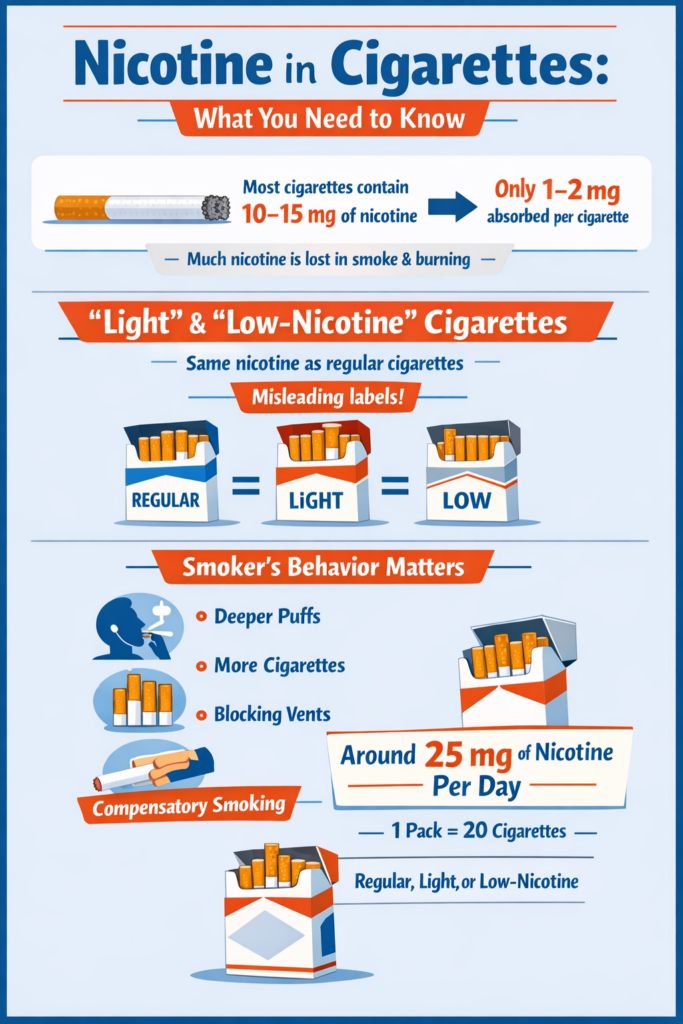
    The total amount of nicotine in a cigarette varies, but most commercial cigarettes contain between 10 and 15 milligrams (mg) of nicotine. This is the amount present in the tobacco before the cigarette is lit, but this figure does not reflect the whole picture. Most of the nicotine in a cigarette is destroyed by combustion or remains in the sidestream smoke that you do not inhale. What really matters is the amount of nicotine that enters your bloodstream.

    ‘Light’ or ‘low-nicotine’ cigarettes:

    Don’t be fooled by these labels! Studies have shown that cigarettes marketed as ‘light’ or ‘low-nicotine’ contain about the same amount of nicotine as regular cigarettes. The real difference lies in their design (air holes around the filter), which can affect how you smoke.

    How much nicotine do you actually inhale?

    You do not inhale all of the 10 to 15 mg of nicotine contained in a cigarette. When you light a cigarette and take a puff, a significant amount of nicotine is destroyed by heat or escapes as sidestream smoke. The amount of nicotine that enters your lungs and is absorbed in your blood (bioavailability) depends on many factors, including how the cigarette is manufactured and, most importantly, how you smoke it. A person who smokes one cigarette absorbs approximately 1 to 2 mg of nicotine. Although this amount may seem small compared to the total 15 mg, it is enough to deliver a powerful dose to your brain and satisfy your addiction.

    The smoker’s behavior matters

    The way a person smokes is the most important variable in the actual dose received. Each person behaves differently, and two people smoking the same cigarette may absorb different amounts of nicotine. Your brain acts like a thermostat that determines how much nicotine you need to feel good and avoid nicotine withdrawal symptoms. As a result, people who smoke “low nicotine” or “light” cigarettes do so differently than normal cigarettes. This is called compensatory smoking:

    Deeper puffs: If you use a low-nicotine cigarette, your body compensates by taking deeper, longer puffs to get the amount of nicotine your brain needs.

    Smoking more often: You may also simply smoke more cigarettes throughout the day.

    Blocking the vents: Some ‘light’ cigarettes have ventilation holes near the filter. Smokers often cover these with their fingers or lips, either unconsciously or intentionally, which increases the concentration of smoke inhaled and, consequently, the dose of nicotine.

    This means that a heavy smoker can easily absorb 25 mg of nicotine per day by smoking a pack of 20 cigarettes, whether these are regular, low-nicotine or light cigarettes.

    Why it is important to understand nicotine levels and the speed of delivery:

    Nicotine is the main addictive chemical in tobacco, it is what drives you to smoke one cigarette after another. When you inhale smoke, nicotine quickly enters your bloodstream and reaches your brain. This rush causes the release of a chemical that makes you feel good (dopamine), which is why smoking can be enjoyable or soothing. But this feeling is temporary, as the nicotine level in your blood drops quickly, leading to withdrawal symptoms.

    When you smoke, nicotine reaches your brain within 10 to 20 seconds of inhalation. This rapid effect is one of the reasons why cigarettes are so addictive. Your brain learns to anticipate this rapid rush, and cravings develop when nicotine levels drop. Nicotine replacement therapies (patches, gum, tablets) release nicotine at a much slower rate and therefore do not create addiction, even though the molecule is the same.

    Understanding how nicotine works helps to understand why nicotine replacement therapies (such as patches, gum or lozenges) are designed in this way: to provide controlled, lower doses of nicotine at a slower rate of delivery and without the toxic chemicals found in cigarette smoke.

    Knowing all this can make it easier to quit smoking.

    Knowing these figures can help you understand how cigarettes are designed to make you addicted. The tobacco industry adjusts the chemical composition so that nicotine reaches your brain quickly and reliably, not only by controlling the amount of nicotine in cigarettes with the same precision used by drug manufacturers to produce prescription drugs, but also by using chemical additives.

    To quit smoking without experiencing nicotine withdrawal symptoms, you need to replace the “dirty” nicotine you currently get from smoking with “clean” nicotine from nicotine replacement therapy (NRT): products such as patches, gum and lozenges deliver a controlled and steady dose of nicotine without the thousands of other toxic chemicals found in cigarette smoke. Nicotine-based medicines release nicotine at a much slower rate than cigarettes, which is why these products are not addictive. They help you manage withdrawal symptoms when you quit smoking.

    Behavioural support from a healthcare professional increases the effectiveness of nicotine replacement therapy. Peer support groups and quit-smoking helplines can also help you manage the psychological and behavioral aspects of quitting smoking.

    If you do not want to use NRT, you can also get nicotine from e-cigarettes or nicotine pouches, these products deliver sufficient amounts of nicotine but no smoke, and are therefore much less dangerous than cigarettes.


    Rate this article by clicking on the desired number of stars:
    1 Star2 Stars3 Stars4 Stars5 Stars (1 votes, average: 5.00 out of 5)
    Loading...

    Please use the “Comments” field below to share your experience or suggest improvements to this article.


  • Test: withdrawal symptoms

    Answer these questions to assess the level of your nicotine withdrawal symptoms.

    Please indicate if you agree with each of these statements:

  • Test your level of addiction to cigarettes

    Test your level of addiction to cigarettes

    The CDS test

    Answer these 5 questions to assess your level of addiction to cigarettes:

    Please rate your addiction to cigarettes on a scale of 0–1000 = I am NOT addicted to cigarettes at all
    100 = I am extremely addicted to cigarettes

    Addiction:
    0–20 = 1 point
    21–40 = 2 points
    41–60 = 3 points
    61–80 = 4 points
    81–100 = 5 points
    On average, how many cigarettes do you smoke per day? Cigarette/day :
    0–5 = 1 point
    6–10 = 2 points
    11–20 = 3 points
    21–29 = 4 points
    30+ = 5 points
    Usually, how soon after waking up do you smoke your first cigarette? Minutes :
    0-5 = 5 points
    6–15 = 4 points
    16–30 = 3 points
    31–60 = 2 points
    61+ = 1 point
    For you, quitting smoking for good would be: Impossible = 5 points
    Very difficult = 4 points
    Fairly difficult = 3 points
    Fairly easy = 2 points
    Very easy = 1 point
    After a few hours without smoking, I feel an irresistible urge to smoke Totally disagree = 1 point
    Somewhat disagree =2 points
    Neither agree nor disagree = 3 points
    Somewhat agree = 4 points
    Fully agree = 5 points

    Now add your points (maximum=25)

    Interpretation :

    5-10 points: Low level of addiction

    11-15 points: Moderate level of addiction

    16-20 points: Strong level of addiction

    21-25 points: Very strong level of addiction

    Our previous research found that a value of 16 or above indicates that your are strongly addicted to cigarettes.(a)

    This questionnaire is called the Cigarette Dependence Scale (CDS-5), it is a well-validated measure of dependence.(b)


    References:

    a) Etter JF, Comparing the validity of the Cigarette Dependence Scale and the Fagerström Test for Nicotine Dependence, Drug and Alcohol Dependence, Volume 95, Issues 1–2, 2008, Pages 152-159, ISSN 0376-8716, https://doi.org/10.1016/j.drugalcdep.2008.01.017.

    b) Etter, JF., Le Houezec, J. & Perneger, T. A Self-Administered Questionnaire to Measure Dependence on Cigarettes: The Cigarette Dependence Scale. Neuropsychopharmacology 28, 359–370 (2003). https://doi.org/10.1038/sj.npp.1300030


    Please rate this article by clicking on the desired number of stars:
    1 Star2 Stars3 Stars4 Stars5 Stars (2 votes, average: 5.00 out of 5)
    Loading...

    Please use the “Comments” field below to share your experience or suggest improvements to this article.


  • Relapse

    Relapse

    Quitting smoking is often a difficult break from a powerful addiction. However, the real test of resilience often begins after the initial withdrawal phase. A relapse is not a failure, but a common obstacle—a sign that the addiction pathways in the brain are still active. To remain abstinent in the long term, you must not only stay away from smoking, but actively build a life in which smoking no longer plays a role. This transition requires practical strategies and an unwavering commitment.

    Identifying the Enemy: High-Risk Triggers

    The majority of relapses occur in predictable situations that act as powerful psychological cues. Understanding these personal triggers is the first line of defense. They fall broadly into four categories:

    1. Social Triggers: Being around other smokers is perhaps the most immediate danger. Attending a party where everyone steps outside for a smoke break or going to a bar where smoking is allowed can easily compromise resolve.
    2. Emotional Triggers: Stress, anxiety, boredom, anger, sadness, or even a celebration can all signal the brain that it needs the soothing or stimulating effect of nicotine. For example, the former smoker who always reached for a cigarette after a heated argument with a spouse must have a replacement plan ready before the next disagreement even begins.
    3. Routine Triggers: These are the habitual pairings—the ritualistic moments in the day tied to a cigarette. The first cup of coffee in the morning, the end of a meal, or getting into the car are all prime examples. These triggers are the most ingrained and require consistent, active substitution.
    4. Craving and other nicotine withdrawal symptoms: a very strong urge to smoke (craving), being in a bad mood (sad or depressed, angry, irritable, impatient or agitated, anxious or nervous, rapid mood swings), poor sleep (insomnia), difficulty concentrating, increased hunger and weight gain. But quitting smoking also brings about a rapid improvement in smell and taste. These symptoms are alleviated by nicotine replacement therapy.

    The Escape Plan: Avoidance and Substitution

    To successfully navigate these high-risk moments, preparation is key. Avoidance is the simplest tactic for the immediate term. For instance, if a specific coffee shop was the regular smoking spot, the former smoker should temporarily change their morning routine, perhaps opting for tea at home or taking a different route to work.

    When avoidance is impossible, substitution becomes the main tool. This is where the commitment to a new behavior must override the old habit. If stress is the trigger, a five-minute substitution could involve deep-breathing exercises, a quick walk around the block, or texting a supportive friend. If the trigger is the end of a meal, the former smoker needs to immediately engage the mouth and hands with something else—brushing teeth right away, chewing nicotine gum, or eating a piece of hard candy. The crucial action is disrupting the old routine instantly.

    Navigating Cravings: The Four D’s

    Cravings, even months after quitting, are intense but short-lived. They typically peak within three to five minutes. Former smokers need a repertoire of rapid response mechanisms to survive this brief window of desire. In addition to taking a nicotine gum of lozenge, experts recommend the “Four D’s” strategy:

    • Delay: Wait it out. Tell oneself, “I will wait five minutes and see how I feel then.” By delaying, the intensity often subsides before the person gives in.
    • Deep Breathe: Take ten slow, deep breaths. This not only distracts but also helps manage the anxiety often associated with the craving.
    • Drink Water: Sip a glass of water slowly. The physical act engages the mouth and provides a minor distraction.
    • Do Something Else: Immediately change activities. If one is sitting, they should stand up and move. If they are talking, they should shift the topic. A quick distraction breaks the mental focus on the craving.

    Weight Gain

    Many former smokers gain a few pounds after quitting smoking. Weight gain can be delayed by using nicotine replacement products (patches, gum, tablet). This way, you can tackle one difficulty at a time: first, you quit smoking, then you use nicotine replacement products for a few months, and only when you stop using these products will you possibly gain weight.

    The Relapse Management Protocol

    The ultimate mistake is to treat a single slip as a total failure. A single cigarette is a slip, not a surrender. The danger lies in the self-defeating mindset that follows, leading to the full return to regular smoking.

    A successful relapse management protocol requires compassion and immediate action. If a former smoker has a cigarette, the focus must be on what happened just before that moment, identifying the trigger (Was it alcohol? Stress? A specific person?) and analyzing what defensive measure was skipped. The goal is to learn from the mistake and immediately recommit to the quit effort, disposing of any remaining cigarettes and reinforcing the substitution tactics for the next high-risk situation.

    Long-term success is built on the realization that abstinence is a continuous, conscious effort. It requires maintaining motivation, celebrating every smoke-free day, and understanding that managing the urge to smoke is a skill that improves, but never entirely disappears. Staying vigilant against the triggers is the true path to a permanently smoke-free life.


    Use the ‘Comments’ field below to share your experience or to suggest improvements to this article.