Category: Addiction

  • Cannabis and tobacco

    Cannabis and tobacco

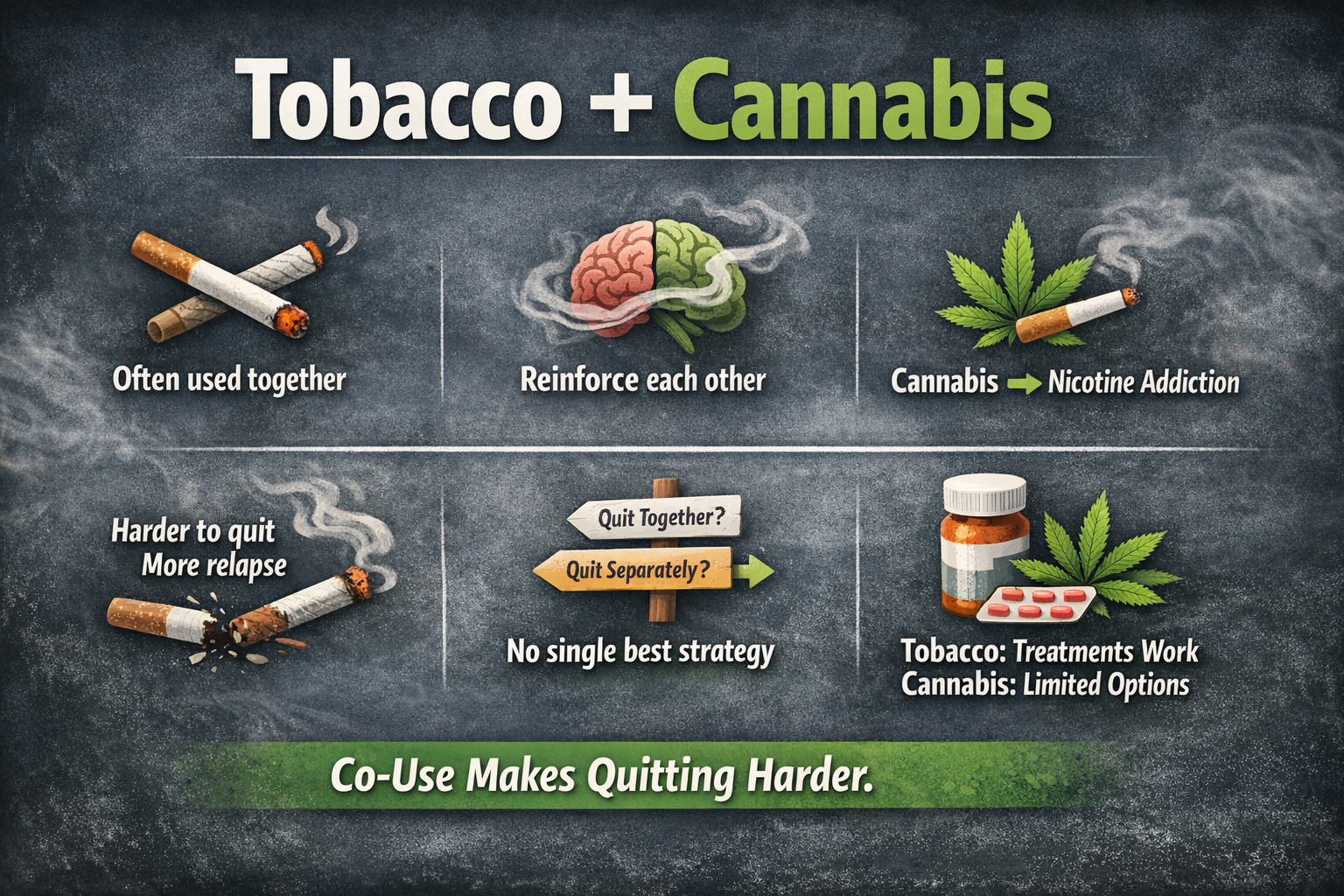
    The article explains how tobacco and cannabis reinforce each other biologically and behaviorally. While THC and nicotine target distinct but interacting systems in the brain, cannabis often acts as a gateway that leads to or sustains nicotine addiction. Because cannabis use is a major trigger for tobacco relapse, experts generally recommend quitting both simultaneously to break the cycle. While specific medications for cannabis are limited, combining traditional nicotine replacement therapy with behavioral support offers the best chance at a clean break.

    A shared landscape of use

    Globally, tobacco remains one of the most widely consumed psychoactive substances, with more than a billion users. Cannabis, once more marginal, now counts nearly 200 million users worldwide. What is striking is not only the scale of each phenomenon, but their intersection. Among people who use tobacco, cannabis use is disproportionately common, and vice versa. In some populations, more than half of cannabis users also smoke tobacco (1).

    This overlap is not incidental. In countries where both substances are widely available, roughly one in three tobacco users also consumes cannabis (2), and daily cannabis use is markedly higher among smokers than among non-smokers (3). Among young users of nicotine products, co-use rates can exceed 50% (4). What emerges is not two parallel epidemics, but a shared behavioral ecosystem.

    Why people use both

    The reasons for co-use are as much cultural as they are pharmacological. For some, tobacco enhances the psychoactive effects of cannabis; for others, cannabis softens the stimulation of nicotine. Mixing the two is common practice in many regions.

    But beyond habit and ritual lies a deeper interaction. Users report that one substance can trigger cravings for the other, or serve as a substitute when the preferred drug is unavailable. This behavioral coupling reflects overlapping reward pathways in the brain, where both nicotine and THC act on interconnected neurochemical systems.

    Social context also plays a decisive role. Initiation often occurs in shared environments—peer groups, nightlife, or informal settings—where the boundary between substances is blurred. Over time, this proximity fosters conditioning: the act of smoking, regardless of the substance, becomes a cue in itself.

    From cannabis use to nicotine dependence

    One of the most underappreciated pathways in addiction is the role cannabis can play in initiating or reinforcing nicotine dependence. This occurs through several mechanisms.

    First, co-administration—mixing tobacco with cannabis—introduces nicotine to individuals who might not otherwise use tobacco. This is particularly evident when cannabis is consumed with tobacco rather than in pure form.

    Second, repeated exposure to nicotine, even at low doses, can lead to dependence. Evidence suggests that cannabis users who also smoke tobacco exhibit higher levels of nicotine dependence than those who smoke cigarettes alone.

    Third, the relationship is bidirectional. Tobacco use appears to increase the risk of cannabis dependence and relapse, while cannabis use increases the likelihood of developing nicotine dependence and makes quitting tobacco more difficult.

    In short, cannabis does not merely coexist with tobacco; it can act as a gateway into sustained nicotine addiction.

    Nicotine, THC, and the brain

    Nicotine and THC operate through distinct but interacting systems in the brain. Nicotine stimulates nicotinic acetylcholine receptors, leading to the release of dopamine in reward circuits. THC, the main psychoactive compound in cannabis, acts primarily on the endocannabinoid system, modulating neurotransmitter release and influencing mood, memory, and perception.

    Where it becomes complex is in their interaction. Experimental and clinical studies suggest that nicotine may partially offset some cognitive impairments associated with cannabis use, particularly in memory (5). This “compensatory” effect may reinforce co-use: users perceive a functional benefit in combining the two.

    At the same time, the endocannabinoid system appears to play a role in nicotine dependence itself, influencing craving and withdrawal. The two substances are not simply additive; they are biologically intertwined.

    Quitting tobacco in the context of cannabis use

    One of the most challenging realities is that cannabis use complicates smoking cessation. People who use both substances tend to experience more intense withdrawal symptoms during tobacco quit attempts, at least in the early stages (6).

    Relapse is also more common. Cannabis can act as a trigger—both behaviorally and neurochemically—reactivating the urge to smoke tobacco. Conversely, quitting tobacco may lead some individuals to increase cannabis use as a form of compensation, a phenomenon observed in several studies.

    The evidence is not entirely consistent, but the overall picture is clear: co-use introduces instability into the quitting process.

    Quit together or separately?

    This question has no universal answer, and the scientific literature reflects that ambiguity. Some data suggest that addressing both substances simultaneously may prevent substitution effects and improve overall outcomes. Others indicate that focusing on one substance at a time may be more manageable for certain individuals.

    What is increasingly recognized is that co-users are not a homogeneous group (7). Patterns of use vary—simultaneous versus separate, daily versus occasional, dependent versus recreational—and these differences matter. Tailored approaches, rather than one-size-fits-all strategies, are likely to be more effective.

    Treatment options: what works, what doesn’t

    For tobacco cessation, the evidence base is strong. Nicotine replacement therapies, varenicline, cytisine and bupropion remain the cornerstone treatments, combined with behavioral support.

    For cannabis, the situation is more uncertain. No pharmacological treatment has yet demonstrated consistent efficacy for cannabis use disorder. Behavioral interventions—cognitive-behavioral therapy, motivational interviewing, contingency management—remain the primary tools.

    For people who use both substances, integrated treatment approaches are still rare. Clinical trials have only begun to address co-use directly, and the results are modest. Interventions may reduce cannabis consumption, but their impact on tobacco cessation is less clear (8).

    This gap reflects a broader issue: healthcare systems are still largely organized around single-substance models, while real-world use is increasingly multi-substance.


    Use the ‘Comments’ field below to share your experience and to suggest improvements to this article, or write a testimonial.


  • Alcohol and tobacco

    Alcohol and tobacco

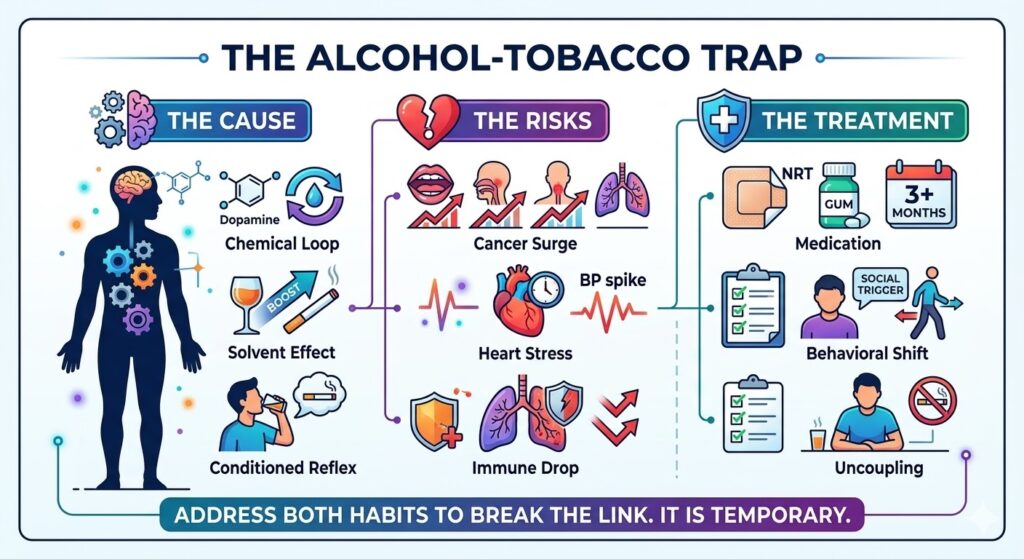
    For many smokers, the link is visceral. The smell of beer or the taste of wine triggers an almost instinctive reflex to reach for a cigarette. This powerful link between tobacco and alcohol is not only a difficult habit to break, it is a synergistic threat that greatly amplifies the health risks, far beyond the sum of its parts. Understanding why these two substances are so often consumed together and the amplified dangers they create is crucial for anyone trying to break free from the grip of tobacco.

    The Science of the Sinister Pair

    Why do alcohol and tobacco seem so inseparable? The reason lies in the intricate interplay of chemistry and habit. Nicotine, a powerful stimulant, works on the brain’s reward pathways by releasing dopamine. Alcohol, conversely, is a central nervous system depressant. Paradoxically, alcohol can heighten the pleasant effects of nicotine while simultaneously dulling its stimulant edge. This can lead smokers to consume more cigarettes to maintain the desired effect, creating a escalating cycle. Beyond the physical, there is the powerful associative learning. Years of pairing cigarettes with drinks in social settings or during stress create potent neural pathways. The very atmosphere of a bar, or the taste of a specific beverage, becomes a signal to the brain, igniting a forceful craving.

    A Compound Crisis: The Amplified Health Threats

    While either habit alone is a significant health burden, consuming tobacco and alcohol together creates a compounding crisis. This synergy dramatically accelerates the risk of various cancers. Alcohol acts as a solvent, increasing the body’s absorption of the carcinogenic chemicals in tobacco smoke. Nowhere is this devastating teamwork more apparent than in cancers of the mouth, throat, and esophagus. Studies consistently show that the risk of developing these diseases is exponentially higher for combined users compared to those who only smoke or only drink. The relationship is not simply additive; it is multiplicative. Cardiovascular risks also surge. Both substances stress the heart and blood vessels—alcohol can raise blood pressure, while nicotine constricts arteries and boosts heart rate. Together, they form a perfect storm for heart attacks, strokes, and peripheral arterial disease. Respiratory diseases, too, are exacerbated, as alcohol weakens the immune response in the lungs, leaving them more vulnerable to the damage caused by tobacco smoke.

    Devising a Treatment Strategy: Breaking the Double Habit

    Successful cessation in the context of combined alcohol and tobacco use requires a comprehensive, integrated approach. The most effective strategies utilize a dual-pronged assault, combining pharmacological support with robust behavioral therapies. On the medication front, several options can help. Nicotine Replacement Therapies (NRT) like patches, gum, and lozenges can manage nicotine withdrawal, reducing the urge to smoke when alcohol triggers arise. Prescription medications such as Varenicline (Chantix) or Bupropion (Zyban) work differently, targeting nicotine receptors or neurotransmitters in the brain to decrease both the pleasure of smoking and the intensity of cravings. It’s essential to consult a healthcare provider to determine the safest and most suitable medication, especially if there are underlying health conditions linked to alcohol use.

    The Behavioral Blueprint: Rewriting the Script

    Medication provides a critical foundation, but behavioral therapy offers the essential toolkit for long-term success. Cognitive Behavioral Therapy (CBT) is highly effective, helping individuals identify the unique, interconnected triggers that link their drinking to their smoking. Individuals learn to anticipate high-risk situations—the post-work pint or the weekend gathering—and develop specific, actionable coping mechanisms. These strategies might involve developing assertive refusal skills, planning smoke-free social activities, or finding alternative ways to manage stress that don’t involve either substance. Furthermore, counseling addresses the underlying emotional drivers. Support groups provide a powerful sense of community and shared struggle. Many cessation programs now explicitly address the tobacco-alcohol link, helping participants systematically uncouple the habits. Learning to socialize without a drink in one hand and a cigarette in the other involves essentially relearning how to navigate social spaces. By developing these new skills and rewriting the ingrained behavioral script, individuals can systematically break the chain that binds tobacco and alcohol.


    Use the ‘Comments’ field below to share your experience or to suggest improvements to this page.


  • Irritability, anger

    Irritability, anger

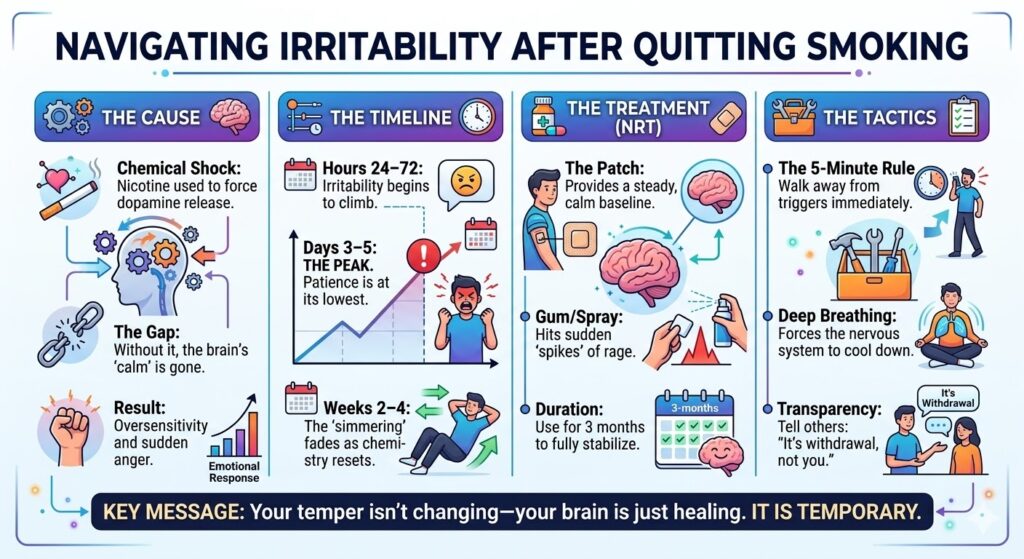
    The first few days after quitting smoking can feel less like a victory and more like a descent into unusual anger. This sudden and brutal increase in irritability, where a misplaced set of keys or a slow-moving queue is perceived as a personal offense, is one of the most common obstacles on the path to a smoke-free life. Understanding that this “short temper” is a biological side effect of the healing process, rather than a permanent personality change, is the first step toward easing the tension.

    The Chemistry of a Quitter’s Temper

    Irritability during the early stages of quitting smoking is largely caused by the brain’s dependence on nicotine. For years, nicotine has stimulated the release of dopamine—the chemical linked to pleasure and relaxation. When nicotine intake suddenly stops, the brain’s reward system experiences a shock. This creates a temporary chemical imbalance that makes the nervous system more sensitive to stress. Without the calming effect of cigarettes, even minor frustrations can trigger impatience or anger.

    The Peak and the Plateau

    This irritability usually follows a predictable timeline. Symptoms often appear within the first 24 hours after the last cigarette and peak between the third and fifth days, when cravings are strongest and emotional tolerance is lowest. Fortunately, the brain gradually adapts. After about a month, the intensity of anger typically decreases as brain chemistry begins to rebalance. Within a few months, most people find their mood returning to normal, although occasional flashes of frustration may still occur, especially in long-term heavy smokers.

    Pharmaceutical Support

    Nicotine Replacement Therapy (NRT) can help reduce irritability by preventing the sudden drop in nicotine levels. Products such as patches, gum, or lozenges deliver controlled doses of nicotine without the harmful toxins of smoke. Many experts recommend combining a long-acting patch with a short-acting product like gum or spray to manage sudden cravings. Using these treatments at the proper dose for the recommended period—often around three months—gives the brain time to adjust.

    Behavioral Strategies

    Alongside medication, simple behavioral strategies can help manage anger. Stepping away from a stressful situation for a few minutes allows the body’s stress response to settle. Deep breathing can also calm the nervous system. Being open with friends, family, or colleagues about temporary withdrawal irritability can encourage understanding and support. Regular exercise is particularly helpful, as it releases tension and provides a healthy outlet for restless energy.


    Use the ‘Commets’ field below to share your experience or to suggest improvements to this article.


  • Difficulty concentrating

    Difficulty concentrating

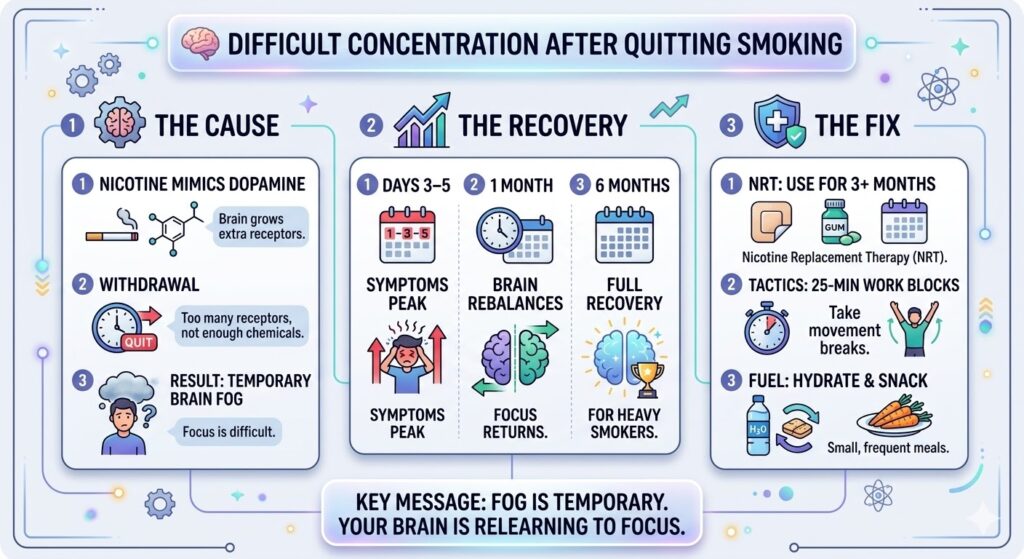
    For many attempting to quit smoking, the sudden inability to focus on a work report, follow a conversation, or even read a paragraph without the mind wandering feels like a permanent cognitive decline. Difficulty concentrating is a hallmark of nicotine withdrawal, yet it is frequently misunderstood as a personal failing rather than a predictable physiological response. Understanding the mechanics behind this mental haze is the first step in navigating through it without reaching for a pack.

    The Chemistry of Distraction

    Nicotine is a potent psychoactive substance that, over time, rewires the brain’s chemistry. When a person smokes regularly, nicotine binds to acetylcholine receptors, triggering the release of neurotransmitters like dopamine and norepinephrine. These chemicals sharpen attention, improve memory, and create a sense of alertness. The brain eventually adapts to this constant chemical prodding by reducing its own natural production of these neurotransmitters and increasing the number of receptors waiting for the next hit. When nicotine intake stops abruptly, the brain is left with an overabundance of nicotinic receptors and a shortage of the chemicals needed to activate them. The result is a temporary communication breakdown in the neural pathways responsible for focus and executive function. It is not that the capacity to think has vanished; rather, the brain’s engine is sputtering as it learns to run on its own fuel again.

    Mapping the Timeline of Recovery

    The timeline for this cognitive disruption is relatively short, though it feels interminable while it lasts. Symptoms typically peak within the first three to five days after quitting, coinciding with the highest levels of physical withdrawal. For most people, the acute phase of brain fog begins to lift within one month as the brain starts to downregulate the excess receptors and restore natural neurotransmitter balance. However, the duration can vary depending on the length and intensity of the smoking habit. Heavy smokers may experience lingering periods of distractibility for up to 6 months, but these episodes become less frequent and less intense over time. Recognizing that this state is temporary provides a crucial psychological anchor.

    The role of nicotine medications

    Nicotine replacement therapies (patches, gum, tablets, sprays) can provide the necessary amount of nicotine without the toxic elements found in tobacco smoke. These therapies alleviate all nicotine withdrawal symptoms, including difficulty concentrating. Use them at a sufficient dose for at least 3 months after quitting smoking.

    Strategic Adjustments for Daily Life

    Managing this symptom requires a shift in strategy rather than a battle of willpower. Since the brain is currently operating with reduced efficiency, attempting to force intense concentration often leads to frustration and relapse. Instead, it is more effective to work with the limitation by breaking tasks into smaller, manageable segments. The Pomodoro technique, which involves working for short bursts (25 minutes) followed by brief breaks, aligns well with the withdrawn brain’s reduced attention span. Physical movement also plays a critical role; a brisk walk or even a few minutes of stretching increases blood flow to the brain and stimulates the release of endorphins, which can temporarily clear the mental haze. Hydration is another often-overlooked factor, as dehydration exacerbates confusion and fatigue, mimicking and worsening withdrawal symptoms.

    Fueling the Healing Brain

    Dietary adjustments can further smooth the transition. Nicotine affects blood sugar levels, and its absence can lead to fluctuations that impair cognitive function. Eating small, frequent meals rich in protein and carbohydrates helps maintain steady glucose levels, providing the brain with a consistent energy source. Some individuals find that replacing the oral fixation of smoking with crunchy vegetables or sugar-free gum helps ground their attention. Mindfulness practices, such as deep breathing or brief meditation, are not just clichés but practical tools that train the brain to recognize when it has wandered and gently guide it back to the present task. This practice essentially jumpstarts the focusing mechanism that nicotine used to artificially sustain.


    Use the ‘Comments’ field below to share your experience or to suggest improvements to this article.


  • Insomnia

    Insomnia

    Insomnia After Quitting Smoking: Why It Happens and How to Get Through It

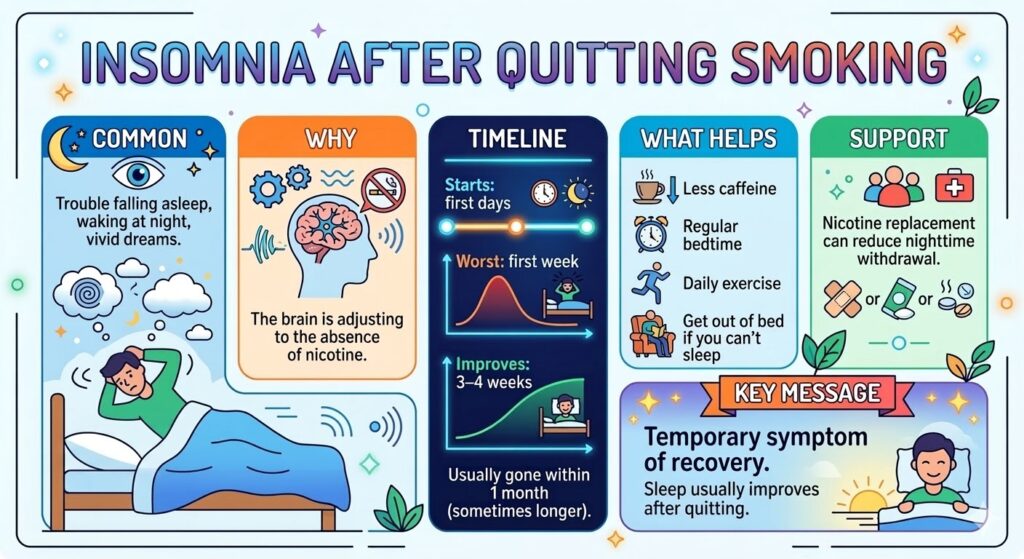
    For many smokers, the first nights after quitting are surprisingly restless. People who expected irritability or cravings are often caught off guard by something else entirely: an inability to sleep. They fall asleep late, wake up repeatedly during the night, or rise far earlier than usual. Insomnia is one of the most common, and least discussed, symptoms of nicotine withdrawal.

    The good news is that it is temporary. But understanding why it happens, how long it typically lasts, and what can help along the way can make the difference between persevering through the first difficult weeks and relapsing out of sheer exhaustion.

    Why nicotine withdrawal disrupts sleep

    Nicotine is a stimulant, and for years the smoker’s brain has adapted to receiving regular doses of it. Paradoxically, many smokers feel that cigarettes help them relax before bed. In reality, nicotine alters several neurotransmitter systems involved in alertness, reward, and sleep regulation, including dopamine, acetylcholine, and norepinephrine.

    When nicotine intake suddenly stops, the brain has to recalibrate. During this adjustment period, sleep can become fragmented. People may take longer to fall asleep, wake frequently, or experience vivid dreams. Some report a sense of agitation at night or an unusual level of mental alertness just when they would normally be winding down.

    Part of the problem is also behavioral. Smokers are used to punctuating their day—and sometimes their night—with cigarettes. Removing those habitual cues can disturb long-established routines, including those associated with bedtime.

    The typical timeline

    Sleep problems usually appear quickly after the last cigarette. Many people notice them during the first two or three nights of abstinence. The first week is often the most difficult, as nicotine withdrawal symptoms peak during this period.

    By the third and fourth weeks, sleep typically begins to stabilize. The brain’s receptors are gradually adapting to the absence of nicotine, and the body’s stress response settles. For most people, insomnia linked to withdrawal fades within a month, but it may last for as much as 6 months after quitting. There are exceptions. Heavy smokers or people who already had sleep difficulties may experience more prolonged disturbances.

    Interestingly, long-term studies suggest that former smokers often end up sleeping better than they did while smoking. Once the withdrawal phase passes, the nightly cycle of nicotine stimulation and withdrawal disappears, and sleep becomes more stable.

    Getting through the sleepless phase

    The most important thing for people experiencing insomnia after quitting smoking is reassurance. The sleeplessness is a symptom of recovery, not a sign that something has gone wrong.

    Simple changes to your evening routine can help. Limiting your caffeine intake after noon reduces the risk of insomnia. Establishing a regular bedtime routine (dim lights, quiet activities, and regular sleep times) helps the body rebuild its internal clock.

    Physical activity during the day also makes a difference. Even moderate exercise, such as a brisk walk, improves sleep quality and reduces withdrawal-related stress. What matters most is consistency rather than intensity.

    Another common recommendation is to avoid lying awake in bed for long periods. If sleep does not come after twenty minutes or so, getting up briefly to read or listen to music in low light can prevent the bed from becoming associated with frustration.

    When nicotine replacement can help

    For some people, insomnia is partly driven by nighttime nicotine withdrawal. If the brain has been accustomed to nicotine every hour of the day, a sudden overnight absence can trigger restlessness.

    Nicotine medications can ease this transition. Products such as patches, gum, lozenges, or inhalers deliver nicotine without the harmful combustion products found in cigarettes. By stabilizing nicotine levels in the body, they reduce the intensity of withdrawal symptoms, including sleep disruption.

    Nicotine patches, which provide a steady dose over many hours, are particularly helpful for some individuals. However, wearing a patch overnight can occasionally lead to vivid dreams or lighter sleep. When that happens, removing the patch before bedtime often solves the problem without compromising daytime craving control.

    Short-acting forms of nicotine replacement, such as gum or lozenges, can also be useful in the evening if cravings or restlessness build up before sleep.

    Nicotine pouches are not medications but provide nicotine in about the same an mounts as nicotine gums.

    The aim is not to replace one dependency with another, but to support the brain through a short transition period while it adapts to life without cigarettes.

    Medical options for persistent insomnia

    If sleep difficulties continue for several weeks and significantly affect daily life, medical advice may be warranted. In some cases, clinicians may suggest temporary sleep aids or behavioral therapies designed specifically for insomnia.

    Another possibility is to use medications such as varenicline or bupropion, which target the brain pathways involved in nicotine dependence.

    A temporary price for long-term benefits

    Few people quit smoking without encountering at least a few uncomfortable days or nights. Insomnia can be one of the more discouraging symptoms, especially when fatigue sets in. Yet it is almost always short-lived.

    What often helps most is perspective. The brain is recalibrating after years of nicotine exposure, and disturbed sleep is part of that process. Within a few weeks or months, the vast majority of people find that their nights settle down again.

    When that happens, many former smokers discover something unexpected: not only have they broken free from cigarettes, but they are also sleeping more soundly than they have in years.


    Use the ‘Comments’ field below to share your experience or to suggest improvements to this page.


  • Non-daily and occasional smoking

    Non-daily and occasional smoking

    You often hear about daily smokers, but what about those who only smoke occasionally—maybe a cigarette on the weekend, a few times a month, or even just during a yearly vacation? If you’re a former smoker who sometimes considers “just one puff,” or if you currently identify as a non-daily or occasional smoker, this article is for you.


    Not All Smokers Are Addicted

    It’s true that not every person who smokes is addicted to nicotine. While many non-daily smokers do have some level of dependence, others smoke primarily due to habit, social cues, or psychological triggers (like stress or boredom) without experiencing severe withdrawal symptoms when they stop.

    • Occasional Smokers: These individuals might smoke a few times a month or a year. Their behavior is often tied to specific social situations (e.g., parties, bars) or emotional states.1 They may not feel a strong physical need for nicotine.
    • Non-Daily Smokers: These individuals smoke, but not every day. They might smoke a few cigarettes on the weekend but none during the week. This pattern is often the grey area where dependence is developing or already present, but perhaps not as intense as in a daily smoker.

    However, regardless of the level of addiction, any level of smoking carries risks.


    The Surprising Health Risks of Occasional Smoking

    The idea that “just a few” cigarettes can’t hurt is a dangerous myth. Research shows that non-daily and occasional smoking poses significant health risks.

    • Heart Disease: Occasional smoking significantly increases the risk of heart disease, almost doubling it compared to non-smokers. Even small amounts of smoke can damage blood vessels and increase the risk of blood clots.
    • Lung Cancer: While the risk is lower than for heavy smokers, occasional smokers are still several times more likely to develop lung cancer than people who have never smoked. There is no truly “safe” threshold for cigarette smoke exposure.
    • Other Cancers: Occasional smoking increases the risk of other cancers, including those of the esophagus, stomach, and bladder.
    • Respiratory Issues: Even occasional smoking can impair lung function and increase the risk of respiratory infections.

    The takeaway? When it comes to the toxic substances in tobacco smoke, your body suffers damage with every puff, although the risk increases with the number of cigarettes smoked per day, the frequency, and the duration of smoking.


    The High Risk of Relapse for Former Smokers

    If you have already quit smoking, the biggest threat is the thought that you can handle “just one” cigarette or “just a puff.”

    • Nicotine’s Power: Nicotine is highly effective at re-awakening the dormant addiction pathways in your brain. A single puff is often enough to remind your brain of the “reward” it used to receive.
    • The “Slippery Slope”: That single puff can easily lead to one cigarette the next week, then two the week after, and soon you find yourself back to daily smoking. Relapse rarely happens overnight; it starts with an occasional exception.
    • The Re-Establishment of Triggers: Even an occasional cigarette re-establishes the psychological connection between smoking and your daily life (stress, coffee, alcohol). This makes future cravings much stronger and harder to manage.

    Your Golden Rule: Not Even a Single Puff

    For anyone serious about staying quit, the most important rule is the simplest: You must never take another puff of tobacco.

    This strict policy is your strongest defense against relapse. It eliminates the need for decision-making in a weak moment: the answer is always no.

    If you are currently an occasional smoker who wants to stop before a full addiction takes hold, or a former smoker fighting the urge to try just one, remember: There is no healthy or safe level of smoking.


    Rate this article by clicking on the desired number of stars:
    1 Star2 Stars3 Stars4 Stars5 Stars (1 votes, average: 1.00 out of 5)
    Loading...

    Please use the “Comments” field below to share your experience or suggest improvements to this article.


  • Craving: the urge to smoke

    Craving: the urge to smoke

    Nicotinic receptors in the brain, hungry for their nicotine meal


    Craving, the irresistible and uncontrollable urge to light a cigarette is a major obstacle when trying to quit smoking. Understanding what a craving is, where it comes from, and how to deal with it is essential to successfully quitting smoking.


    What is a Craving and What Causes It?

    Simply put, a smoking craving is a powerful physical and psychological impulse to smoke or to use nicotine immediately.

    The Root Cause: Nicotine Addiction

    The core of the craving is your brain’s dependence on nicotine. When it is inhaled in tobacco smoke, nicotine is highly addictive (but the same nicotine in a nicotine patch is not addictive at all), and it alters the chemistry and the structure of your brain. Over time, your brain adapts: the number of nicotinic receptors increases and you start to need nicotine to feel “normal.” When you quit smoking, the nicotine level in your blood drops, and your brain sends out a distress signal, which we experience as a craving.

    The Triggers: Conditioning and Habit

    Smoking is heavily linked to daily routines and emotional states.5 Your brain has been conditioned to associate certain activities or feelings with smoking.6 These triggers fall into several categories:

    • Routine: Coffee, after a meal, driving, taking a break.7
    • Emotional: Stress, boredom, feeling happy or sad.8
    • Social: Being with friends who smoke, having a drink.9
    • Environmental: A specific armchair, a smoking spot outside work where you used to smoke.

    The 5-Minute Rule: a Powerful Tool

    Here’s the single most important fact to remember about a craving: It’s intense, but it’s short-lived.

    Research shows that the strongest part of a craving usually peaks and disappears after about five minutes.10

    Your job isn’t to make the craving vanish instantly; it’s to ride the wave for those few minutes until it naturally subsides. Remind yourself: “I just need to make it through the next five minutes.”


    The Role of Nicotine Replacement and Other Aids

    Don’t feel you have to fight this battle on willpower alone. Nicotine Replacement Therapy (NRT) and other aids are designed to give your brain the small, clean dose of nicotine it craves, without the thousands of toxins in cigarette smoke, helping you manage withdrawal symptoms.13

    • Nicotine Replacement Therapy (NRT): Patches provide a steady background dose, while gums, lozenges, inhalers, or sprays are “quick-response” aids you can use immediately when a craving strikes.14 They are excellent for helping you get past that critical 5-minute peak.
    • E-Cigarettes (Vaping): Vaping can serve as a transition tool.15 It mimics the hand-to-mouth action and provides nicotine in good flavors.
    • Oral Tobacco (Snus/Nicotine Pouches): These are sometimes used for harm reduction in places where they are legally available, offering a smoke-free nicotine source.16

    How to Deal with the Urge: Distraction is Key

    Since the urge is temporary, your strategy is simple: Distract yourself until the five minutes pass. You need quick, engaging activities that interrupt the thought process.

    Distraction Techniques

    • Move Your Body: Get up and walk around the house or office. Do 10 quick squats or push-ups.
    • Engage Your Hands: Play a quick game on your phone, doodle, chew gum, sip water slowly, or crunch on a carrot stick.11
    • Change Your Scenery: Step outside for a breath of fresh air (away from smoking areas), or move to a different room.12
    • Focus on Your Breath: Take five slow, deep breaths, counting to four on the inhale and four on the exhale.
    • Talk it Out: Send a text to a friend, or call a quitting support line.

    Specific Triggers and How to Control Them

    Triggers require a pre-planned response. Think of them as battle zones where you need a prepared counter-strategy.

    If the Urge Strikes…Try This Action Plan
    When you wake upDon’t leave the bedroom immediately. Drink a large glass of water, do a 2-minute stretch, chew a piece of nicotine gum, or brush your teeth.
    After a mealReplace the ritual. Immediately get up and clean the dishes, brush your teeth, chew a piece of nicotine gum, or call a friend for a quick chat.
    In the presence of smokersDistance yourself. Announce, “I’m going to grab a drink/fresh air,” and walk away for 5-10 minutes until they’ve finished their cigarette. Chew a piece of nicotine gum.
    In a stressful situationFocus on breathing. Use deep-breathing exercises. Take a 5-minute time-out to write down what’s stressing you, then crumple the paper.
    In a place you used to smokeChange the environment. Sit in a different chair, or physically block the usual smoking area (e.g., place a flowerpot there) to break the association.

    Every time you beat a craving, you weaken the addiction and strengthen your resolve. You are retraining your brain, one five-minute victory at a time. Keep going !


    Rate this article by clicking on the desired number of stars:
    1 Star2 Stars3 Stars4 Stars5 Stars (1 votes, average: 5.00 out of 5)
    Loading...


    Please use the “Comments” field below to share your experience or suggest improvements to this article.


  • Test: withdrawal symptoms

    Answer these questions to assess the level of your nicotine withdrawal symptoms.

    Please indicate if you agree with each of these statements:

  • Test your level of addiction to cigarettes

    Test your level of addiction to cigarettes

    The CDS test

    Answer these 5 questions to assess your level of addiction to cigarettes:

    Please rate your addiction to cigarettes on a scale of 0–1000 = I am NOT addicted to cigarettes at all
    100 = I am extremely addicted to cigarettes

    Addiction:
    0–20 = 1 point
    21–40 = 2 points
    41–60 = 3 points
    61–80 = 4 points
    81–100 = 5 points
    On average, how many cigarettes do you smoke per day? Cigarette/day :
    0–5 = 1 point
    6–10 = 2 points
    11–20 = 3 points
    21–29 = 4 points
    30+ = 5 points
    Usually, how soon after waking up do you smoke your first cigarette? Minutes :
    0-5 = 5 points
    6–15 = 4 points
    16–30 = 3 points
    31–60 = 2 points
    61+ = 1 point
    For you, quitting smoking for good would be: Impossible = 5 points
    Very difficult = 4 points
    Fairly difficult = 3 points
    Fairly easy = 2 points
    Very easy = 1 point
    After a few hours without smoking, I feel an irresistible urge to smoke Totally disagree = 1 point
    Somewhat disagree =2 points
    Neither agree nor disagree = 3 points
    Somewhat agree = 4 points
    Fully agree = 5 points

    Now add your points (maximum=25)

    Interpretation :

    5-10 points: Low level of addiction

    11-15 points: Moderate level of addiction

    16-20 points: Strong level of addiction

    21-25 points: Very strong level of addiction

    Our previous research found that a value of 16 or above indicates that your are strongly addicted to cigarettes.(a)

    This questionnaire is called the Cigarette Dependence Scale (CDS-5), it is a well-validated measure of dependence.(b)


    References:

    a) Etter JF, Comparing the validity of the Cigarette Dependence Scale and the Fagerström Test for Nicotine Dependence, Drug and Alcohol Dependence, Volume 95, Issues 1–2, 2008, Pages 152-159, ISSN 0376-8716, https://doi.org/10.1016/j.drugalcdep.2008.01.017.

    b) Etter, JF., Le Houezec, J. & Perneger, T. A Self-Administered Questionnaire to Measure Dependence on Cigarettes: The Cigarette Dependence Scale. Neuropsychopharmacology 28, 359–370 (2003). https://doi.org/10.1038/sj.npp.1300030


    Please rate this article by clicking on the desired number of stars:
    1 Star2 Stars3 Stars4 Stars5 Stars (2 votes, average: 5.00 out of 5)
    Loading...

    Please use the “Comments” field below to share your experience or suggest improvements to this article.


  • Questionnaire : how much nicotine do you need?

    Questionnaire : how much nicotine do you need?

    Answer 5 questions to assess your nicotine consumption as a smoker (or your consumption when you smoked). We will then use this information to calculate the optimal nicotine concentration in your e-liquids, nicotine-based medications (patches, gum, tablets, inhalers), or nicotine pouches. Our statistics show that these 5 questions allow us to estimate your nicotine needs with twice the accuracy of using only the number of cigarettes smoked per day.

    Questionnaire:

    1- How many cigarettes do (did) you usually smoke per day?

    • 1-5 cig./day = 1 point
    • 6-10 cig./day = 2 points
    • 11-15 cig./day= 3 points
    • 16-20 cig./day= 4 points
    • 21+ cig./day = 5 points

    2- Usually, how long after waking up do (did) you smoke your first cigarette of the day?

    • 0-5 minutes = 5 points
    • 6-15 minutes = 4 points
    • 16-30 minutes = 3 points
    • 31-60 minutes = 2 points
    • Over 1 hour = 1 point

    3- On a scale of 0 to 100, indicate how heavily you smoke(d):

    • 0 = 0 point
    • 1-20 = 1 point
    • 21-40 = 2 points
    • 41-60 = 3 points
    • 61-80 = 4 points
    • 81-100 = 5 points

    4- On a scale of 0 to 10, how much smoke do you inhale each day (or inhaled when you smoked)? This amount depends on the number of cigarettes you smoke, how deeply you inhale, and the number of puffs.
    0: I do not inhale any smoke.
    10: I smoke so much that even if I tried, I could
    not inhale any more smoke.

    • 0 = 0 point
    • 1-2 = 1 point
    • 3-4 = 2 points
    • 5-6 = 3 points
    • 7-8 = 4 points
    • 9-10 = 5 points

    5- Indicate the number of milligrams of nicotine listed on your cigarette packet:

    • 0.1-0.5 mg = 1 point
    • 0.6-0.7 mg = 2 points
    • 0.8 mg = 3 points
    • 0.9 mg = 4 points
    • 1.0 mg or more = 5 points

    Now, add up and calculate your total number of points (maximum = 25 points)

    Data from our studies indicate that if your total is:

    • 0-4 points, you absorb between 0 and 7 mg of nicotine per day (mean =3.4 mg / day)
    • 5-9 points, you absorb between 7 and 14 mg of nicotine per day (mean = 10 mg / day)
    • 10-14 points, you absorb between 14 and 21 mg of nicotine per day (mean = 17 mg / day)
    • 15-19 points, you absorb between 21 and 28 mg of nicotine per day (mean = 24 mg / day)
    • 20-25 points, you absorb over 30 mg of nicotine per day.

    After quitting smoking, you must continue to absorb the same amount of nicotine in order to avoid withdrawal symptoms and to prevent yourself from starting smoking again because you cannot tolerate these symptoms.

    Consume enough nicotine from e-cigarettes, nicotine-based medications, or nicotine pouches for at least 3 months after quitting smoking.

    Dosage for nicotine medications

    Nicotine replacement medications release approximately 70% of the nicotine they contain. For example, a patch containing 21 mg of nicotine releases approximately 15 mg of nicotine.

    Use this factor (x 0.7) to calculate the optimal dose of your nicotine medication. For example, if you scored 12 points on our questionnaire, you need 17 mg of nicotine per day, and a 21 mg patch plus two 2 mg gums should provide you with the necessary dose.

    Dosage for nicotine pouches

    Use the same rule (x 0.7) as for nicotine medications.

    Dosage for e-cigarettes

    For e-cigarettes, the amount of nicotine aborbed by the user depends on many factors, in addition to the nicotine concentration in the e-liquid:

    • the other characteristics of the e-liquid (flavor, nicotine salt or freebase nicotine),
    • the characteristics of the device (battery, coil, wick)
    • your own level of nicotine addiction, your personal way on inhaling (number and depth of puffs), your social environment (whereas you are around smokers and vapers).

    Nevertheless, our previous studies conducted among former smokers who successfully quit smoking using e-cigarettes, and who responded to the above questionnaire offer some insights (1, 2, 3, 4).

    Vapers who were ex-smokers and obtained :

    • 0-4 points used e-liquids containing 10 mg / mL
    • 5-9 points used e-liquids containing 10-12 mg / mL
    • 10-14 points used e-liquids containing 12 mg / mL
    • 15-19 points used e-liquids containing 16 mg / mL
    • 20-25 points used e-liquids containing 18 mg / mL

    Use these results as a guide to choose your e-liquid, and do not underdose your e-liquids, because if you do, you risk unnecessarily:

    • using too much liquid,
    • exposing your lungs to too much vapour,
    • spending too much money on e-liquids,
    • experiencing nicotine withdrawal symptoms and running the risk of relapsing into smoking.

    There is no risk of nicotine overdose in regular smokers, as they can tell when they are consuming too much nicotine (specific taste in the mouth, sensation similar to that felt when you have smoked too much).

    4 important points to remember

    • To successfully quit smoking and avoid nicotine withdrawal symptoms, you need a sufficient amount of nicotine. Do not underdose your nicotine products.
    • You need a sufficient concentration of nicotine in your e-liquids (at least 10 mg/mL). Do not listen to retailers who insist that you buy 3 mg/mL liquids, they do this because they want to sell you more liquid.
    • Purchase your electronic cigarettes and e-liquids from a specialist shop rather than a kiosk or online, as the sales staff in these shops can advise you and allow you to try and taste different products until you find the one that best suits your needs.
    • The advice provided here does not replace that of a doctor or psychologist specialising in the treatment of nicotine addiction.

    Rate this article by clicking on the desired number of stars:
    1 Star2 Stars3 Stars4 Stars5 Stars (3 votes, average: 5.00 out of 5)
    Loading...

    Please use the “Comments” field below to share your experience or suggest improvements to this article.


    References:

    1. Etter J, Perneger TV. Measurement of self reported active exposure to cigarette smoke. Journal of Epidemiology & Community Health 2001;55:674-680. https://doi.org/10.1136/jech.55.9.674

    2. Etter, Jean-François, A longitudinal study of cotinine in long-term daily users of e-cigarettes, Drug and Alcohol Dependence, Volume 160, 2016, Pages 218-221, https://doi.org/10.1016/j.drugalcdep.2016.01.003.

    3. Etter, Jean-François. Levels of saliva cotinine in electronic cigarette users. Addiction. 2014, 109, 5, 825-829. https://doi.org/10.1111/add.12475

    4. Etter, J-F. and Bullen, C. Saliva cotinine levels in users of electronic cigarettes, Eur Respir J, 2011, 38, 5, 1219-1220, https://doi.org/10.1183/09031936.00066011