

Long associated with an image of freedom, sophistication, or rebellion, the cigarette hides a reality far less glamorous when it comes to sexuality and intimacy. Beyond the well-known cardiovascular and respiratory risks, smoking has direct and insidious repercussions on sexual life, attractiveness, and even the ability to procreate. It is a complex story where the smoke does more than just drift away.
Constricted Vessels: A Direct Impact on Arousal
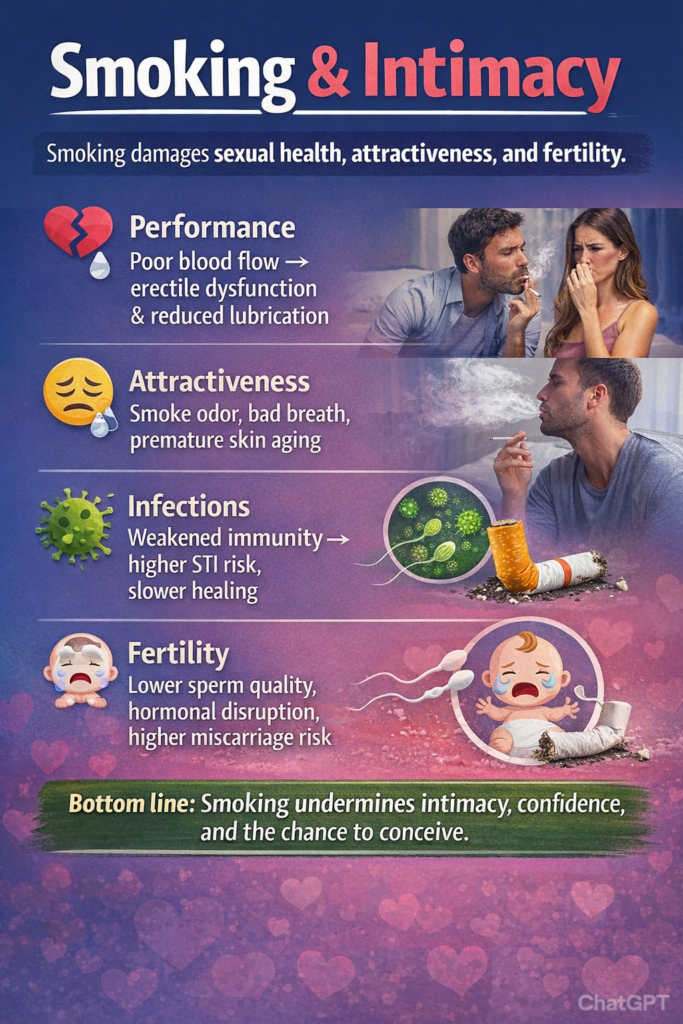
The first and perhaps most crucial impact of tobacco on sexuality lies in its vascular effects. The thousands of toxic substances contained in cigarette smoke damage the walls of blood vessels, leading to narrowing (vasoconstriction) and loss of elasticity. This chronic aggression leads to atherosclerosis, meaning the hardening and obstruction of arteries.
In men, this vascular deterioration often results in difficulty achieving or maintaining a firm and sufficient erection. Erection depends on a rapid and significant blood flow to the penis, a mechanism directly compromised by damaged blood vessels. Smokers thus have a significantly higher risk of developing erectile dysfunction, and this occurs at an earlier age.
In women, although less visible, the vascular impact is just as real. Reduced blood flow to female genital organs can lead to decreased clitoral arousal and insufficient vaginal lubrication. These phenomena can make sexual intercourse uncomfortable, even painful, and significantly reduce pleasure.
A Question of Scent: Attractiveness at Risk
The impact of tobacco extends beyond mere physiology to touch upon more subtle, but no less important, aspects: attractiveness and self-perception. Smoking alters body odor perceptibly. Cigarette smoke permeates clothing, hair, skin, and even breath, imparting a acrid and persistent smell that many find unpleasant.
But the effect doesn’t stop there. Studies have shown that tobacco can influence the scent of genital secretions, making it less appealing to a partner. This aspect, though taboo, contributes to diminished attractiveness and can impact spontaneity and sexual desire within a couple.
More broadly, the effect on physical attractiveness is undeniable. Tobacco accelerates skin aging, causing the premature appearance of wrinkles around the eyes and mouth, dulling the complexion and making it more grayish or yellowish. Yellowed teeth and persistent bad breath are all distinctive marks of the smoker that can undermine self-confidence and the perception one has of oneself, and, of course, the perception others have of us.
The Vulnerable Body: Tobacco and Sexually Transmitted Diseases
Beyond physiological disorders, smoking weakens the body against infections. Tobacco has an immunosuppressive effect, meaning it decreases the efficiency of the immune system. This weakness makes smokers more vulnerable to infections in general, but also to sexually transmitted diseases (STDs). For example, it has been shown that female smokers have an increased risk of contracting and developing more severe forms of human papillomavirus (HPV) infection, a major factor in cervical cancer. Healing of genital lesions can also be slowed in smokers, complicating treatment and favoring the persistence of infections.
A Shadow on Fertility: A Double Burden
Finally, tobacco casts a heavy shadow on the ability to conceive, affecting both men and women. In men, smoking alters sperm quality, reducing the concentration, motility (ability to move), and morphology of sperm. This significantly decreases the chances of fertilization.
In women, tobacco disrupts the hormonal cycle, can damage oocytes (female reproductive cells), and advances the age of menopause. Female smokers have more difficulty getting pregnant and an increased risk of miscarriage or ectopic pregnancies. For couples undergoing assisted reproductive technology, tobacco drastically reduces success rates.
Use the Comments field below to share your experience or to suggest improvements to this article.