Tag: nicotine withdrawal symptoms

  • The amount of nicotine in cigarettes

    🔬 How much nicotine is in a cigarette?

    Many people know that nicotine makes cigarettes addictive, but few know how much nicotine is actually in a cigarette, or how much nicotine your body absorbs when you smoke. Understanding these numbers can help you choose an alternative product that does not involve burning tobacco or inhaling smoke.

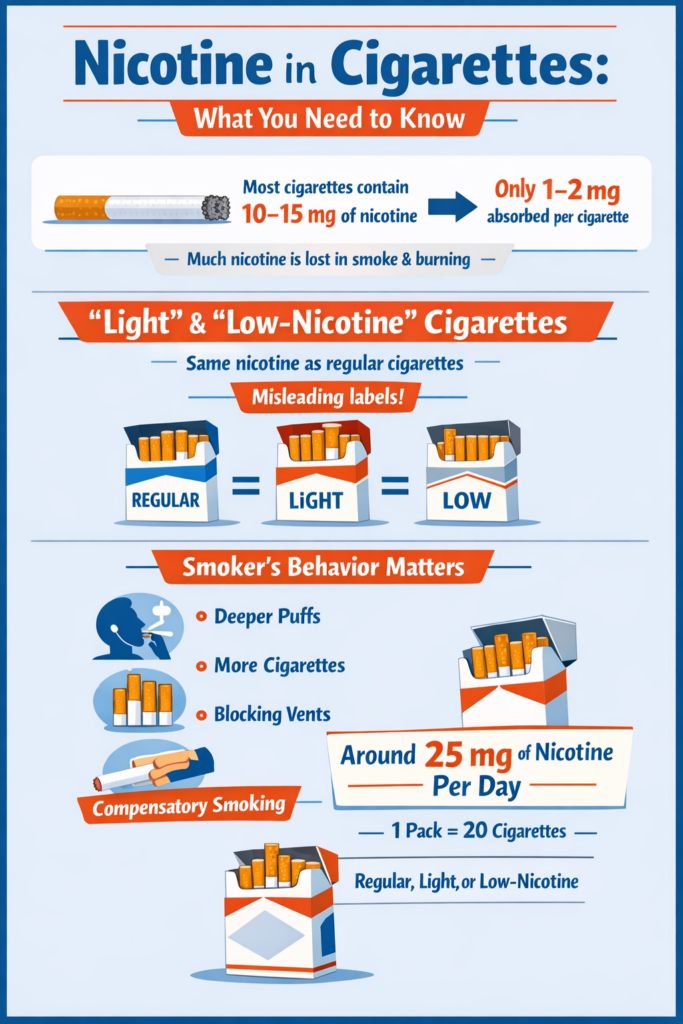
    The total amount of nicotine in a cigarette varies, but most commercial cigarettes contain between 10 and 15 milligrams (mg) of nicotine. This is the amount present in the tobacco before the cigarette is lit, but this figure does not reflect the whole picture. Most of the nicotine in a cigarette is destroyed by combustion or remains in the sidestream smoke that you do not inhale. What really matters is the amount of nicotine that enters your bloodstream.

    ‘Light’ or ‘low-nicotine’ cigarettes:

    Don’t be fooled by these labels! Studies have shown that cigarettes marketed as ‘light’ or ‘low-nicotine’ contain about the same amount of nicotine as regular cigarettes. The real difference lies in their design (air holes around the filter), which can affect how you smoke.

    🌬️ How much nicotine do you actually inhale?

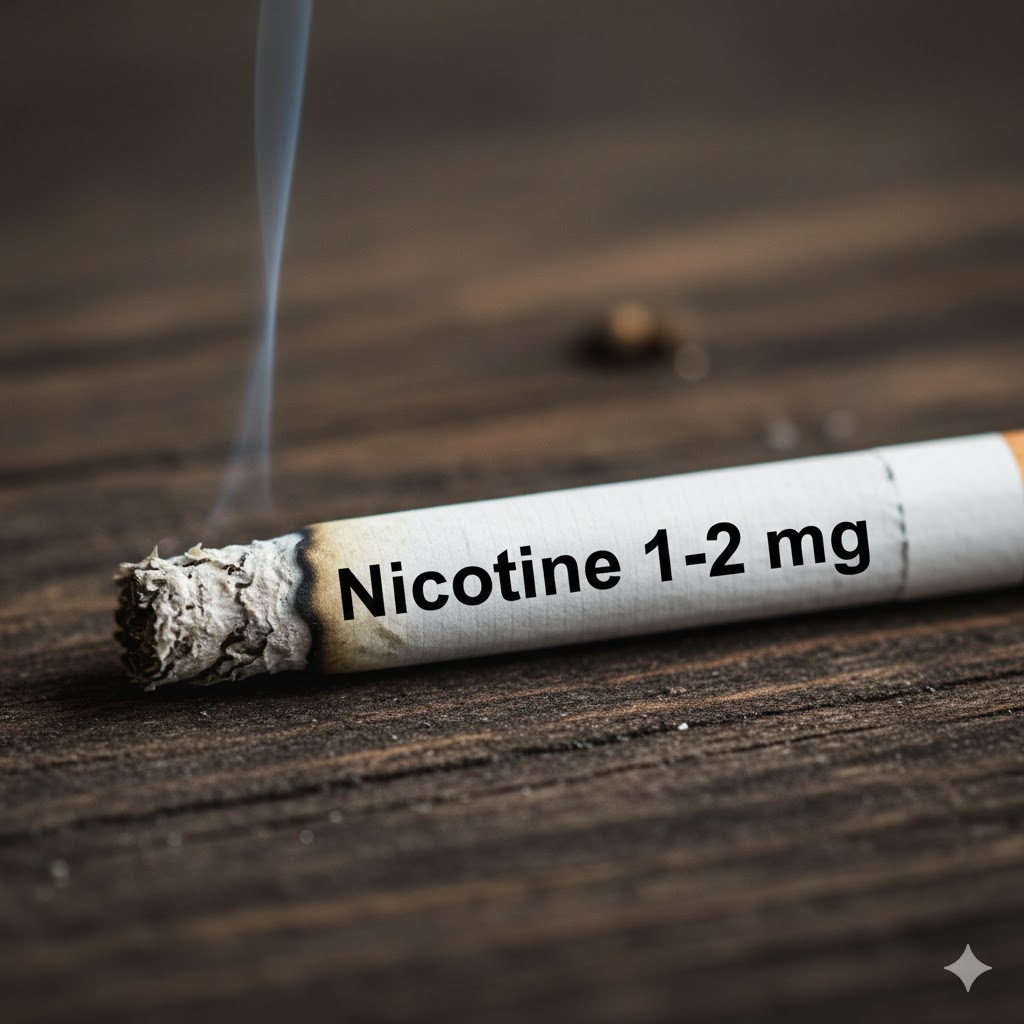
    You do not inhale all of the 10 to 15 mg of nicotine contained in a cigarette. When you light a cigarette and take a puff, a significant amount of nicotine is destroyed by heat or escapes as sidestream smoke. The amount of nicotine that enters your lungs and is absorbed in your blood (bioavailability) depends on many factors, including how the cigarette is manufactured and, most importantly, how you smoke it. A person who smokes one cigarette absorbs approximately 1 to 2 mg of nicotine. Although this amount may seem small compared to the total 15 mg, it is enough to deliver a powerful dose to your brain and satisfy your addiction.

    💨 The smoker’s behavior matters

    The way a person smokes is the most important variable in the actual dose received. Each person behaves differently, and two people smoking the same cigarette may absorb different amounts of nicotine. Your brain acts like a thermostat that determines how much nicotine you need to feel good and avoid nicotine withdrawal symptoms. As a result, people who smoke “low nicotine” or “light” cigarettes do so differently than normal cigarettes. This is called compensatory smoking:

    Deeper puffs: If you use a low-nicotine cigarette, your body compensates by taking deeper, longer puffs to get the amount of nicotine your brain needs.

    Smoking more often: You may also simply smoke more cigarettes throughout the day.

    Blocking the vents: Some ‘light’ cigarettes have ventilation holes near the filter. Smokers often cover these with their fingers or lips, either unconsciously or intentionally, which increases the concentration of smoke inhaled and, consequently, the dose of nicotine.

    This means that a heavy smoker can easily absorb 25 mg of nicotine per day by smoking a pack of 20 cigarettes, whether these are regular, low-nicotine or light cigarettes.

    🔥 Why it is important to understand nicotine levels and the speed of delivery:

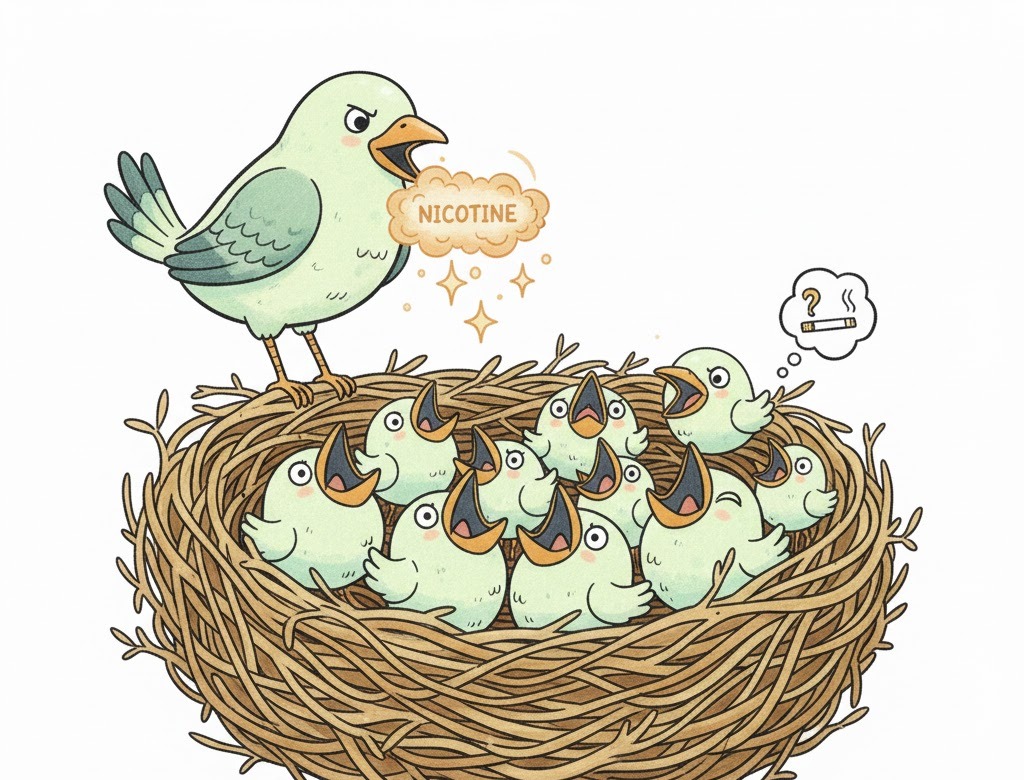
    Nicotine is the main addictive chemical in tobacco, it is what drives you to smoke one cigarette after another. When you inhale smoke, nicotine quickly enters your bloodstream and reaches your brain. This rush causes the release of a chemical that makes you feel good (dopamine), which is why smoking can be enjoyable or soothing. But this feeling is temporary, as the nicotine level in your blood drops quickly, leading to withdrawal symptoms.

    When you smoke, nicotine reaches your brain within 10 to 20 seconds of inhalation. This rapid effect is one of the reasons why cigarettes are so addictive. Your brain learns to anticipate this rapid rush, and cravings develop when nicotine levels drop. Nicotine replacement therapies (patches, gum, tablets) release nicotine at a much slower rate and therefore do not create addiction, even though the molecule is the same.

    Understanding how nicotine works helps to understand why nicotine replacement therapies (such as patches, gum or lozenges) are designed in this way: to provide controlled, lower doses of nicotine at a slower rate of delivery and without the toxic chemicals found in cigarette smoke.

    🚭 Knowing all this can make it easier to quit smoking.

    Knowing these figures can help you understand how cigarettes are designed to make you addicted. The tobacco industry adjusts the chemical composition so that nicotine reaches your brain quickly and reliably, not only by controlling the amount of nicotine in cigarettes with the same precision used by drug manufacturers to produce prescription drugs, but also by using chemical additives.

    To quit smoking without experiencing nicotine withdrawal symptoms, you need to replace the “dirty” nicotine you currently get from smoking with “clean” nicotine from nicotine replacement therapy (NRT): products such as patches, gum and lozenges deliver a controlled and steady dose of nicotine without the thousands of other toxic chemicals found in cigarette smoke. Nicotine-based medicines release nicotine at a much slower rate than cigarettes, which is why these products are not addictive. They help you manage withdrawal symptoms when you quit smoking.

    Behavioural support from a healthcare professional increases the effectiveness of nicotine replacement therapy. Peer support groups and quit-smoking helplines can also help you manage the psychological and behavioral aspects of quitting smoking.

    If you do not want to use NRT, you can also get nicotine from e-cigarettes or nicotine pouches, these products deliver sufficient amounts of nicotine but no smoke, and are therefore much less dangerous than cigarettes.


    Rate this article by clicking on the desired number of stars:
    1 Star2 Stars3 Stars4 Stars5 Stars (1 votes, average: 5.00 out of 5)
    Loading...

    Please use the “Comments” field below to share your experience or suggest improvements to this article.
  • Nicotine patch

    Nicotine patch


    🛑An effective tool for quitting smoking

    The nicotine patch is a small, bandage-like patch that you apply directly to your skin, typically on your arm or torso. It’s designed to deliver a controlled, steady dose of nicotine into your bloodstream throughout the day. It provides you with nicotine in a controlled manner, without the harmful substances (tar, carbon monoxide) found in cigarette smoke.

    It is designed to alleviate the discomfort associated with cigarette withdrawal symptoms (craving for cigarettes, irritability, bad mood, depression, anxiety, difficulty consentrating, trouble sleeping, increased appetite and weight gain).

    How Does the Patch Work?

    The nicotine patch slowly releases nicotine through your skin, which is then absorbed by your body.

    The patch can be used by smokers who wish to quit smoking, but also by those who are not yet ready to quit and who continue to smoke while wearing the patch:

    • After you quit smoking, the patch relieves cravings and other nicotine withdrawal symptoms, so that you suffer less during the first days, weeks and months after quitting.
    • The patch increase your chances of successfully quitting smoking.
    • Smokers who are not ready to quit immediately can use nicotine patches for a few weeks before quitting smoking, in addition to cigarettes. This way, most of their nicotine needs will be met by the patch, they will smoke fewer cigarettes, and it will be easier for them to quit after a few weeks of combined use.
    • Smokers who do not wish to quit smoking, or feel unable to do so, can use nicotine patches to reduce their cigarette consumption. This means that part of their nicotine requirement will be satisfied by the patch, and they will smoke fewer cigarettes, thereby inhaling less smoke and fewer toxic components present in cigarette smoke. This dual use can be continued in the long term, over several months or years.

    Is the patch effective to quit smoking?

    In smokers willing to quit, a synthesis of 51 high-quality studies involving 25,754 participants concluded that nicotine patches increase their chances of quitting smoking by a factor of 1.64 (i.e. +64%), compared to a control group that did not use patches. However, it is difficult to quit smoking, and the median quit rate in the control group was only xx per cent after 6 months, while the quit rate in the group using the patch was xx per cent. This shows that the patch is effective, but that it only increases your chances of quitting smoking by a few percentage points.

    To increase your chances of quitting smoking, you can combine two nicotine medications, e.g. patch and gum, or patch and inhaler, or patch and tablet. This will further increase your chances of quitting by a factor x1.27 (i.e. +27%).

    There is evidence that higher-doses patches (21-25 mg) are more effective than lower doses patches (14-15 mg), and that patches with 42-44 mg are as effective as patched with 21-22 mg.

    🎯 The Importance of compliance and of not smoking after you quit, not even a puff

    For the treatment to be effective, you must follow the instructions. It is essential that you use the patch every day, at the recommended dosage, for 3 months after quitting smoking, without stopping the treatment prematurely. If you do not do so, you increase the risk of relapse.

    You can smoke while wearing the patch; it is not dangerous. However, it is best not to smoke at all after quitting, even a single puff, as this increases the risk of relapse.

    Consulting a healthcare professional (doctor, psychologist, pharmacist) can significantly increase your chances of success.

    📅 How to Use the Patch?

    Some brands of patches are designed to be worn for 16 hours a day, from morning until bedtime. The idea is to simulate the fluctuations in nicotine levels experienced by a smoker without supplying nicotine during sleep, which could disrupt sleep. Other brands are designed to be worn for 24 hours. The idea is to reduce the urge to smoke and withdrawal symptoms in the morning.

    With the 16-hour patch that you remove before going to bed, you may wake up with very low nicotine levels in your blood and experience cigarette cravings and other nicotine withdrawal symptoms in the morning. The patch slowly releases nicotine through the skin, and you will not feel its full effects until two hours after applying it. Therefore, you should use the patch in combination with a faster-acting product, such as nicotine gum or lozenges, to avoid withdrawal symptoms in the morning.

    Dosage depends on your initial cigarette consumption:

    • Heavy smokers (more than 15 cigarettes/day): Start with the highest dose (25 mg/16h) for 8 weeks, then reduce (15 mg/16h for 2 weeks, then 10 mg/16h for 2 weeks).
    • Moderate/light smokers (fewer than 15 cigarettes/day): Start directly with the medium dose (15 mg/16h) for 8 weeks, then switch to the low dose (10 mg/16h) for 4 weeks.

    Treatment lasts 3 months. It is very important not to stop treatment prematurely, as this would increase the risk of relapse.

    Practical Tip: Change the application site every day to minimize skin irritation.

    ⚠️ Precautions and Contraindications

    The nicotine patch should not be used by non-smokers or non-users of tobacco or e-cigarettes, children under 12, and in principle, adolescents, unless there are already addicted to cigarettes or e-cigarettes.

    Health Conditions:

    If you suffer from recent or severe heart problems (recent heart attack, unstable or worsening angina, uncontrolled high blood pressure), or other conditions such as diabetes, kidney/liver diseases, or epilepsy, you must consult your doctor before starting treatment.

    Pregnancy and Breastfeeding:

    Nicotine, even in the form of a medication, can harm the fetus or infant. Pregnant or breastfeeding women should only use the nicotine patch after consulting a healthcare professional. If smoking cessation is not achieved, flexible-dose nicotine products (like gum or lozenges) are preferred.

    🔄 What Side Effects Can You Expect?

    Side effects of the patch are often confused with cigarette withdrawal symptoms.

    • Common side effects of the patch: Itching at the application site, headache, nausea, or vomiting.
    • Not to be confused with cigarette withdrawal symptoms: Irritability, depression, anxiety, bad mood, difficulty concentrating, sleep disturbances, increased appetite, or smoking cravings.

    Most skin reactions are mild and disappear quickly after removing the patch. If you experience severe effects (chest pain, irregular pulse), stop treatment and seek medical advice.

    If you absorb too much nicotine, you may feel nauseous, dizzy or weak, and have a bad taste in your mouth, similar to the feeling you get when you smoke too much. If this happens, remove the patch immediately and the effect will disappear after a few minutes. There is no risk of nicotine overdose with nicotine patches in former smokers or tobacco users.

    The nicotine patch is a valuable tool, but ultimate success depends on your willingness to quit smoking, your ability to avoid places where you used to smoke and the presence of other smokers, and, ideally, medical supervision.


    Rate this article by clicking on the desired number of stars:
    1 Star2 Stars3 Stars4 Stars5 Stars (1 votes, average: 5.00 out of 5)
    Loading...

    Please use the “Comments” field below to share your experience or suggest improvements to this article.

  • Test: withdrawal symptoms

    Answer these questions to assess the level of your nicotine withdrawal symptoms.

    Please indicate if you agree with each of these statements:

  • Nicotine withdrawal symptoms

    🚭What happens when you stop smoking?

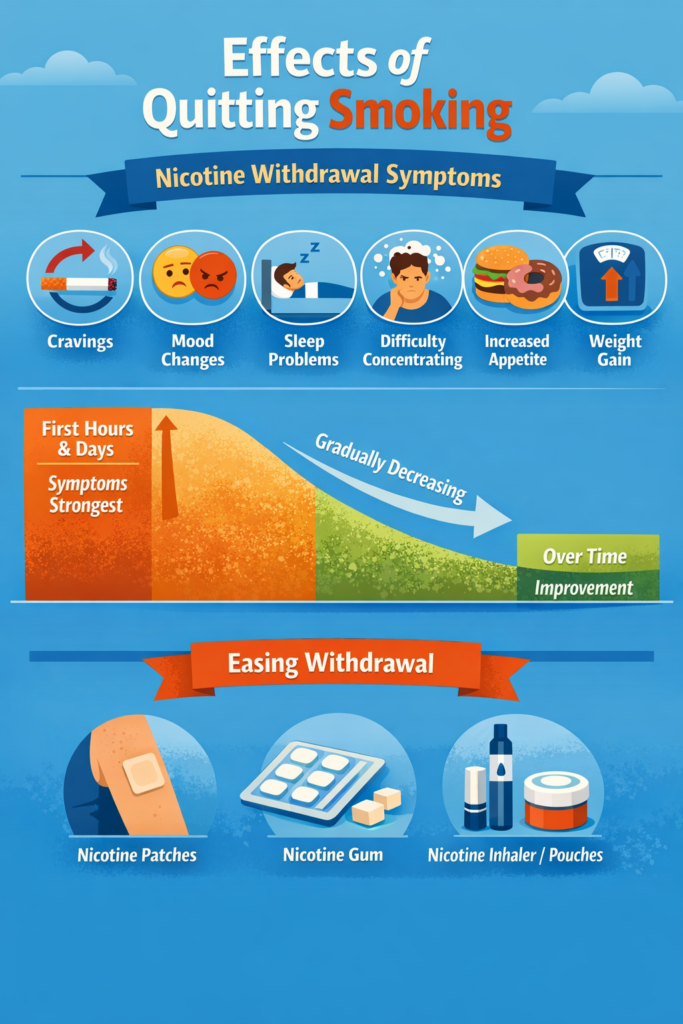
    When you stop smoking, your body no longer gets its dose of nicotine, and it’s normal to feel uncomfortable. Here are the withdrawal symptoms you may experience:

    • A very strong urge to smoke (craving)
    • Being in a bad mood :
      – sad or depressed,
      – angry, irritated,
      – impatient or agitated.
    • Anxious or nervous, rapid mood swings.
    • Poor sleep (insomnia).
    • Difficulty concentrating.
    • Increased hunger and weight gain.
    • But quitting smoking also brings about a rapid improvement in smell and taste.

    ⏳ How long does it last?

    These symptoms are most intense during the first few hours and days after your last cigarette. After the first few days, these feelings diminish significantly, but be aware that some signs may last longer:

    • The urge to smoke may return at times for several months. This is normal, but it will pass.
    • Some people feel sad or depressed for a long time. Talk to your doctor if this is the case for you.
    • Weight gain may be permanent.

    💊What can you do ?

    • to attenuate these withdrawal symptoms, you can use nicotine medications (patch, gum, tablet, inhaler)
    • or you can use another nicotine source that does not burn tobacco, such as an e-cigarette or a nicotine pouch.
    • cravings last just a few minutes, so just wait 5 minutes and it will pass

    📆Change in symptom intensity over the course of a year

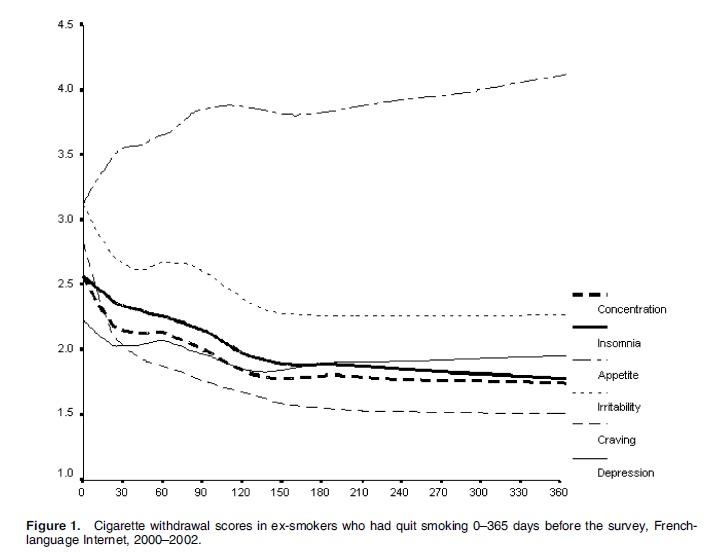
    The graph below, taken from one of the author’s scientific publications, shows how the intensity of withdrawal symptoms changes during the first year after quitting smoking. The most striking feature is that appetite and weight gain increase, while the intensity of all other symptoms decreases over time. The symptom that decreases most rapidly in intensity is craving, i.e. the strong urge to smoke. The intensity of all symptoms changes most rapidly during the first 30 days after quitting smoking. AFter about 6 months, symptoms remain stable.

    References:

    Jean-François Etter, A Self-Administered Questionnaire to Measure Cigarette Withdrawal Symptoms: The Cigarette Withdrawal Scale, Nicotine & Tobacco Research, Volume 7, Issue 1, February 2005, Pages 47–57, https://doi.org/10.1080/14622200412331328501

    Etter JF, Hughes J. A comparison of the psychometric properties of three cigarette withdrawal scales. Addiction, 2006,101,262-372.


    Please rate this article by clicking on the desired number of stars:
    1 Star2 Stars3 Stars4 Stars5 Stars (1 votes, average: 5.00 out of 5)
    Loading...

    Please use the “Comments” field below to share your experience or suggest improvements to this article.