
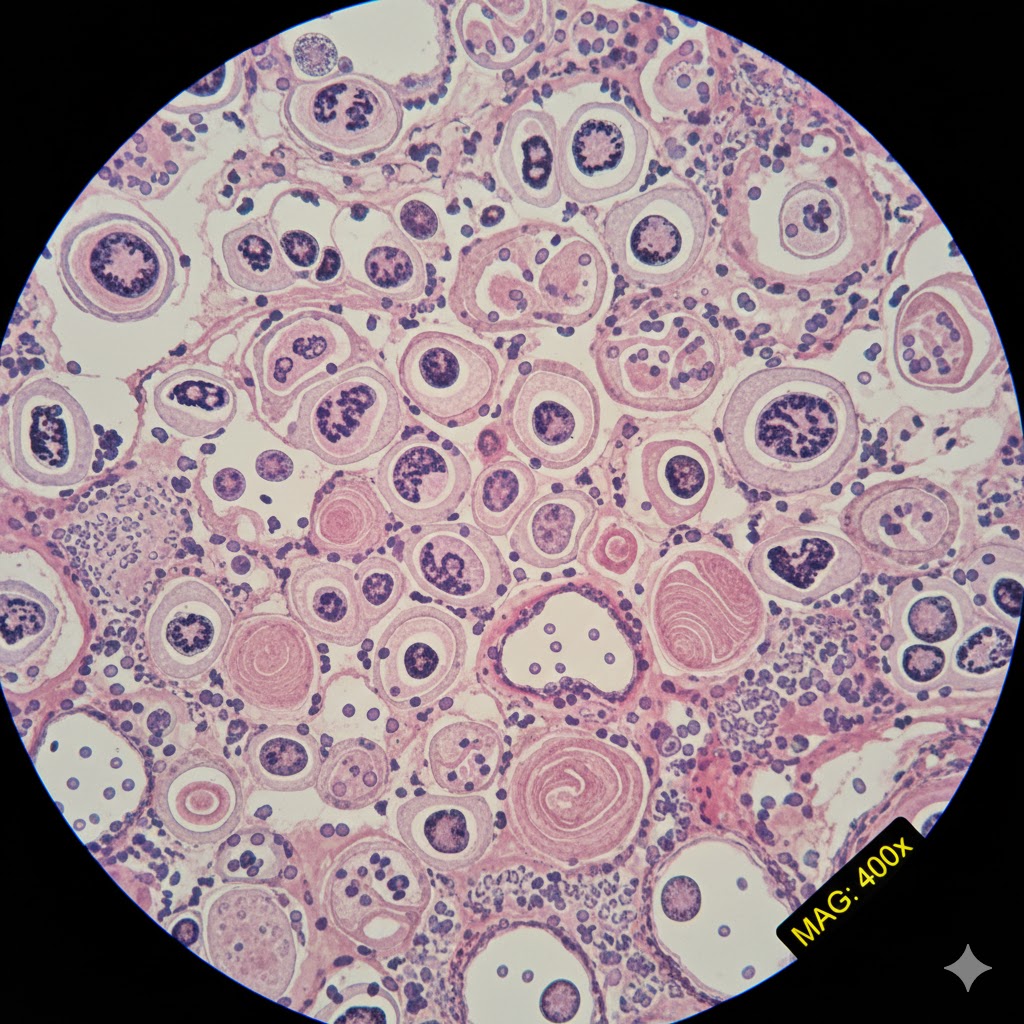
Smoking is notorious for its role in lung cancer, but its impact on the mouth and throat is often underestimated. Cancer of the oral cavity, which includes the lips, tongue, gums, floor of the mouth, and palate, is a serious disease whose primary cause remains tobacco smoking
Who is Affected:
Tobacco use is by far the most significant risk factor for oral cancer. The risk for a person who smokes can be multiplied by five or more compared to someone who has never touched tobacco. This correlation applies not only to cigarettes but also to cigars and pipes.
It is crucial to emphasize, however, that oral cancer is not exclusively a smoker’s disease. A significant percentage of cases occur in individuals who have never smoked. These cases are often linked to other risk factors, notably alcohol use and infection with the Human Papillomavirus (HPV). The combined effect of alcohol and tobacco is strongly synergistic, multiplying the risk exponentially.
The Mechanism of the Disease
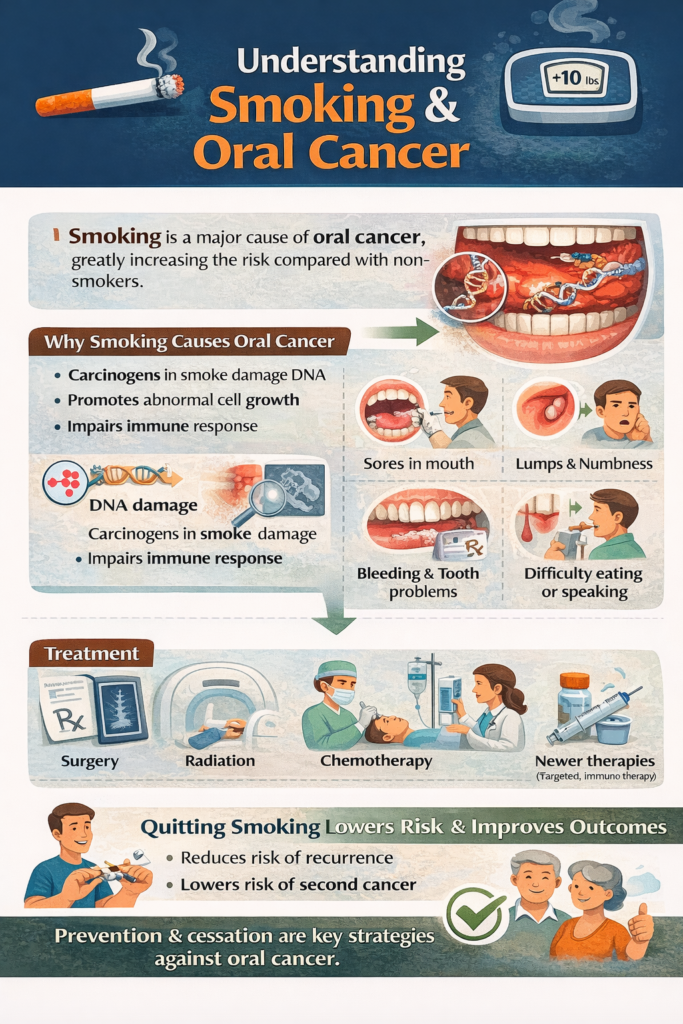
The reason tobacco smoke triggers oral cancer lies in its chemical composition. Tobacco smoke contains thousands of chemical substances, dozens of which are known carcinogens. When these compounds come into contact with the delicate tissues of the mouth, they attack the DNA of the epithelial cells. These toxic substances cause genetic mutations which, over time and with repeated exposure, disrupt the normal mechanisms of cell growth and division. The mutated cells then begin to multiply uncontrollably, forming precancerous lesions, such as leukoplakia (white patch) or erythroplakia (red patch), which can progress to squamous cell carcinoma, the most common form of oral cancer. The chronic inflammation induced by tobacco only worsens this carcinogenic process.
Signs, Diagnosis, and Treatment
Oral cancer, if detected early, offers excellent chances of cure. The problem lies in the fact that the initial symptoms are often subtle or mistaken for benign conditions.
The symptoms to watch out for are:
- A sore or ulcer in the mouth or on the lip that does not heal after two weeks.
- The appearance of a persistent white, red, or mixed patch on the oral lining or tongue.
- A thickening, lump, or nodule in the cheek or neck.
- Unexplained pain, numbness, or bleeding in the mouth.
- Difficulty chewing, swallowing, or moving the tongue.
The diagnosis begins with a thorough clinical examination, often performed by a dentist or physician. Any persistent suspicious lesion requires a biopsy, which involves taking a small sample of tissue for laboratory analysis. If cancer is confirmed, imaging tests (CT scan, MRI, PET scan) are performed to determine the extent of the tumor and to check whether it has reached the lymph nodes in the neck or other parts of the body, or whether the cancer has spread to other organs (metastasis).
Treatment depends on the stage and location of the cancer. It most often involves a combination of:
- Surgery to remove the tumor and, if necessary, the affected lymph nodes.
- Radiation therapy to destroy remaining cancer cells.
- Chemotherapy or immunotherapy in more advanced cases or to increase the effectiveness of other treatments.
Prognosis and the Importance of Quitting
The prognosis is directly related to the stage of the cancer at the time of diagnosis. When the disease is localized and detected very early, the five-year survival rate is significantly higher. Unfortunately, many cases are diagnosed at an advanced stage, when the cancer has spread to the lymph nodes, which makes treatment more arduous and significantly reduces the chances of recovery.
The most powerful impact on the prognosis lies in the immediate and definitive cessation of tobacco use, even after diagnosis. Quitting smoking not only reduces the risk of recurrence but also improves the response to treatments and the overall quality of life of the patient. Prevention remains the most effective weapon: avoiding tobacco and excessive alcohol use are the fundamental steps to guard against this devastating disease.
Use the ‘Comments’ field below to share your experience with oral cancer or to suggest improvements to this article.