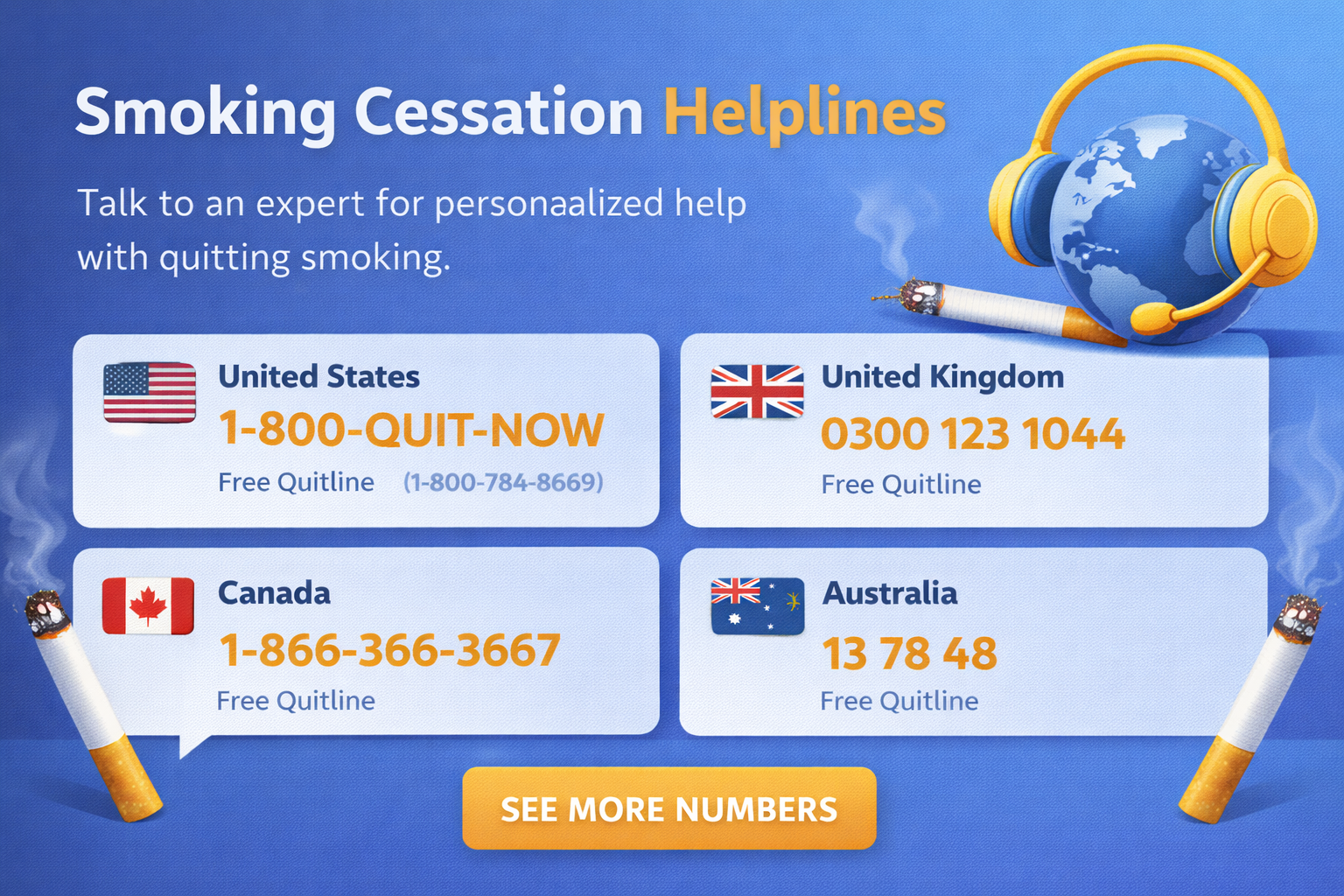
Telephone helplines provide advice, help and support to quit smoking. Do not hesitate to call them. Here are the best and most widely recognized smoking cessation helplines, or “Quitlines,” for the US, UK, Canada, Australia and New Zealand. They offer free, evidence-based telephone counseling
🇺🇸 United States
- 1-800-QUIT-NOW (1-800-784-8669)
- Provider: This is the national access number supported by the National Cancer Institute (NCI). When called, it automatically connects the caller to their state’s local quitline.
- Service: Offers free, confidential phone counseling, help with building a quit plan, information on cessation medications, and referrals to local programs.
- 1-877-44U-QUIT (1-877-448-7848)
- Provider: National Cancer Institute (NCI).
- Service: Specifically for smokers seeking NCI smoking cessation information and assistance.
🇨🇦 Canada
- 1-866-366-3667 (The Smokers’ Helpline)
- Provider: Canadian Cancer Society (in partnership with provincial governments).
- Service: Provides free, confidential telephone counseling and support in multiple languages. They also offer online support, text messaging programs, and community referrals across the country.
🇬🇧 United Kingdom
The UK operates through decentralized, local services, but provides central resources:
- National NHS Smokefree Helpline: 0300 123 1044
- Provider: National Health Service (NHS).
- Service: Offers free advice, support, and encouragement from a trained specialist. The NHS also promotes local “Stop Smoking Services” which are often considered the most effective path, offering face-to-face support.
🇦🇺 Australia
- 13 7848 (13 QUIT) (Quitline)
- Provider: National Quitline services, often managed by Cancer Councils in partnership with state/territory health departments.
- Service: Provides free, confidential telephone support from trained counselors, personalized quitting strategies, and information on nicotine replacement therapy (NRT).
🇳🇿 New Zealand
- 0800 778 778 (Quitline)
- Provider: Quitline New Zealand (Hāpainga).
- Service: Offers free phone counseling, text support, and access to subsidized NRT (patches, gum, lozenges). They place a strong emphasis on providing culturally sensitive support, including to Māori communities.