

The first few days after quitting smoking can feel less like a victory and more like a descent into unusual anger. This sudden and brutal increase in irritability, where a misplaced set of keys or a slow-moving queue is perceived as a personal offense, is one of the most common obstacles on the path to a smoke-free life. Understanding that this “short temper” is a biological side effect of the healing process, rather than a permanent personality change, is the first step toward easing the tension.
The Chemistry of a Quitter’s Temper
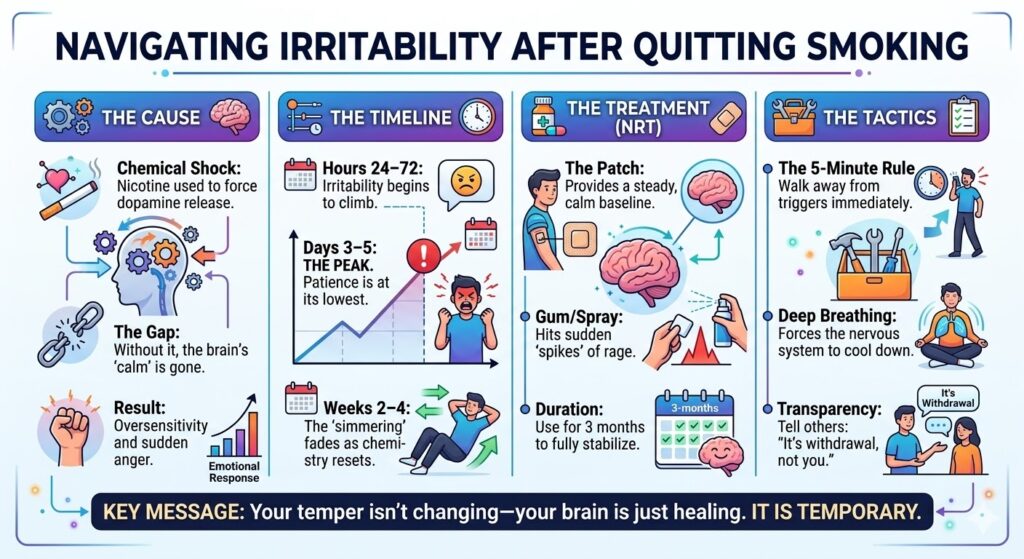
Irritability during the early stages of quitting smoking is largely caused by the brain’s dependence on nicotine. For years, nicotine has stimulated the release of dopamine—the chemical linked to pleasure and relaxation. When nicotine intake suddenly stops, the brain’s reward system experiences a shock. This creates a temporary chemical imbalance that makes the nervous system more sensitive to stress. Without the calming effect of cigarettes, even minor frustrations can trigger impatience or anger.
The Peak and the Plateau
This irritability usually follows a predictable timeline. Symptoms often appear within the first 24 hours after the last cigarette and peak between the third and fifth days, when cravings are strongest and emotional tolerance is lowest. Fortunately, the brain gradually adapts. After about a month, the intensity of anger typically decreases as brain chemistry begins to rebalance. Within a few months, most people find their mood returning to normal, although occasional flashes of frustration may still occur, especially in long-term heavy smokers.
Pharmaceutical Support
Nicotine Replacement Therapy (NRT) can help reduce irritability by preventing the sudden drop in nicotine levels. Products such as patches, gum, or lozenges deliver controlled doses of nicotine without the harmful toxins of smoke. Many experts recommend combining a long-acting patch with a short-acting product like gum or spray to manage sudden cravings. Using these treatments at the proper dose for the recommended period—often around three months—gives the brain time to adjust.
Behavioral Strategies
Alongside medication, simple behavioral strategies can help manage anger. Stepping away from a stressful situation for a few minutes allows the body’s stress response to settle. Deep breathing can also calm the nervous system. Being open with friends, family, or colleagues about temporary withdrawal irritability can encourage understanding and support. Regular exercise is particularly helpful, as it releases tension and provides a healthy outlet for restless energy.
Use the ‘Commets’ field below to share your experience or to suggest improvements to this article.




Leave a Reply