

Insomnia After Quitting Smoking: Why It Happens and How to Get Through It
For many smokers, the first nights after quitting are surprisingly restless. People who expected irritability or cravings are often caught off guard by something else entirely: an inability to sleep. They fall asleep late, wake up repeatedly during the night, or rise far earlier than usual. Insomnia is one of the most common, and least discussed, symptoms of nicotine withdrawal.
The good news is that it is temporary. But understanding why it happens, how long it typically lasts, and what can help along the way can make the difference between persevering through the first difficult weeks and relapsing out of sheer exhaustion.
Why nicotine withdrawal disrupts sleep
Nicotine is a stimulant, and for years the smoker’s brain has adapted to receiving regular doses of it. Paradoxically, many smokers feel that cigarettes help them relax before bed. In reality, nicotine alters several neurotransmitter systems involved in alertness, reward, and sleep regulation, including dopamine, acetylcholine, and norepinephrine.
When nicotine intake suddenly stops, the brain has to recalibrate. During this adjustment period, sleep can become fragmented. People may take longer to fall asleep, wake frequently, or experience vivid dreams. Some report a sense of agitation at night or an unusual level of mental alertness just when they would normally be winding down.
Part of the problem is also behavioral. Smokers are used to punctuating their day—and sometimes their night—with cigarettes. Removing those habitual cues can disturb long-established routines, including those associated with bedtime.
The typical timeline
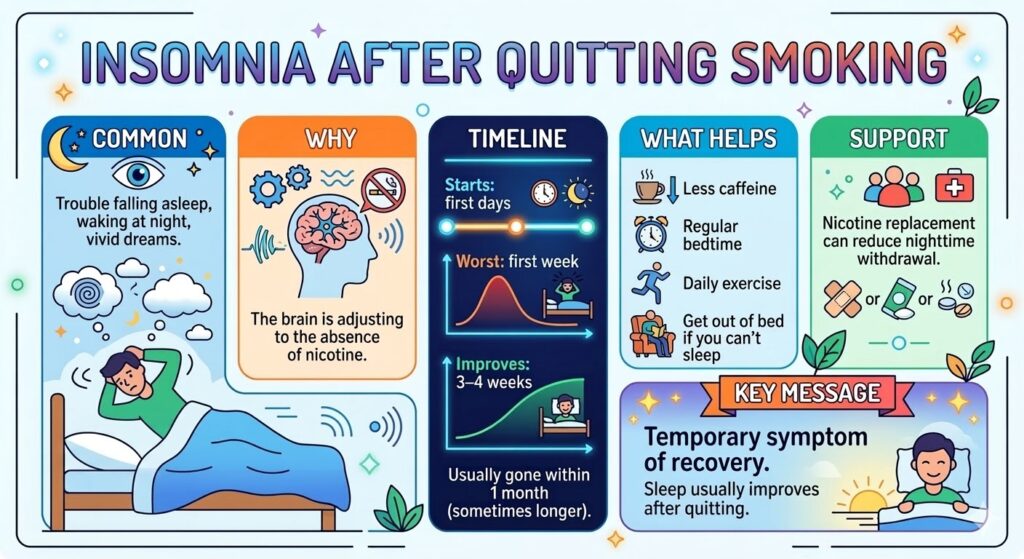
Sleep problems usually appear quickly after the last cigarette. Many people notice them during the first two or three nights of abstinence. The first week is often the most difficult, as nicotine withdrawal symptoms peak during this period.
By the third and fourth weeks, sleep typically begins to stabilize. The brain’s receptors are gradually adapting to the absence of nicotine, and the body’s stress response settles. For most people, insomnia linked to withdrawal fades within a month, but it may last for as much as 6 months after quitting. There are exceptions. Heavy smokers or people who already had sleep difficulties may experience more prolonged disturbances.
Interestingly, long-term studies suggest that former smokers often end up sleeping better than they did while smoking. Once the withdrawal phase passes, the nightly cycle of nicotine stimulation and withdrawal disappears, and sleep becomes more stable.
Getting through the sleepless phase
The most important thing for people experiencing insomnia after quitting smoking is reassurance. The sleeplessness is a symptom of recovery, not a sign that something has gone wrong.
Simple changes to your evening routine can help. Limiting your caffeine intake after noon reduces the risk of insomnia. Establishing a regular bedtime routine (dim lights, quiet activities, and regular sleep times) helps the body rebuild its internal clock.
Physical activity during the day also makes a difference. Even moderate exercise, such as a brisk walk, improves sleep quality and reduces withdrawal-related stress. What matters most is consistency rather than intensity.
Another common recommendation is to avoid lying awake in bed for long periods. If sleep does not come after twenty minutes or so, getting up briefly to read or listen to music in low light can prevent the bed from becoming associated with frustration.
When nicotine replacement can help
For some people, insomnia is partly driven by nighttime nicotine withdrawal. If the brain has been accustomed to nicotine every hour of the day, a sudden overnight absence can trigger restlessness.
Nicotine medications can ease this transition. Products such as patches, gum, lozenges, or inhalers deliver nicotine without the harmful combustion products found in cigarettes. By stabilizing nicotine levels in the body, they reduce the intensity of withdrawal symptoms, including sleep disruption.
Nicotine patches, which provide a steady dose over many hours, are particularly helpful for some individuals. However, wearing a patch overnight can occasionally lead to vivid dreams or lighter sleep. When that happens, removing the patch before bedtime often solves the problem without compromising daytime craving control.
Short-acting forms of nicotine replacement, such as gum or lozenges, can also be useful in the evening if cravings or restlessness build up before sleep.
Nicotine pouches are not medications but provide nicotine in about the same an mounts as nicotine gums.
The aim is not to replace one dependency with another, but to support the brain through a short transition period while it adapts to life without cigarettes.
Medical options for persistent insomnia
If sleep difficulties continue for several weeks and significantly affect daily life, medical advice may be warranted. In some cases, clinicians may suggest temporary sleep aids or behavioral therapies designed specifically for insomnia.
Another possibility is to use medications such as varenicline or bupropion, which target the brain pathways involved in nicotine dependence.
A temporary price for long-term benefits
Few people quit smoking without encountering at least a few uncomfortable days or nights. Insomnia can be one of the more discouraging symptoms, especially when fatigue sets in. Yet it is almost always short-lived.
What often helps most is perspective. The brain is recalibrating after years of nicotine exposure, and disturbed sleep is part of that process. Within a few weeks or months, the vast majority of people find that their nights settle down again.
When that happens, many former smokers discover something unexpected: not only have they broken free from cigarettes, but they are also sleeping more soundly than they have in years.
Use the ‘Comments’ field below to share your experience or to suggest improvements to this page.




Leave a Reply